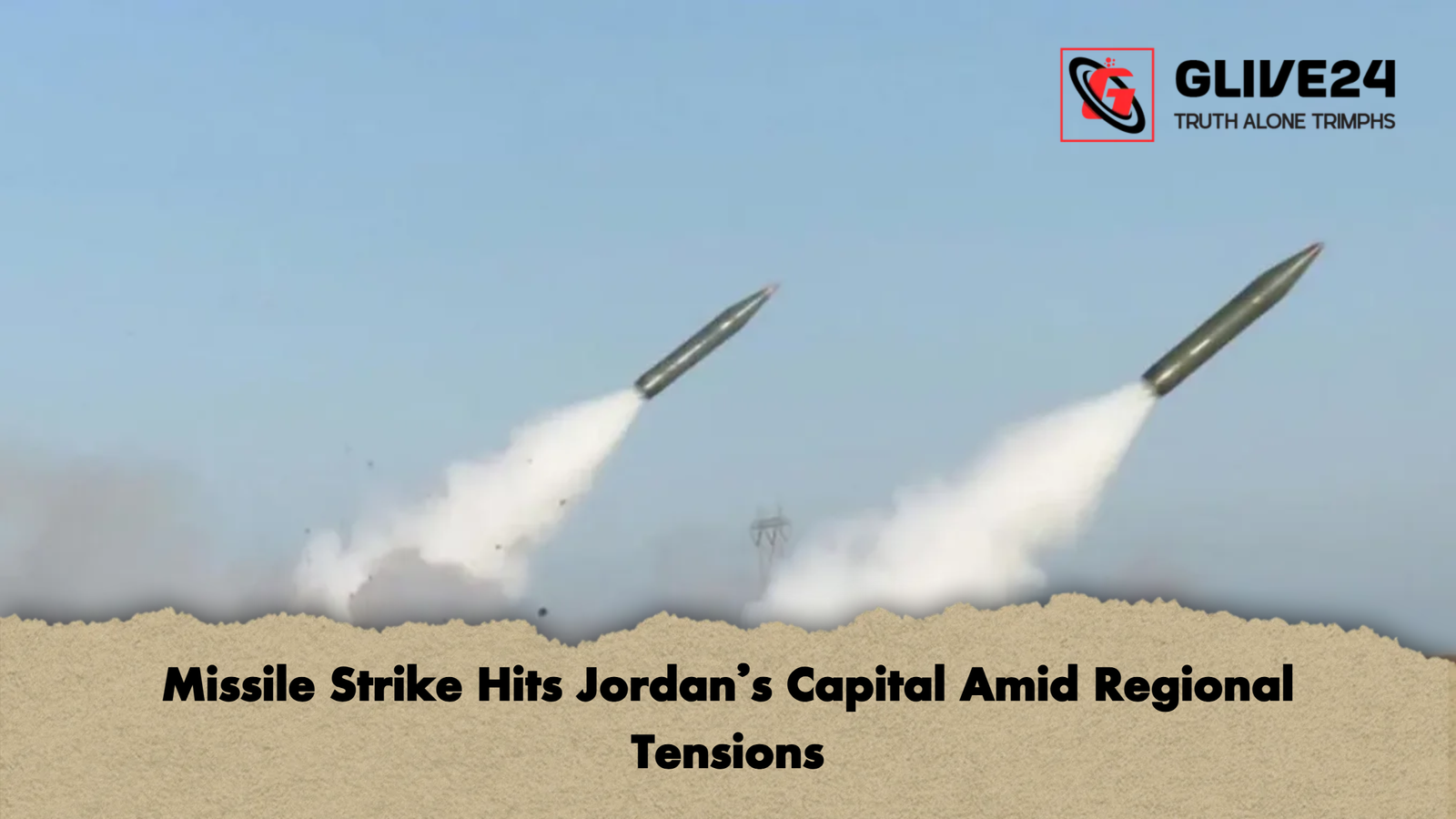
A missile reportedly launched by Iran struck a residential building in Amman, the capital of Jordan, on Saturday afternoon, according to state media cited by The Times of Israel. No official statement has yet been released by the Jordanian authorities, and Iran has also not confirmed the strike.
The attack comes amid escalating regional tensions following retaliatory strikes in Israel, where a joint US-Israel operation reportedly triggered Iranian counterattacks. International media, including the French news agency AFP, report that these counter-strikes have caused severe explosions in Saudi Arabia, Bahrain, Kuwait, and Abu Dhabi.
Regional Impact of Recent Missile Strikes
| Country | Target / Location | Incident Details |
|---|---|---|
| Jordan | Amman residential area | Missile strike on a house; casualties unconfirmed |
| Saudi Arabia | Multiple locations | Explosions linked to Iranian retaliatory missile attacks |
| Bahrain | US Navy 5th Fleet Headquarters | Missile strike confirmed on military facility |
| Kuwait | Locations unspecified | Explosions reported; extent of damage unknown |
| UAE (Abu Dhabi) | Locations unspecified | Explosions reported; situation remains tense |
According to reports, Iran has initiated a series of retaliatory missile attacks in response to the recent US-Israel operations in the region. These strikes, targeting strategic military and civilian areas, have heightened fears of a wider regional conflict. In Bahrain, for example, the US Navy’s 5th Fleet headquarters has reportedly been targeted, raising concerns among international military observers.
The incident in Amman has caused significant alarm among local residents. Security forces quickly cordoned off the area, but no information has yet been released regarding casualties or structural damage. The strike underscores the precarious nature of regional security in the Middle East, where retaliatory attacks can rapidly escalate tensions.
Analysts warn that such strikes could further destabilise an already volatile region. The international community is closely monitoring the situation, stressing the importance of diplomatic engagement to prevent further escalation. Experts highlight that continued exchanges of missile attacks between Iran, Israel, and allied nations could have wider ramifications for global security and shipping routes in the Gulf.
The Jordanian government has urged calm and assured residents that investigations are ongoing. Meanwhile, diplomatic channels in the region are reported to be active, aiming to de-escalate the potential for further conflict.