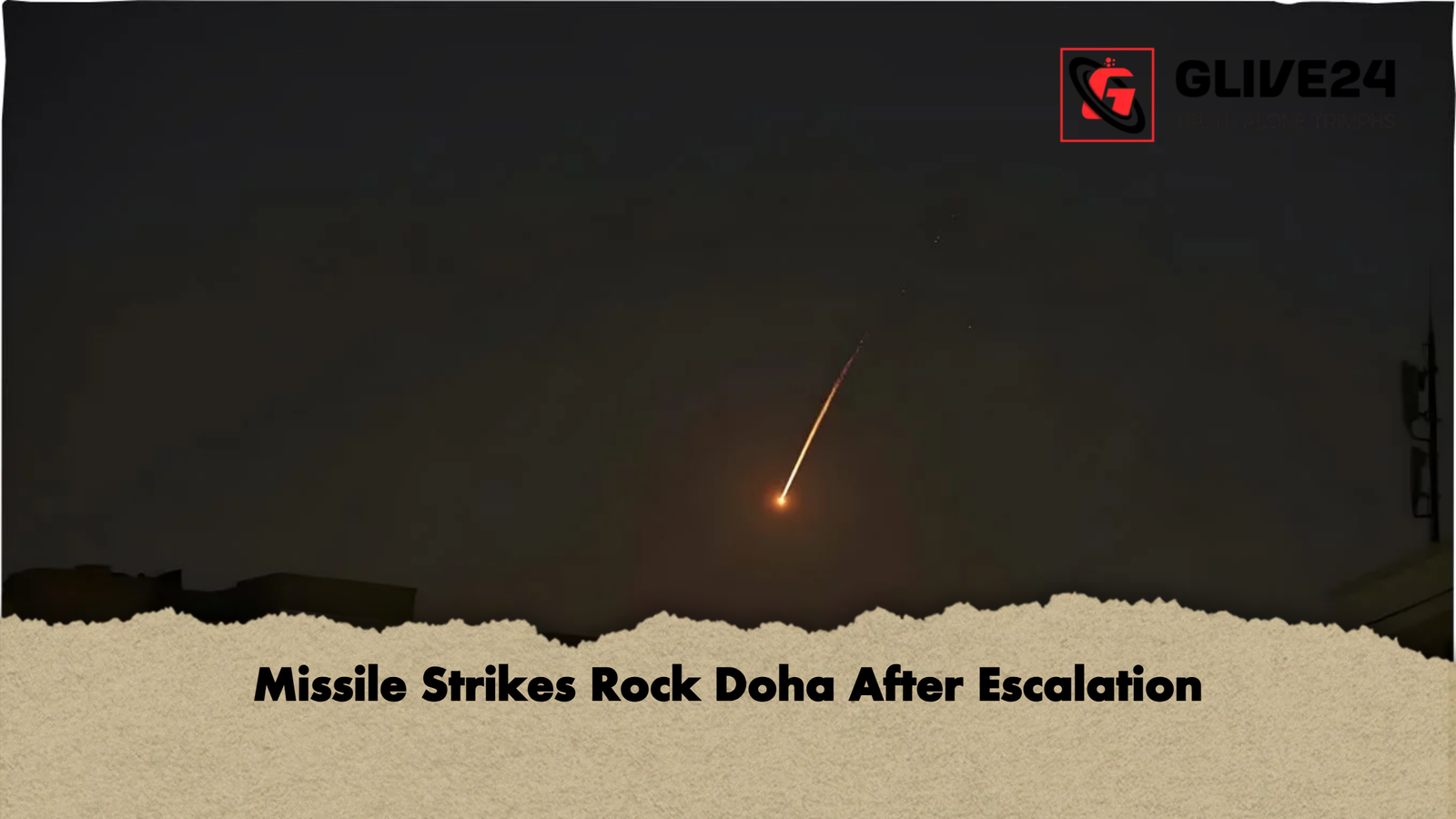
Iran has reportedly launched retaliatory strikes towards Qatari territory following a joint military operation by the United States and Israel against Iranian targets, according to regional sources. The developments mark a sharp escalation in tensions across the Middle East, with multiple explosions heard in Doha, the capital of Qatar, prompting widespread alarm among residents.
International broadcaster Al Jazeera reported that at least three fresh explosions were heard across Doha shortly after the initial incident. Eyewitness accounts described loud blasts reverberating through several districts, followed by the activation of emergency sirens. Security forces were swiftly deployed around critical infrastructure sites, including government buildings and transport hubs, as authorities sought to contain the situation.
Although immediate details regarding casualties or material damage remain unclear, Qatari defence systems were said to be on high alert. The Ministry of Interior issued a public advisory via social media, urging residents to remain indoors until further notice. Citizens were instructed to avoid windows and open spaces, and emergency services were placed on maximum readiness.
Table of Contents
Diplomatic Engagement Intensifies
Amid mounting regional instability, the Emir of Qatar, Sheikh Tamim bin Hamad Al Thani, held a telephone conversation with Abdullah II of Jordan. According to an official statement released in Doha, the two leaders discussed the rapidly evolving security landscape and its potential repercussions for regional peace and stability.
Both leaders strongly condemned Iran’s reported ballistic missile activity targeting Qatar, Jordan, and other Arab states. They reaffirmed their commitment to safeguarding national sovereignty and underscored the urgent need for coordinated diplomatic initiatives aimed at de-escalation. The leaders further stressed the importance of resuming dialogue to prevent a broader regional conflagration.
Background to the Escalation
The crisis follows a coordinated military operation launched on Saturday by the United States and Israel against targets in Iran. Explosions were reported in several Iranian cities, including the capital, Tehran. Iranian state sources subsequently claimed that drone and missile strikes had been initiated against what they described as “hostile forces”.
Reports indicate that northern Israel and several Gulf states have since experienced incidents involving aerial projectiles or explosions, heightening fears of a widening confrontation.
Summary of Recent Developments
| বিষয় | বিবরণ |
|---|---|
| Triggering Event | Joint US–Israel military operation inside Iran |
| Retaliatory Action | Iranian drone and missile strikes |
| Affected Areas | Doha, northern Israel, several Gulf states |
| Security Measures | Stay-at-home advisory in Qatar; enhanced patrols |
| Diplomatic Activity | Qatar–Jordan leadership talks on de-escalation |
Regional and Global Implications
Analysts warn that the unfolding conflict poses significant risks to broader Middle Eastern stability. The Gulf region is a vital artery for global energy supplies, and any sustained hostilities could disrupt oil and gas exports, maritime shipping lanes, and international aviation routes. Insurance premiums for commercial shipping and air traffic may rise sharply if the security situation deteriorates further.
Financial markets have already shown signs of volatility amid concerns over energy prices and supply chain disruption. Should the confrontation intensify, the ramifications may extend well beyond the region, affecting global economic stability and international security frameworks.
For now, diplomatic channels remain active, but the coming days are likely to prove decisive in determining whether the crisis can be contained or spirals into a broader regional conflict.