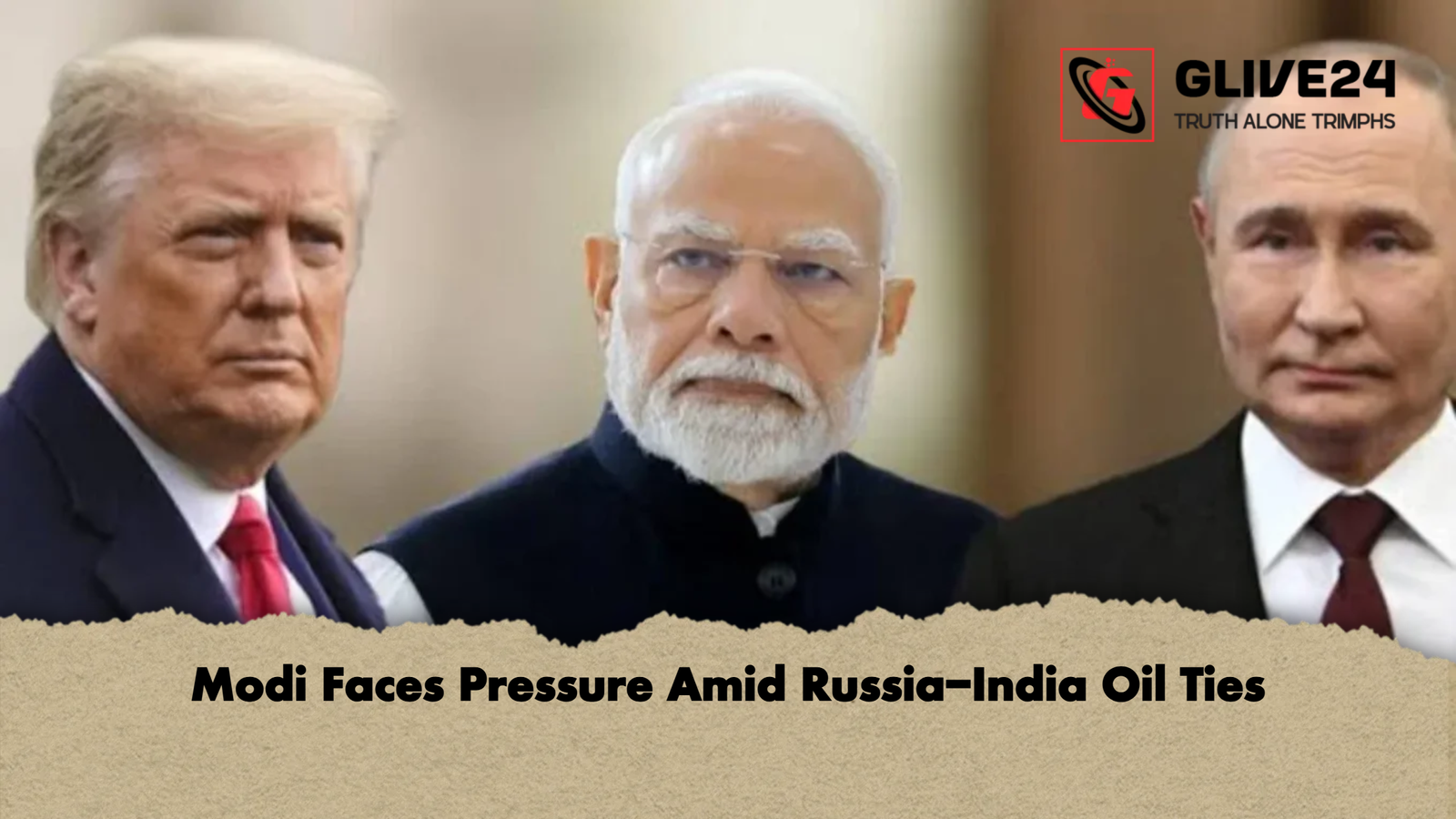
India’s Prime Minister Narendra Modi finds his government caught in a mounting geopolitical squeeze, balancing the uncompromising demands of former U.S. President Donald Trump with the steadfast partnership of Russian President Vladimir Putin. This complex interplay has left New Delhi in a delicate position, attempting to maintain energy security while navigating international pressure.
Central to the current tensions is India’s long-standing policy of maintaining independence in oil procurement and diversifying energy sources. Russia, however, has dismissed recent claims by Trump suggesting that India had agreed to halt crude oil imports from Moscow as part of a broader trade arrangement with Washington. Kremlin officials have made it clear that no such commitment has been formally communicated to them.
Kremlin spokesperson Dmitry Peskov stated that Russia is not India’s sole supplier of crude oil and that New Delhi has historically sourced oil from multiple countries. He emphasized that there is nothing novel in India diversifying its oil imports, and that Moscow sees no reason to alter its ongoing energy cooperation.
Trump had asserted that Modi had consented to replace Russian oil with supplies from the United States and possibly Venezuela. Peskov, however, clarified that Russia has received no official notice indicating India would cease purchases, underscoring the persistence of the India-Russia energy relationship.
Despite Western sanctions against Moscow following the Ukraine conflict, India has continued to import substantial volumes of discounted Russian crude. Current estimates indicate that India imports approximately 1.5 million barrels of Russian oil daily, accounting for over one-third of its total oil imports. Even when the Trump administration imposed a 25 per cent tariff on Indian goods, India did not halt Russian oil imports.
Maria Zakharova, spokesperson for Russia’s Ministry of Foreign Affairs, described the energy trade as mutually beneficial, contributing to international market stability. She reiterated Moscow’s readiness to continue this close hydrocarbon partnership with India.
Technical considerations also make a rapid shift away from Russian oil challenging. Russian Urals crude is heavier and more sulfur-rich than lighter U.S. grades, making direct substitution technically complex and economically costly for Indian refineries, according to Russian media and energy experts.
The following table summarises India’s current oil import landscape:
| Indicator | Data |
|---|---|
| Total daily oil imports | 45–50 million barrels |
| Daily Russian oil imports | ~1.5 million barrels |
| Russian oil share of total imports | Over one-third |
| Other major suppliers | Middle East, USA |
| Russian crude characteristics | Heavy, sulfur-rich |
India now faces the intricate task of balancing domestic energy needs, longstanding ties with Russia, and diplomatic pressure from the United States. Maintaining this equilibrium will be one of Modi’s most formidable challenges in international energy diplomacy.