
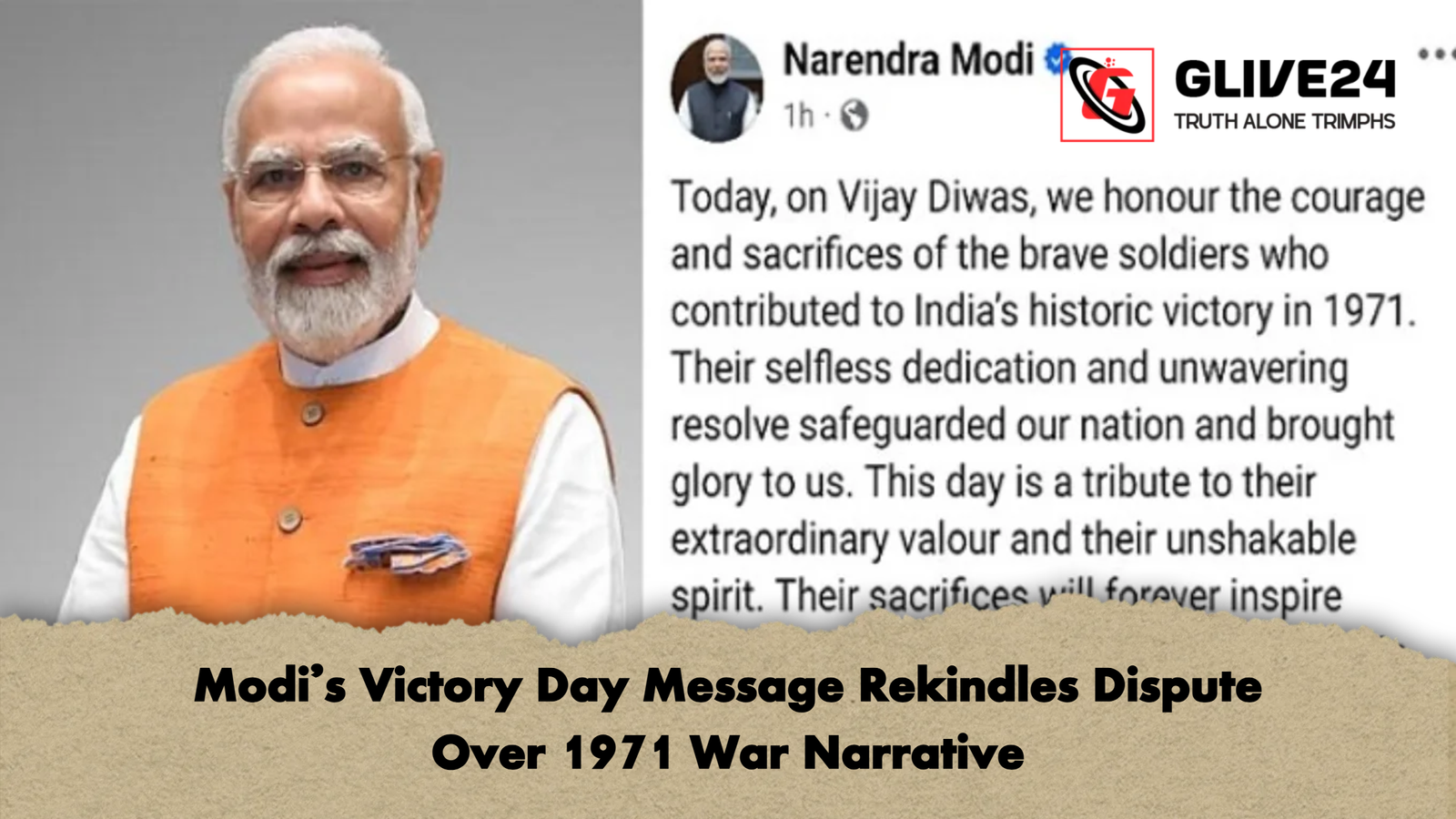
Prime Minister Narendra Modi’s description of 16 December as India’s Victory Day has once again drawn criticism in Bangladesh, reviving an emotionally charged debate over the interpretation of the 1971 Liberation War. The absence of any reference to Bangladesh in his message has been widely interpreted as a selective reading of history that minimises the sacrifices of an entire nation.
In his social media post, Modi praised Indian soldiers for securing what he described as a historic Indian victory in 1971. He highlighted their discipline, selflessness, and bravery, stating that their legacy continues to inspire future generations. While the message was intended for a domestic Indian audience, its regional implications were quickly felt across the border.
For Bangladeshis, 16 December symbolises the end of systematic oppression, the conclusion of a brutal war, and the realisation of self-determination. The Liberation War resulted in the deaths of millions and the displacement of an estimated ten million people. Freedom fighters, students, farmers, and ordinary citizens formed the backbone of the resistance, long before India’s formal military engagement in December 1971.
Political commentators in Bangladesh argue that portraying the date solely as an Indian victory risks distorting this reality. They emphasise that India did not “win” Bangladesh’s independence; rather, it supported an existing liberation movement. To frame the outcome otherwise, they contend, shifts agency away from the Bangladeshi people.
The controversy has political as well as cultural dimensions. Last year’s similar remarks by Modi triggered protests and formal objections from multiple sectors in Bangladesh. That the same narrative has been repeated this year has led some analysts to question whether the omission is accidental or intentional.
From a diplomatic standpoint, such statements are seen as avoidable irritants. India and Bangladesh share extensive economic, security, and strategic ties. However, historians note that unresolved tensions over historical memory can quietly undermine public trust, even when official relations remain cordial.
Some Indian analysts defend Modi’s statement by pointing out that Victory Day in India is traditionally observed to honour the armed forces. Yet critics argue that acknowledging Bangladesh’s independence within that context would not diminish India’s military achievement, but rather enhance the credibility and inclusiveness of the commemoration.
The recurring controversy highlights a broader issue: the challenge of narrating shared history in a region shaped by colonial legacies and nationalist movements. For Bangladesh, the Liberation War is not a subchapter of Indian military history but the defining chapter of its own national story.
As public discourse intensifies, voices from academia and civil society are calling for greater historical responsibility from regional leaders. They argue that mutual respect for each other’s national narratives is essential, especially on dates as symbolically powerful as 16 December.b