
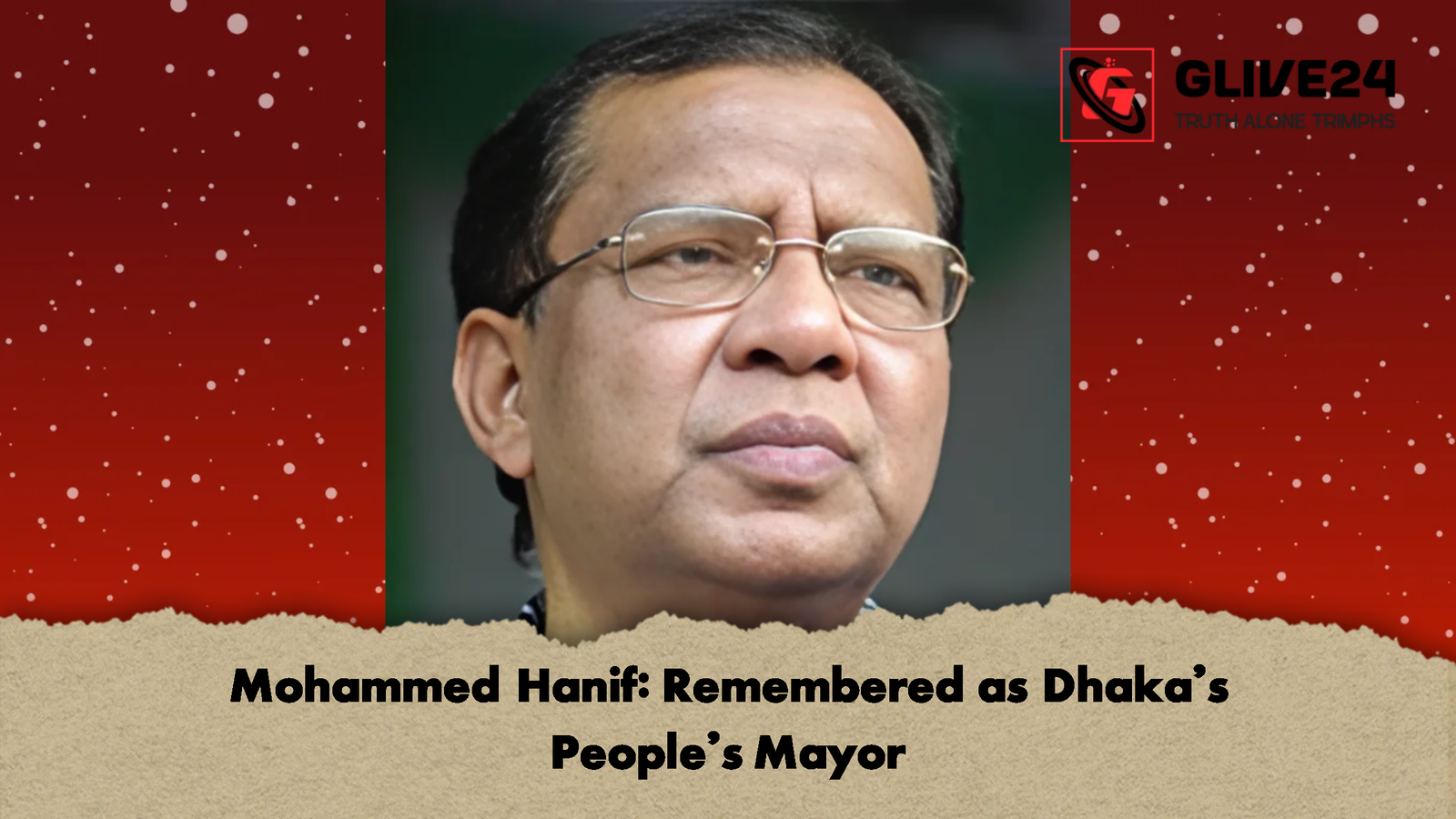
Mohammed Hanif continues to be regarded as one of the most influential figures in the political and civic history of Dhaka, remembered for his journey from grassroots activism to becoming a defining force in the capital’s urban governance. On 1 April, his birth anniversary is observed with profound respect, reflecting on his enduring legacy as the first elected “people’s mayor” of Dhaka City Corporation and a symbol of people-centred leadership.
Unlike many politicians associated with elite or insulated forms of engagement, Hanif was widely known for his direct connection with ordinary citizens. His political identity was shaped on the streets rather than in formal drawing rooms, and he consistently positioned himself as a representative of public concerns during critical phases of Bangladesh’s political evolution. His life remains closely linked with the country’s broader democratic struggle and the transformation of its capital city.
Table of Contents
Early Political Engagement and National Movements
Hanif began his political career during his student life by joining the student wing of the Awami League. He later worked closely with Sheikh Mujibur Rahman as a personal aide and secretary, an experience that deeply influenced his political outlook. From this association, he developed a strong commitment to public service, discipline in leadership, and resistance against political oppression.
During the Six-Point Movement of 1966, Hanif played an active role in organising and participating in street-based political mobilisation. This period exposed him to state repression under the then regime, further strengthening his dedication to mass-oriented politics. His early experiences laid the foundation for a lifelong commitment to democratic activism and civic engagement.
Election as Dhaka’s First Directly Elected Mayor
A major turning point in his political career came in 1994, when Hanif was elected Mayor of Dhaka City Corporation in its first direct election. This historic victory marked a significant milestone in the democratisation of urban governance in Bangladesh, granting the capital city its first popularly mandated municipal leadership.
During his tenure, Hanif prioritised essential urban development initiatives, focusing on road construction, drainage systems, waste management, and improvements in basic civic services. His administration was widely recognised for its accessibility, with a governance approach that encouraged direct engagement between citizens and municipal authorities.
Key Contributions as Mayor
| Category | Details |
|---|---|
| Election Year | 1994 |
| Position | First elected Mayor of Dhaka |
| Governance Style | Open-door, citizen-focused administration |
| Priority Areas | Roads, drainage, sanitation, civic services |
| Political Affiliation | Awami League |
His tenure left a lasting imprint on Dhaka’s urban development trajectory, and many residents continue to associate his period in office with visible improvements in municipal responsiveness and infrastructure planning.
Political Leadership and National Crisis
Beyond his municipal role, Hanif emerged as a senior political leader within Dhaka’s metropolitan structure and remained a key organisational figure in the Awami League during periods of political instability. He was known for his steadfast leadership and ability to maintain party cohesion during times of crisis.
A defining and tragic moment in his life came on 21 August 2004, during the grenade attack on an Awami League rally at Bangabandhu Avenue. In the chaos of the attack, Hanif reportedly formed a human shield to protect the party’s then leader, Sheikh Hasina. He sustained multiple injuries from grenade splinters, leaving him with long-term health complications that persisted for the remainder of his life.
These injuries ultimately contributed to his declining health, and he passed away on 28 November 2006, bringing to a close a life marked by political struggle, sacrifice, and public service.
Legacy and Political Continuity
Hanif’s political legacy has continued through his family, particularly his son Sayeed Khokon, who went on to serve as Mayor of Dhaka South City Corporation and later as a Member of Parliament. His son’s political career is widely viewed as an extension of Hanif’s ideals of civic responsibility and public service.
Hanif is frequently remembered for his personal conviction that serving the people of Dhaka was the foremost duty of his life—a principle that guided both his administrative reforms and his political decisions throughout his career.
Enduring Significance
Mohammed Hanif’s contribution to Dhaka’s urban development and Bangladesh’s political landscape remains widely acknowledged. He is remembered not only as an administrator but also as a frontline political activist who stood firm during moments of national crisis.
On his birth anniversary, he is commemorated as a leader whose life embodied resilience, dedication, and an unwavering commitment to public welfare. His legacy continues to serve as an enduring source of inspiration for contemporary political leaders and urban administrators working towards more inclusive, responsive, and people-oriented governance in Bangladesh.