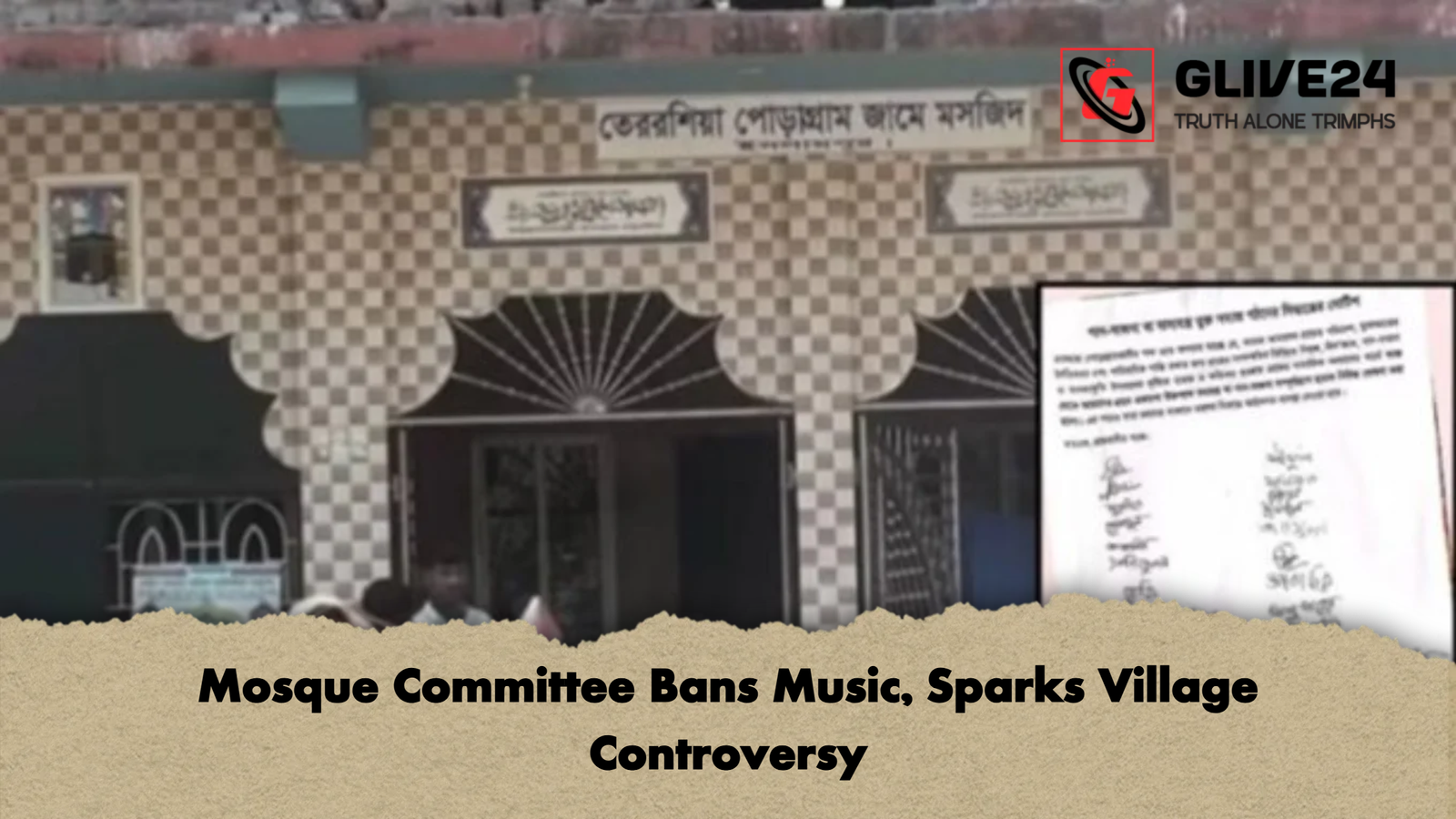
In Chapainawabganj Sadar, a local mosque committee in the village of Terrosia Poragram, Islampur Union, has unilaterally declared a ban on all forms of music and musical instruments under the guise of “social reform”. The committee further stated that if any wedding celebrations in the area involve music, local clerics would refuse to perform the religious wedding rites.
The notice, titled “Decision for a Music-Free Society”, was circulated in the village nearly two months ago. It reads:
“On behalf of the people of Poragram, we announce that for the protection of our village environment, the morality of our youth, and family harmony, all music, musical instruments, and cultural performances are considered haram and harmful in Islam. Henceforth, public performance of music or instruments is strictly prohibited. Legal action will be taken against anyone who disobeys this directive.”
The notice bore 34 signatures from mosque committee members and other villagers and was accompanied by banners and festoons at village crossroads. Since its issuance, music has reportedly ceased in the area. Following the recent public disclosure of the ban, police intervened, seizing the banners, festoons, and notices.
Sadar Upazila Nirbahi Officer (UNO) Maruf Afzal (Rajan) told reporters that he summoned the mosque committee members after learning of the directive. Eight to ten members, led by the mosque’s imam, admitted that the notice had been issued without proper understanding. They have formally apologised and agreed to retract the music ban in writing at the UNO’s office.
Attempts to contact the mosque’s imam, Abdul Malik bin Khalidur Rahman, were largely unsuccessful. He initially indicated he would comment later but has not responded further.
Investigations revealed that a village meeting organised by the mosque’s imam and local clerics approved the ban on musical instruments and performances for both social events and commercial purposes, including mobile vendors. The decision provoked mixed reactions. While some elders supported it, younger villagers expressed dissatisfaction.
Women in the village expressed frustration, explaining that songs and sound systems are now banned at weddings. Teenagers’ recreational activities, such as picnics with music, have also ceased, causing additional discontent.
Some villagers, speaking anonymously, claimed that the committee even suggested that those not performing daily prayers could be denied funeral rites—a stance widely rejected locally as inappropriate. A shopkeeper stated: “I have a TV in my shop but no longer play music. I only broadcast religious lectures and sermons.”
Rabiu Islam, a prominent local resident, commented, “Weddings are meant for enjoyment. Music and singing are natural elements. They cannot stop it entirely. Even if clerics refuse, the ceremonies will continue with others performing the rites. Many will simply not comply with the committee’s decree.”
The table below summarises the situation:
| Aspect | Details |
|---|---|
| Village | Terrosia Poragram, Islampur Union, Chapainawabganj Sadar |
| Mosque | Local Jame Masjid |
| Ban | All music and musical instruments |
| Signatories | 34 committee members and villagers |
| Impact | Social events, commercial vendors, mobile sellers |
| Administrative Action | Police seized notices and banners; committee to retract decision |
The incident highlights tensions between traditional religious authority and contemporary social practices, with the music ban sparking debate over personal freedoms, cultural expression, and communal governance.