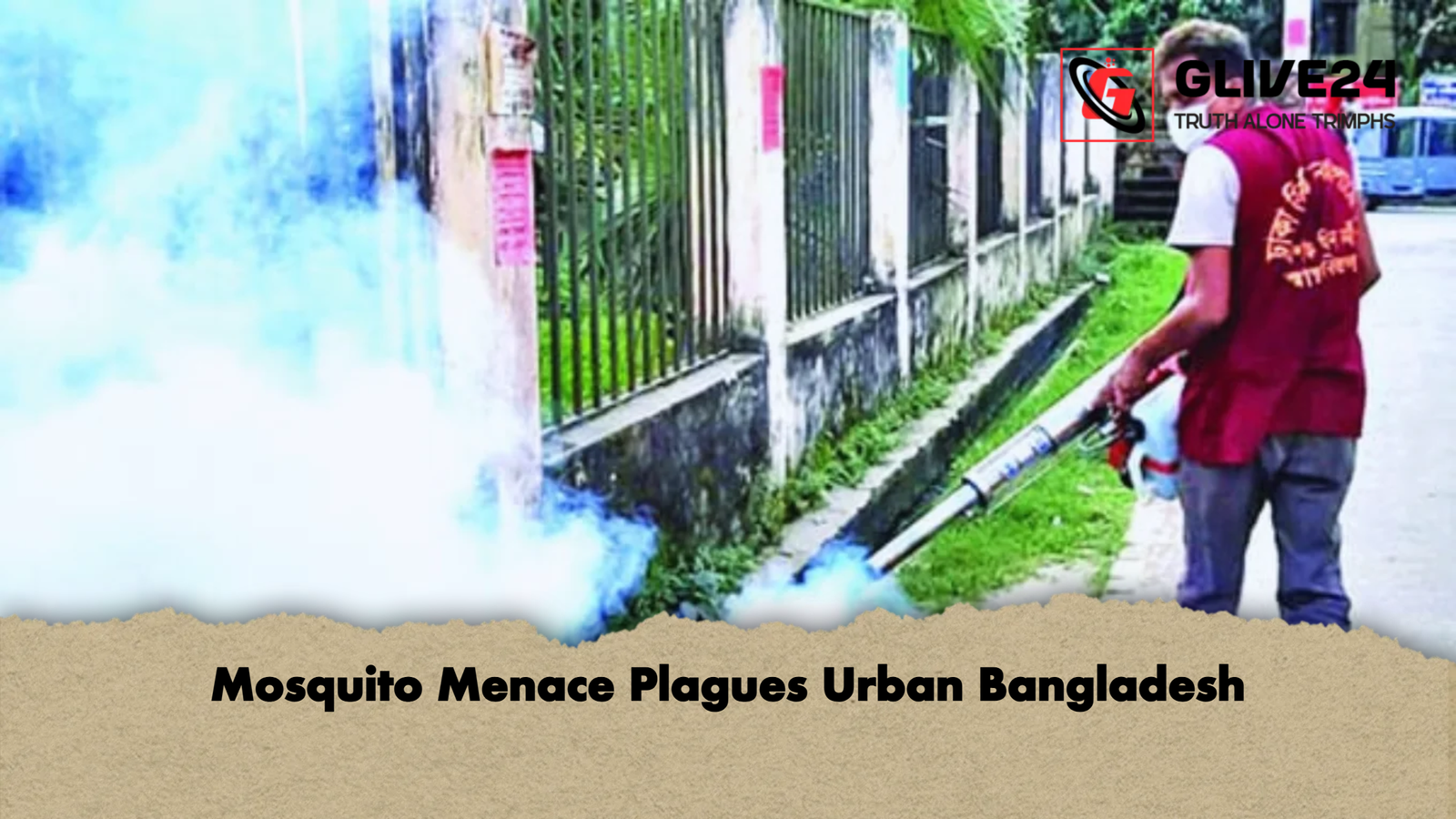
From dawn until long after dusk, Bangladeshis are battling an unrelenting mosquito onslaught that is leaving people exasperated and fearful for their health. “From opening my shop in the morning until closing at night, it feels like a thousand mosquitoes have bitten me,” said Ismail Hossain, a shopkeeper at Amtoli Bazaar in Mohakhali. “I wear socks on my feet, yet my hands and face are covered in red welts. Neither coils nor electric bats seem to work. I can’t even sit under a net in the shop.”
The mosquito menace, driven primarily by the Culex species, is wreaking havoc in cities, towns, and ports alike. While people endure the incessant biting, dengue is quietly spreading, often unnoticed. Experts blame ineffective vector control measures and the unchecked breeding of mosquitoes in stagnant water, drains, ditches, and abandoned containers.
In response, Health Minister Sardar Md. Shahawat Hossain Bakul and State Minister M.A. Muhit conducted a ground inspection of mosquito control operations yesterday. “Culex mosquitoes have increased alarmingly. We have already initiated measures to combat this,” said the Health Minister during a visit to Dhaka South City Corporation’s mosquito control project in Syedabad. “Samples of larvicide and other insecticides have been collected to test their quality, and full-scale spraying will begin shortly.” Dhaka South’s Administrator, Abdus Salam, was also present.
The ministers emphasised coordinated efforts between authorities and the public. “Speedboats will be used to spray canals, and citizens must cooperate. Water in tubs or discarded tyres are prime breeding grounds for Aedes mosquitoes. Maintaining clean homes is essential,” added the Health Minister. Meanwhile, at Dhaka North City Corporation’s Mirpur-2 storage facility, Minister Muhit reviewed larvicide stocks.
Entomologist Dr. Kabirul Bashar of Jahangirnagar University warned that mosquito populations will rise daily until rainfall becomes more consistent. “Control measures for Aedes and Culex mosquitoes differ. Integrated, science-based vector management is essential. Around 80% of Aedes larvae in Dhaka are found in three locations: construction sites (47%), house basements (17%), and plastic containers (15%). Targeted application of insecticides is key,” he explained.
Mosquito Outbreak Across Cities
Reports from various districts indicate widespread mosquito infestations affecting daily life and public health.
| District/City | Severity of Outbreak | Key Causes | Dengue Cases (Past Year) | Deaths |
|---|---|---|---|---|
| Rajbari | Severe | Blocked drains, garbage | – | – |
| Patuakhali | Critical | Poor drainage, waste accumulation | 500+ | 5 |
| Mymensingh | High | Stagnant water, garbage | – | – |
| Bagerhat | Extreme | Unclean drains, lack of representatives | 256 | 5 |
| Kurigram | Rising | Waterlogging, poor drainage | – | – |
| Rangpur | Severe | Shyamasundari & Kaddy canals | – | – |
| Rajshahi | Alarming | Citywide mosquito activity | – | – |
| Narayanganj | Critical | Poor drainage, garbage | – | – |
| Sylhet | High | Ineffective vector control | – | – |
| Chattogram | Mixed | Uneven spraying coverage | – | – |
District-specific accounts reveal a common pattern: stagnant water, overflowing drains, and uncollected waste fuel mosquito proliferation. In Patuakhali’s Ward 4, residents report five dengue-related deaths, while over 500 people have contracted dengue across the municipality in the past year. Bagerhat has recorded 256 cases of dengue and chikungunya, with five fatalities. Even in cities with active spraying, such as Chattogram and Rajshahi, mosquitoes continue to thrive in neglected drains and urban debris.
Residents nationwide, from Munshiganj and Meherpur to Nilphamari and Bogura, report being attacked day and night. Coils, sprays, and nets offer little relief, and public health authorities struggle to keep pace with the rapidly growing mosquito populations. Experts warn that without timely, comprehensive measures, the onset of the monsoon could trigger a surge in dengue and other mosquito-borne diseases.
Authorities and citizens alike are urged to adopt preventive measures: clearing stagnant water, cleaning drains, discarding old containers, and applying larvicides. Coordinated, targeted interventions remain the only viable path to control the mosquito threat and protect public health in Bangladesh’s densely populated urban centres.