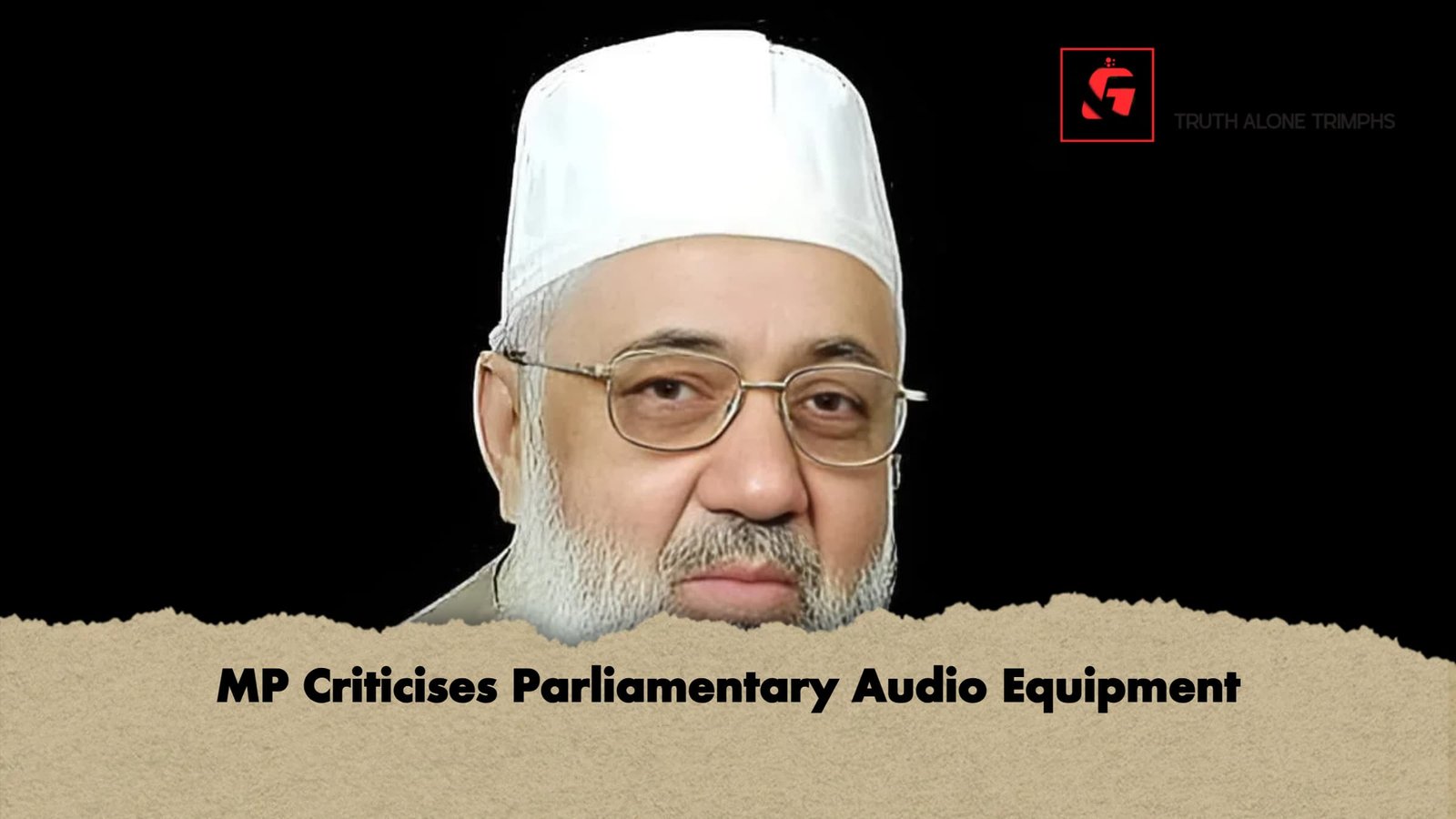
An opposition member of parliament has voiced strong dissatisfaction with the audio equipment used in the National Parliament chamber, arguing that the current system is unnecessarily cumbersome and may reflect questionable spending decisions.
Shahjahan Chowdhury, a member of parliament from the opposition party Jamaat-e-Islami, raised the issue during an unscheduled discussion in the parliamentary session on Sunday. His remarks came during the opening days of the first sitting of the Thirteenth National Parliament, which began last Thursday.
The debate over the sound system emerged after technical problems disrupted proceedings on the very first day of the session. Microphone malfunctions reportedly affected the chamber, forcing a temporary suspension of parliamentary business until the issue could be addressed. The incident prompted several members to question the efficiency and reliability of the newly installed audio arrangements.
Sunday’s sitting began at 11:00 a.m., and during the course of the debate Shahjahan Chowdhury drew the Speaker’s attention to what he described as the impractical design of the headsets provided to members. Removing the headset from his ears and holding it up, he remarked that the equipment was excessively heavy and uncomfortable to wear for extended periods.
According to Chowdhury, the current system imposes an unnecessary burden on members who often remain seated in the chamber for long sessions lasting one to two hours or more. He noted that such equipment could hinder concentration and make participation in parliamentary debates more difficult.
The opposition member also pointed to earlier parliamentary sessions to illustrate his argument. He recalled that during the parliamentary terms beginning in 1991 and again in 2001, lawmakers were able to conduct proceedings without relying on such large headsets. Instead, members depended primarily on a conventional chamber sound system that allowed them to hear speeches clearly without additional devices.
Chowdhury suggested that the introduction of the current system may have involved an inflated budget allocation. He alleged that the arrangement appeared to have been designed primarily to justify expenditure rather than to improve the quality of parliamentary communication. Although he did not present specific financial figures, he argued that the system seemed unnecessarily elaborate compared with the chamber’s practical needs.
The lawmaker called on parliamentary authorities to review the existing setup and consider installing a more efficient and user-friendly sound system. In his view, the chamber should ideally be equipped with high-quality speakers and microphones that allow members to hear proceedings clearly without the need for heavy headsets. If headphones are required, he said, they should be lightweight and optional rather than compulsory.
Parliamentary audio systems are generally designed to ensure that speeches delivered in the chamber are transmitted clearly to all members, staff and official records. In many legislatures worldwide, such systems also support simultaneous interpretation services and digital recording of debates. However, their design must balance technical sophistication with practical comfort for users.
Observers note that the issue raised by Chowdhury highlights a broader concern about the integration of technology in legislative institutions. While modern equipment can enhance clarity and accessibility, its effectiveness depends largely on usability and reliability during live proceedings.
The key points raised during the parliamentary discussion are summarised below.
| Issue | Details |
|---|---|
| Member raising concern | Shahjahan Chowdhury |
| Political affiliation | Opposition member from Jamaat-e-Islami |
| Institution | National Parliament |
| Session | First sitting of the Thirteenth Parliament |
| Initial technical problem | Microphone malfunction on opening day |
| Main complaint | Headsets are heavy and uncomfortable |
| Reference to earlier sessions | Parliament operated without such headsets in 1991 and 2001 |
| Proposed solution | Improve speaker system and provide lighter, optional headphones |
Parliamentary authorities have not yet publicly responded to the remarks. Nevertheless, the discussion has drawn attention to the importance of ensuring that technological upgrades in legislative chambers remain practical, cost-effective and conducive to smooth parliamentary debate.