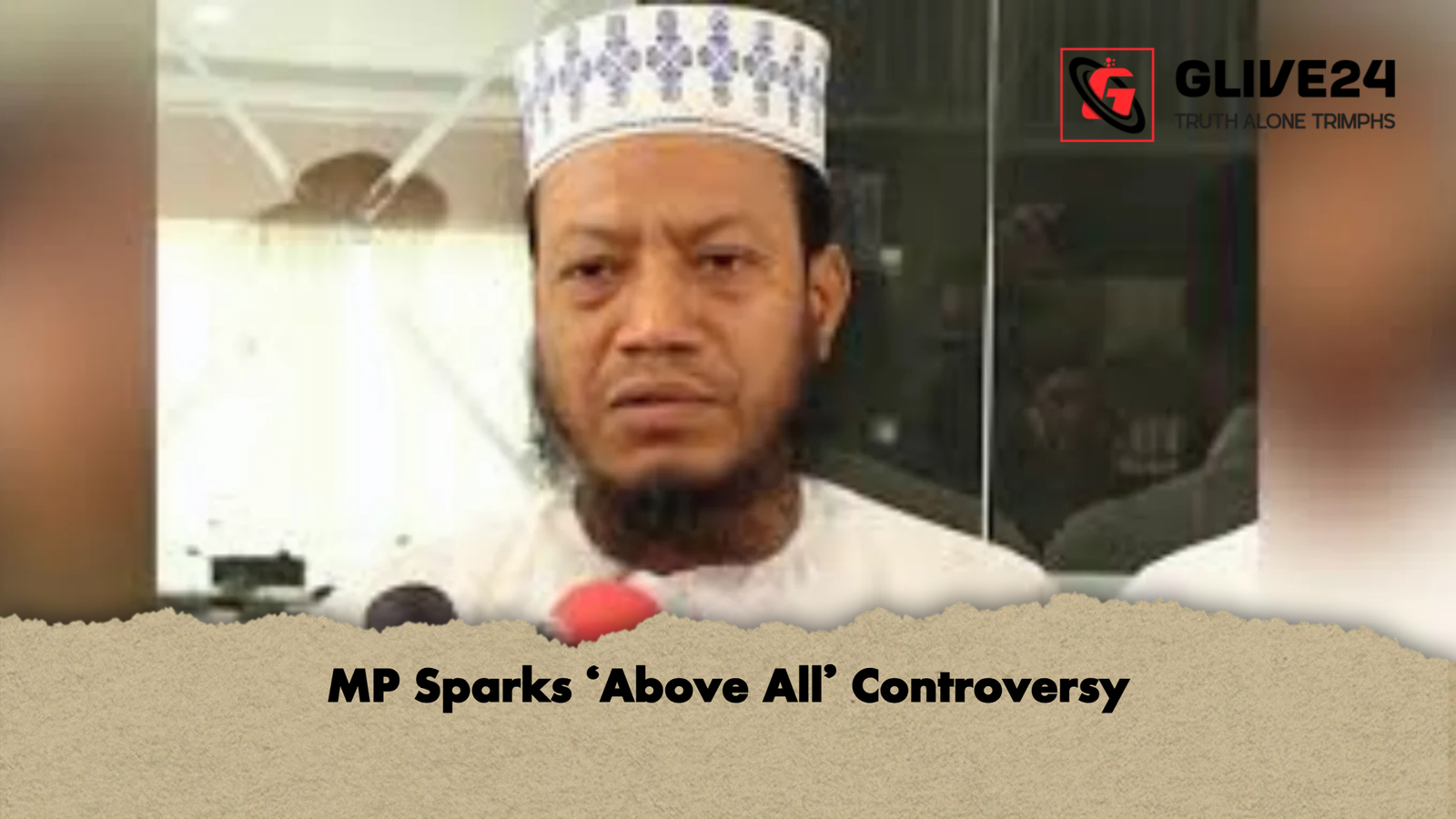
A controversial remark by newly elected Member of Parliament Mufti Amir Hamza of Kushtia-3 has ignited widespread debate across the district, raising questions about political rhetoric, accountability, and governance. Speaking to journalists on Thursday (26 February) after a meeting with officials of Kushtia Medical College, the MP declared, “There is no higher authority in Kushtia now — I am the authority. If anyone attempts wrongdoing, refer them to me.”
The statement, which also included references to financial dealings and personal oversight, has drawn mixed reactions from residents and observers. Critics argue that such language risks undermining institutional governance and the rule of law, while supporters claim the MP was attempting to signal a zero-tolerance stance on corruption and irregularities.
The remarks were made following a formal discussion with administrators at Kushtia Medical College, a key healthcare institution in the region. During the session, Mufti Amir Hamza emphasised the emotional and social importance of the facility, describing it as “a place of deep significance for the people of Kushtia.” He acknowledged that only a limited number of departments are currently operational but hinted at imminent progress.
“Within seven days, you will receive good news,” he stated, suggesting that expansion plans or administrative decisions may soon be announced to improve healthcare delivery.
The meeting was attended by Iqbal Hossain, the district administrator, along with the college principal Dr Shahidul Islam and other senior officials. Discussions reportedly focused on infrastructure constraints, staffing shortages, and the urgent need for modern medical equipment.
At present, Kushtia Medical College operates with limited capacity, which has led many patients to seek advanced treatment in larger cities such as Dhaka or Rajshahi. Local stakeholders have long advocated for the expansion of departments, increased recruitment of specialist doctors, and improved diagnostic facilities.
The current status and anticipated developments of the institution are outlined below:
| Category | Current Situation | Expected Improvements |
|---|---|---|
| Academic Departments | Only a few departments operational | Gradual expansion into specialised disciplines |
| Medical Staff | Shortage of qualified specialists | New recruitment initiatives underway |
| Equipment | Limited access to advanced technology | Planned procurement of modern equipment |
| Patient Services | Basic and restricted services | Expansion towards comprehensive care |
Political analysts note that while strong leadership messaging can resonate with constituents, it must be carefully balanced with respect for democratic norms and institutional frameworks. Statements implying unilateral authority may risk eroding public trust if not clarified or contextualised.
As discussions continue in both political and civic circles, attention now turns to the promised “good news” and whether it will translate into tangible improvements in healthcare services. Equally, the longer-term impact of the MP’s remarks on public perception and administrative culture in Kushtia remains to be seen.