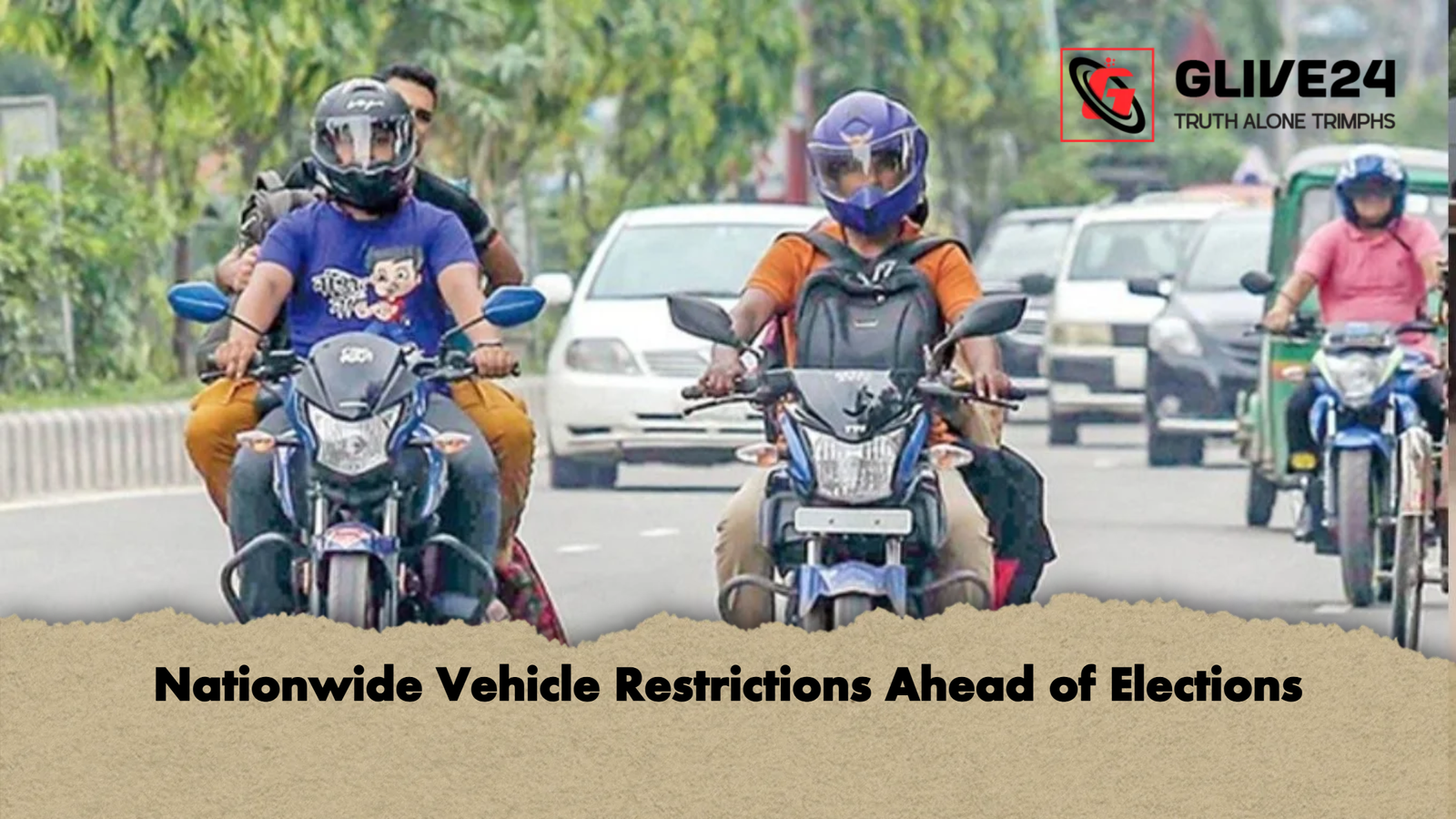
In anticipation of the upcoming 13th National Parliamentary Election and accompanying referendum, the Ministry of Road Transport and Bridges has issued a formal directive imposing special restrictions on vehicular movement across the country. The notification, signed on Sunday by Al-Amin Md. Nurul Islam, Deputy Secretary of the Road Transport and Highways Division, outlines detailed guidelines to regulate traffic during the electoral period.
According to the directive, vehicular movement will be restricted on polling day, 12 February, as well as the surrounding days, to ensure public safety and maintain the integrity and transparency of the election process. The measure is designed to prevent disruptions while allowing essential services to continue uninterrupted.
The key restrictions and exemptions are summarised in the table below:
| Vehicle Type | Restriction Period | Permitted Exceptions |
|---|---|---|
| Taxi, Pickup, Minibus, Truck | 12:00 a.m., 11 Feb – 12:00 a.m., 12 Feb | Movement allowed only for emergency services and election-related duties |
| Motorcycle | 12:00 a.m., 10 Feb – 12:00 a.m., 13 Feb (72 hours) | Permitted only for election duties, emergency services, administrative purposes, and approved observers |
| Air Passengers | Not restricted | Travel permitted upon presentation of passport and ticket |
| Candidates & Agents | Subject to special permission | One small vehicle (jeep, car, or minibus) allowed per candidate/agent |
| Journalists & Observers | With Election Commission or Returning Officer approval | Vehicles or motorcycles may be used |
| Election Officers & Staff | Exempt from restrictions | May use motorcycles and other vehicles freely |
| Telecommunication Companies | Exempt from restrictions | Licensed vehicles may operate for emergency services |
The notification also clarifies that law enforcement personnel, the armed forces, administrative authorities, and authorised observers are exempt from these restrictions. In addition, vehicles transporting medicines, emergency supplies, health services, and newspapers will be permitted to operate.
National highways, ports, and key connecting roads will remain open to minimise disruption to public life and economic activity. District Magistrates and Metropolitan Police Commissioners retain the discretion to tighten or relax restrictions locally, depending on the prevailing circumstances.
Overall, the directive seeks to balance public safety, election transparency, and uninterrupted provision of essential services, ensuring a smooth and secure electoral process nationwide.