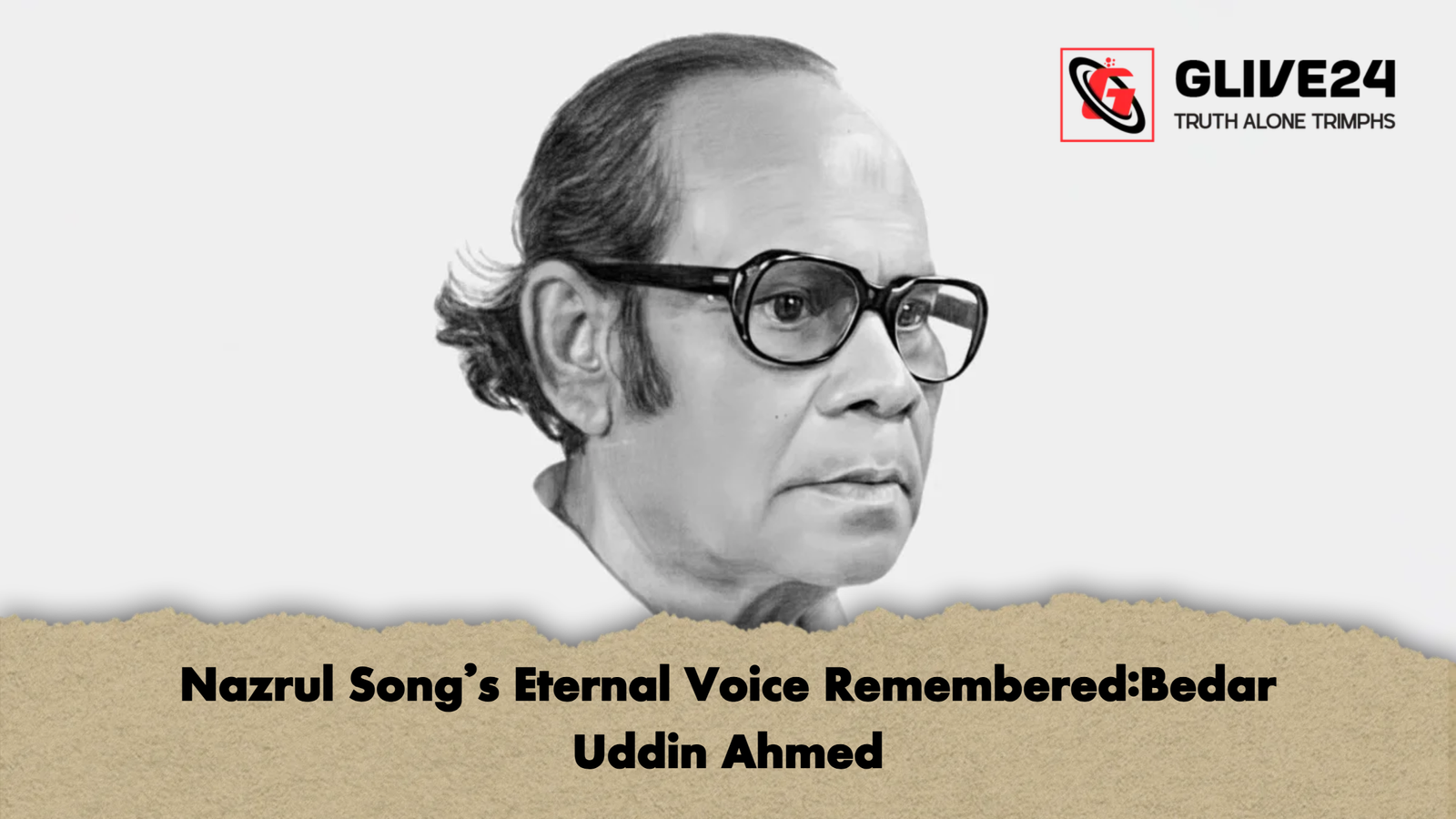
Bedar Uddin Ahmed remains one of the most luminous and enduring figures in the history of Bengali music. A distinguished exponent of Nazrul Sangeet, an acclaimed performer of patriotic and Islamic songs, and a former principal of BAFA (Bangladesh Academy of Fine Arts), his artistic legacy occupies a unique and honoured place in the cultural heritage of Bangladesh. Through his resonant voice, emotional depth and disciplined artistry, Bedar Uddin Ahmed elevated Bengali song into a powerful medium of spiritual reflection, national consciousness and aesthetic excellence.
Born on 15 March 1927 in Sherpur Sadar of Bogura district, Bedar Uddin Ahmed was the son of Mahir Uddin Ahmed and Nekjahan Begum. His childhood was marked by hardship, as he lost his father at an early age and was compelled to shoulder responsibilities far beyond his years. Yet it was within this challenging environment that his artistic sensibility took root. Listening to Islamic devotional songs sung by his mother awakened his early fascination with music, which gradually transformed into a lifelong dedication to vocal practice and cultural service.
His professional journey began in 1942, when he joined the Song Publicity Department. His exceptional vocal quality and refined musical understanding quickly attracted attention. Recordings released by the renowned Columbia and HMV gramophone companies introduced his voice to a wider audience, earning him growing acclaim across Bengal. At the same time, his regular performances on Calcutta Radio established him as a familiar and respected presence in the pre-Partition Bengali music scene.
Following the Partition of India in 1947, Bedar Uddin Ahmed relocated to Dhaka and joined East Pakistan Radio as a staff artist. This period marked a significant expansion of his artistic reach. He became widely recognised as a complementary and successor voice to Abbas Uddin Ahmed, the legendary “Emperor of Bhawaiya,” playing a crucial role in preserving and transmitting that musical tradition to newer generations. During the 1950s, as a newly emerging nation sought cultural renewal, Bedar Uddin Ahmed emerged as a symbol of artistic inspiration. Through concerts and cultural gatherings across the country, his renditions of Nazrul’s songs and patriotic compositions stirred feelings of unity, dignity and national pride.
In recognition of his outstanding contribution to music and culture, he was awarded the Bangla Academy Award in 1974 and the Ekushey Padak in 1980—two of the highest civilian honours in Bangladesh. These accolades formally acknowledged a career devoted not merely to performance, but to cultural awakening and national identity.
Bedar Uddin Ahmed passed away on 13 January 1998. Yet his voice continues to resonate beyond time. His songs still inspire listeners, his ideals continue to guide artists, and his contribution remains deeply embedded in the collective memory of the Bengali people.
Key Facts at a Glance :
| Aspect | Details |
|---|---|
| Full Name | Bedar Uddin Ahmed |
| Date of Birth | 15 March 1927 |
| Place of Birth | Sherpur Sadar, Bogura |
| Musical Genres | Nazrul Sangeet, Patriotic, Islamic Songs |
| Professional Associations | Calcutta Radio, East Pakistan Radio, BAFA |
| Major Awards | Bangla Academy Award (1974), Ekushey Padak (1980) |
| Date of Death | 13 January 1998 |
Through his art and ideals, Bedar Uddin Ahmed remains an undying presence in the soul of Bengali music.