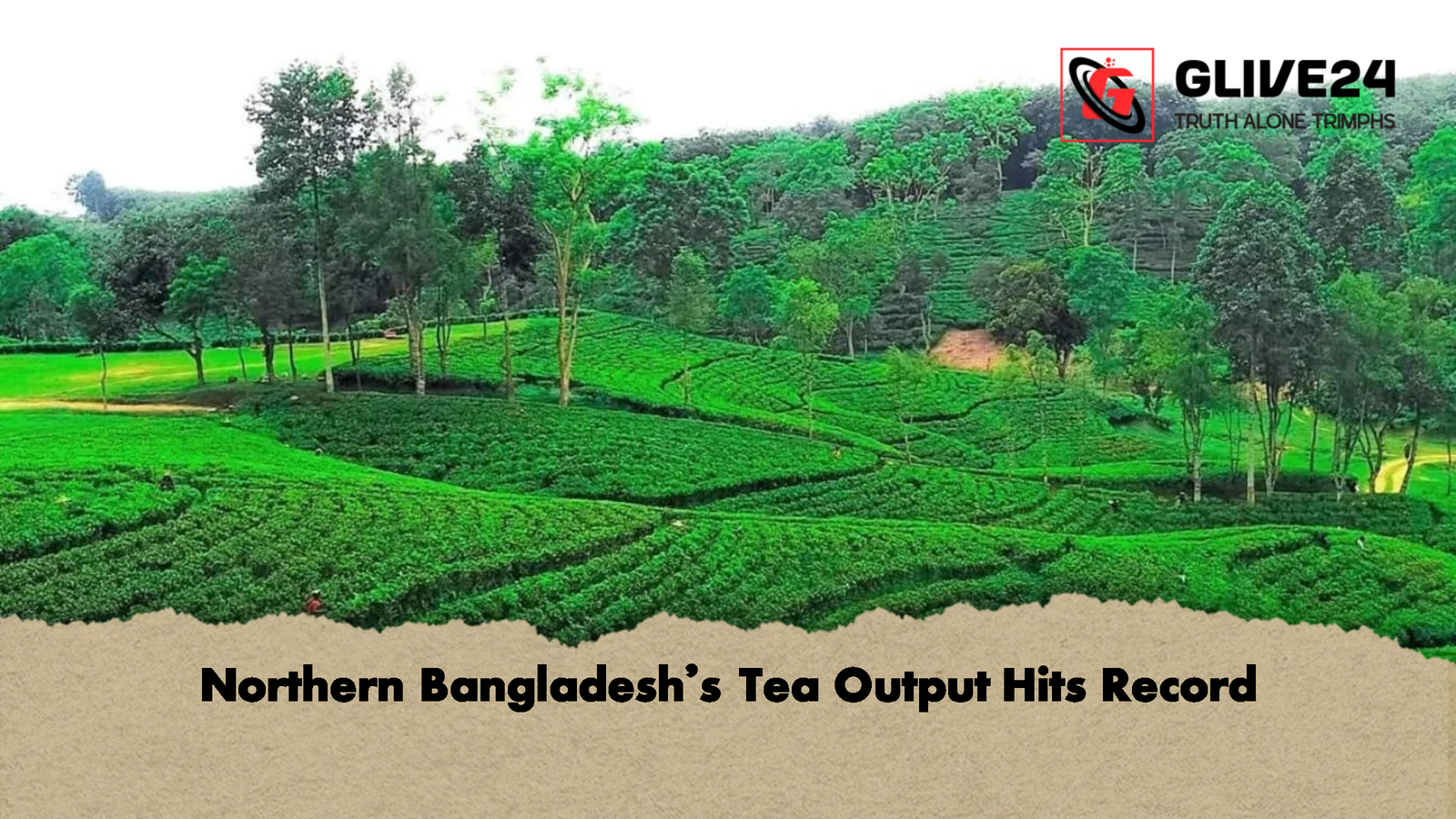
Bangladesh’s northern tea-growing region has achieved a historic milestone, with five districts collectively producing a record volume of tea and strengthening their position within the country’s expanding tea industry. According to the Bangladesh Tea Board, the districts of Panchagarh, Thakurgaon, Dinajpur, Nilphamari and Lalmonirhat now contribute approximately 21 per cent of Bangladesh’s total tea production, highlighting the region’s growing importance in the national agricultural economy.
During the most recent production season, Bangladesh produced nearly 94.9 million kilograms of tea nationwide. Of this total, more than 20 million kilograms originated from the five northern districts, reflecting a steady expansion of tea cultivation beyond the country’s traditional estates in the northeast.
Table of Contents
Record Production in the North
Data released by the Bangladesh Tea Board shows that 20.24 million kilograms of processed tea were produced in these districts during the past year. This output exceeded the government’s production target by 1.52 million kilograms, making it the highest production level since tea cultivation began in the region around 2000.
The previous record was achieved in 2023, when northern districts produced 17.95 million kilograms, representing about 17 per cent of national tea output.
| Indicator | Latest Season | Previous Record (2023) | National Context |
|---|---|---|---|
| Total Bangladesh tea production | 94.9 million kg | — | Nationwide |
| Production from five northern districts | 20.24 million kg | 17.95 million kg | ~21% of national output |
| Government production target | 18.72 million kg | — | Target exceeded |
| Start of tea cultivation in region | Around 2000 | — | Rapid expansion since |
Expanding Cultivation Across Districts
Tea cultivation in northern Bangladesh now spans nearly 11,600 acres, following an increase of more than 73 acres in 2025 compared with the previous year. The majority of this cultivation is concentrated in Panchagarh, which has emerged as the centre of the northern tea industry.
| District | Tea Cultivation Area (Acres) |
|---|---|
| Panchagarh | 9,819.73 |
| Thakurgaon | 1,457 |
| Dinajpur | 130 |
| Nilphamari | 67.92 |
| Lalmonirhat | 124.82 |
The region currently hosts 12 registered and 18 unregistered large tea estates, each exceeding 25 acres. In addition, there are 2,225 registered and 6,146 unregistered small tea gardens, many managed by individual farmers and small agricultural entrepreneurs.
Overcoming Industry Challenges
Despite the recent record output, the northern tea sector has faced several challenges in recent years. In 2023, tea cultivation covered 12,132 acres, but declining prices for raw tea leaves left many farmers struggling financially. As a result, the cultivated area dropped to 11,527 acres in 2024, and some growers even uprooted their tea plants.
Officials investigating the situation found that several factors contributed to rising production costs. Some farmers were applying fertiliser seven to eight times per season, far exceeding the recommended maximum of three applications. This increased input costs without delivering proportional yield improvements.
At the processing stage, inefficiencies were also discovered. Some factories had been skipping the crucial “withering” stage, the initial drying process that reduces moisture in freshly plucked leaves. Without proper withering, machinery had to operate 17–18 hours daily to process the same quantity of tea.
After factories reintroduced the correct withering procedures, processing time fell dramatically to 7–8 hours, significantly reducing electricity costs while also improving the quality of the finished tea.
Rising Prices Restore Farmers’ Confidence
Improved processing standards and better-quality tea have also driven up prices in the auction market. In Panchagarh, the average auction price reached 242 taka per kilogram in 2025, compared with 162 taka per kilogram in 2024.
Prices for raw tea leaves have risen sharply as well. Although the official rate remained 18 taka per kilogram, strong demand enabled farmers to sell their produce for as much as 38 taka per kilogram during the latest season.
The improved profitability has renewed farmers’ interest in tea cultivation. In September 2023, Panchagarh launched Bangladesh’s third tea auction centre, operating through an online platform to support the growing regional industry. To date, 52 tea processing factories have been approved in the area, including 30 located in Panchagarh.
Farmers See New Opportunities
Local farmer Humayun Khaled, from Roiseya village in Atwari upazila of Panchagarh, cultivates tea on 1.5 acres of land. After experiencing losses for three consecutive years, he reported earning around 200,000 taka in profit in the most recent season.
“I had almost lost interest and stopped properly caring for the garden,” he said. “Now that the sector is recovering, I will invest more effort. I hope to earn 400,000 to 500,000 taka annually from this land in the future.”
A Growing Northern Tea Economy
The record output from northern Bangladesh reflects the rapid transformation of the country’s tea sector, as cultivation expands beyond traditional estates into new regions. With improved farming practices, stronger auction prices, and growing processing capacity, the northern tea belt is increasingly becoming a major pillar of Bangladesh’s agricultural economy and rural livelihood developme