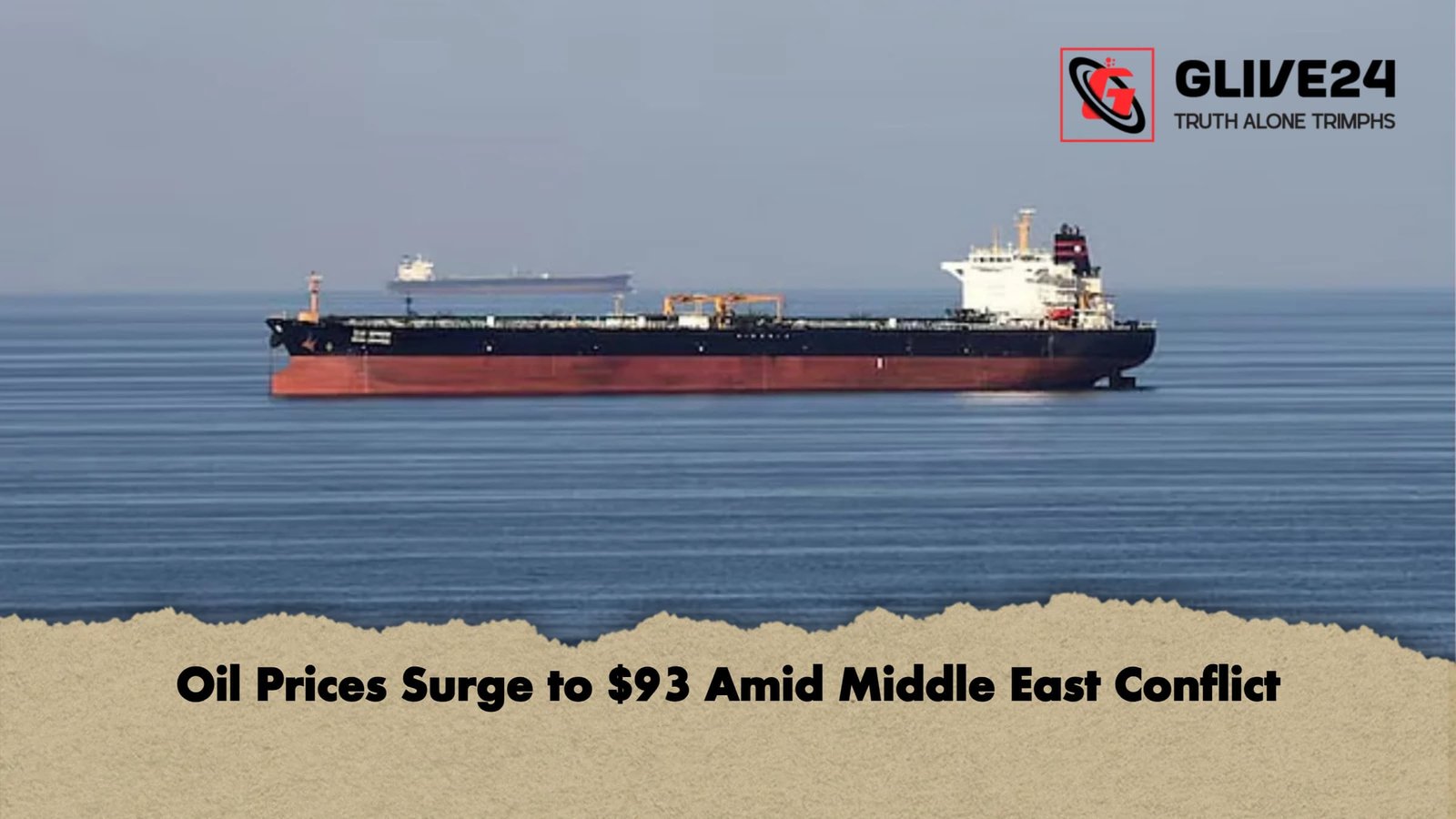
The international energy market is grappling with unprecedented volatility as escalating geopolitical tensions in the Middle East drive crude oil prices to their highest levels since the autumn of 2023. Over the final five trading days of the week, crude benchmarks witnessed a staggering ascent, with some metrics recording their most significant weekly growth since the inception of futures trading in 1983.
Market Reaction and Price Benchmarks
The surge was punctuated on Friday, the final working day of the week, by a dramatic spike in both American and global standards. West Texas Intermediate (WTI), the US crude benchmark, leaped by 12.21% ($9.89) to reach $90.90 per barrel. Simultaneously, the global benchmark, Brent Crude, climbed by over 9% to hit the $93 mark.
The cumulative weekly performance paints a picture of a market in distress. WTI prices rose by a total of 35.63% across the week, while Brent saw an increase of approximately 28%—the sharpest weekly incline since the height of the pandemic disruptions in April 2020.
| Oil Benchmark | Friday Increase | Weekly Growth | Current Price (Per Barrel) |
| Brent Crude | 9.0% + | 28.00% | $93.00 |
| WTI (US) | 12.21% | 35.63% | $90.90 |
Geopolitical Triggers and Supply Disruptions
The primary catalyst for this “black gold” rush is the intensifying friction between Iran, Israel, and the United States. Following US President Donald Trump’s recent demand for Iran’s “unconditional surrender,” fears of a prolonged and devastating regional conflict have intensified.
The strategic Strait of Hormuz, a vital artery through which a significant portion of the world’s oil supply flows, is currently facing near-paralysis. Industry analysts and officials are sounding the alarm regarding the catastrophic potential of a total blockade.
Qatar’s Energy Minister, Saad al-Kaabi, warned the Financial Times that if tanker traffic through the Strait ceases, prices could skyrocket to $150 per barrel within weeks. “This could lead to a collapse of the global economy,” al-Kaabi cautioned, noting that Gulf exporters may soon be forced to declare force majeure and suspend supply contracts.
Production Halts and Economic Fallout
The impact is already being felt on the ground:
Iraq: Officials report a production cut of roughly 1.5 million barrels per day.
Kuwait: Production is being scaled back due to critical storage shortages.
USA: Domestic petrol prices have jumped by 27 cents in a single week, averaging $3.25 per gallon.
Natasha Kaneva, Head of Commodities Strategy at JPMorgan, suggests the market is no longer just pricing in “risk” but is now accounting for “actual physical disruption.” She estimates that if the Strait of Hormuz remains contested, global production could drop by 6 million barrels per day by the end of next week.
As the conflict enters its second week, US Defence Secretary Pete Hegseth maintains a firm stance, stating that the American military effort has “only just begun,” further cementing expectations of a long-term supply crunch.