
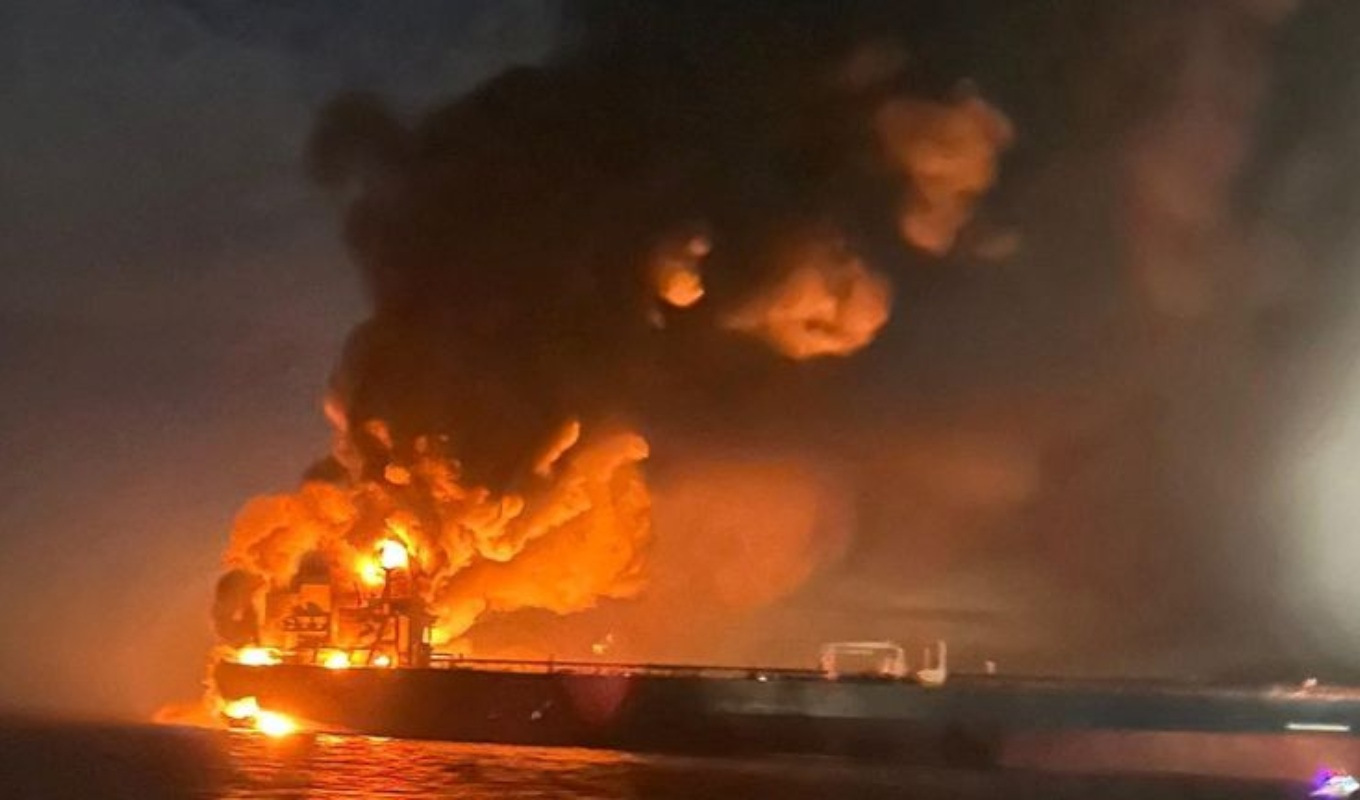
An oil tanker that had departed Russia was hit by four external explosions off the coast of Dakar last week, Turkish shipowner Besiktas and Senegalese port authorities confirmed, while analysts considered whether the attack might be tied to ongoing geopolitical tensions.
The Mersin, a Panamanian-flagged tanker operated by Turkish shipping firm Besiktas and carrying nearly 39,000 tonnes of fuel, was stabilised approximately 10 kilometres (six miles) offshore after the explosions.
The exact cause was still unknown on Tuesday, but experts speaking to AFP suggested a potential Ukrainian role due to the vessel’s Russian links.
Besiktas Shipping stated on Monday that “four external explosions occurred” while the Mersin was anchored on Thursday at around 11:45 pm (local and GMT), resulting in seawater entering the engine room. No injuries or deaths were reported, and the crew brought the situation under control. The company confirmed that no pollution had taken place and the vessel remained stable.
Dakar port authorities confirmed receiving a distress call and evacuating the mostly Turkish crew before deploying emergency resources.
Tracking data from myshiptracking.com showed the ship had departed from Taman, located on the Kerch Strait connecting Russia to Crimea.
Speculation over Ukrainian involvement
Experts noted that the tanker may have been targeted due to its repeated association with Russian oil shipments. The incident follows Turkey’s recent reports of three Russia-linked tankers being attacked in the Black Sea.
A Ukrainian security official told AFP that naval drones were used to strike two tankers on Friday, alleging they had been secretly transporting Russian oil. A third vessel, reportedly carrying “sunflower oil” from Russia to Georgia, was also hit, according to Turkish authorities.
Marine consultant Martin Kelly wrote that the Mersin had repeatedly transported Russian crude and petroleum products, having docked at several Russian ports throughout 2025.
Dirk Siebels of Risk Intelligence suggested the explosions were unlikely accidental, while Igor Delanoe of the Franco-Russian Observatory cautioned that Ukrainian responsibility was not certain, noting that such an attack in this region would be unprecedented.
The Mersin is not subject to UN or EU sanctions, though two other Besiktas-owned ships are sanctioned by Ukraine.
Risk of pollution
Similar incidents involving Russian-affiliated vessels have occurred recently without any direct claim of responsibility. The sinking of the Russian cargo ship Ursa Major in the Mediterranean a year earlier was labelled a “terrorist attack” by its Russian Ministry of Defence-owned operator, though no evidence was presented.
Dakar, located along major Atlantic shipping corridors, responded promptly by securing the site and deploying anti-pollution measures. Pollution remains possible but may be prevented if current efforts succeed, according to Ibrahima Diaw, senior commander at the Port of Dakar.
Glive24/SS