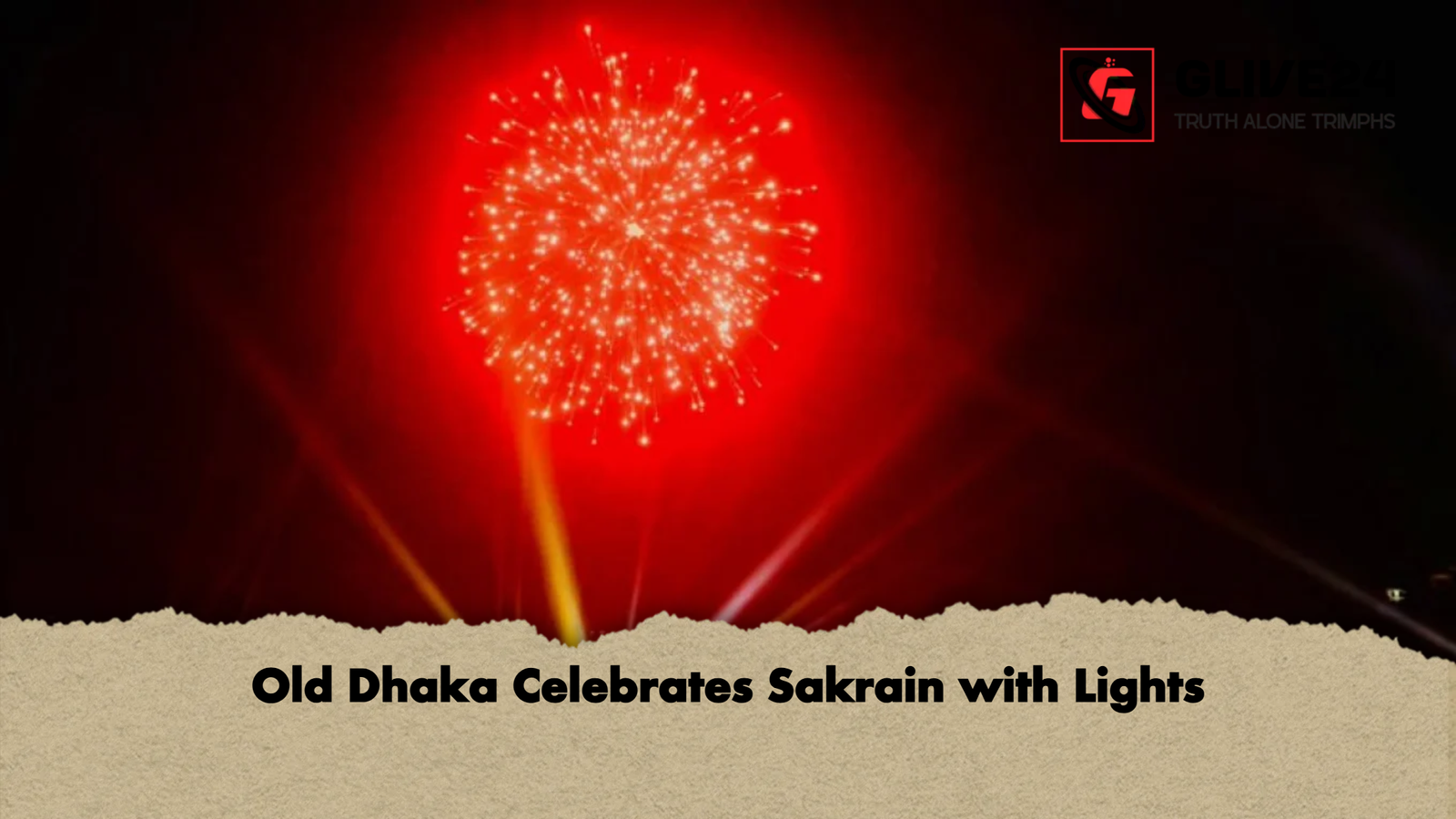
Old Dhaka has once again been transformed into a vibrant tapestry of colour, sound and tradition as residents celebrate Sakrain, the historic festival marking Poush Sankranti. From the narrow lanes to the rooftops of centuries-old houses, the area has come alive with kite-flying, festive lighting and communal gatherings, reaffirming Sakrain’s place as a defining symbol of Old Dhaka’s cultural heritage.
Observed annually on the final day of the Bengali month of Poush, Sakrain is deeply rooted in the social life of the old city. Throughout the day, people of all ages gather on rooftops to fly kites, engaging in friendly yet competitive contests that often last until sunset. As evening falls, the skyline along the Buriganga River is illuminated by fireworks and colourful paper lanterns, creating a striking contrast against the winter sky. Festivities frequently continue late into the night with music, informal performances and rooftop gatherings.
Preparations for Sakrain begin days in advance. In areas under Kotwali police station—including Shankharibazar, Lakshmibazar, Nayabazar, Tantibazar, Gandaria, Dhupkhola and Sutrapur—shops have reported brisk sales of kites, spools and string. Rooftops have been decorated with lights, while loudspeakers playing music have added to the festive atmosphere. However, the excessive use of high-volume sound systems has drawn criticism from some residents, who argue that noise pollution is undermining the spirit of the festival.
Kotwali Police Station Officer-in-Charge Moniruzzaman said that the Dhaka Metropolitan Police had issued clear instructions to prevent disturbances. He noted that playing loud music throughout the night was prohibited and that law enforcement teams remained vigilant to ensure public safety and prevent accidents during the celebrations.
Local traders say the festival is economically significant. Kite seller Jagadish from Shankharibazar reported better sales than last year, while another trader in Lakshmibazar said a substantial portion of annual sales occurs during the Sakrain period. Demand this year has been particularly strong for large, brightly coloured kites and manja string, prized for kite-cutting competitions.
The table below highlights key aspects of Sakrain-related trade and activities in Old Dhaka:
| Area | Main Items Sold | Notable Trend |
|---|---|---|
| Shankharibazar | Kites | Higher sales than last year |
| Lakshmibazar | Kites | Peak annual sales during Sakrain |
| Nayabazar | Spools, string | Strong demand for manja |
| Gandaria | Kites | Purchases driven by children |
| Tantibazar | Kites | Youth-led rooftop competitions |
Residents, including students and families, describe Sakrain as an emotional and cultural anchor. Many emphasise that the festival offers children a joyful alternative to screen-based entertainment while strengthening community bonds.
Derived from the Sanskrit word Sankranti, which evolved locally into “Sakrain,” the festival is traditionally observed over one or two days due to variations in the Bengali calendar. Although rooted in Hindu tradition, Sakrain has long been embraced by people of all backgrounds in Old Dhaka, standing as a shared celebration of heritage, unity and seasonal change.