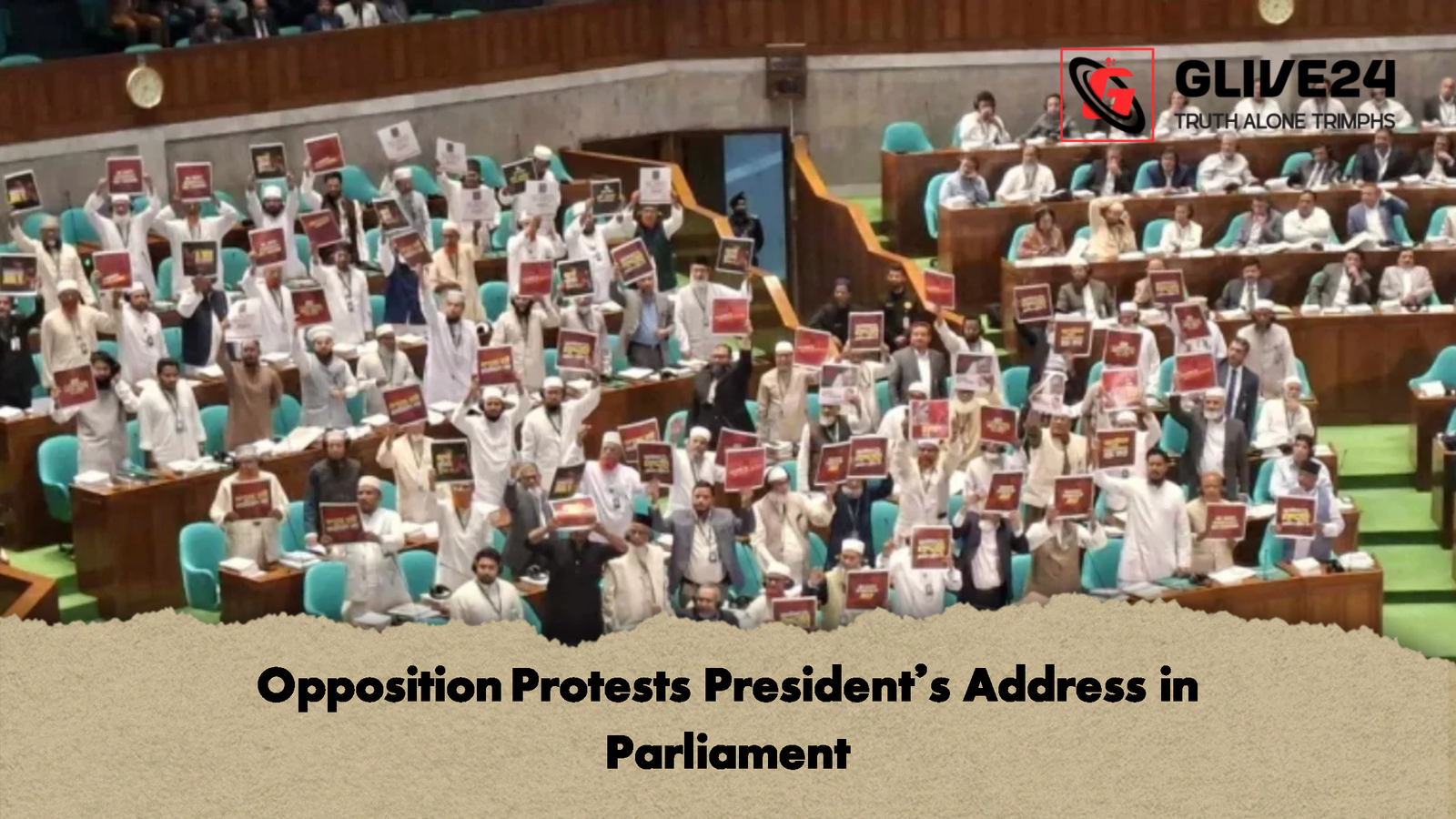
A highly unusual incident occurred in the Bangladesh National Parliament on Thursday, 12 March 2026, when President Md. Sahabuddin entered the chamber to deliver his scheduled address. Opposition MPs, predominantly from Jamaat-e-Islami and the National Citizens Party (NCP), staged an immediate protest, holding placards emblazoned with the slogan “July-er Gaddar” (July Traitor), signalling their strong objection to the President.
Incident Overview
The disruption took place shortly after the parliamentary session began in the afternoon. As the President approached the dais, opposition MPs stood and raised placards while vocally demonstrating their dissent. The protest continued even as the President began speaking, with some members eventually staging a walkout in a coordinated display of defiance.
| Aspect | Details |
|---|---|
| Date | 12 March 2026 |
| Occasion | Parliamentary session, 13th National Parliament |
| President | Md. Sahabuddin |
| Opposition Parties | Jamaat-e-Islami, National Citizens Party (NCP) |
| Nature of Protest | Standing demonstration, placards reading “July-er Gaddar”, walkout during speech |
| Time of Incident | Afternoon session, immediately upon President’s entry |
| Impact | Interrupted address, visible parliamentary disruption |
Context and Reactions
Observers highlighted that direct opposition to a sitting President during an official address is extremely rare in Bangladesh. The slogan “July-er Gaddar” references criticism of events linked to the previous Awami League government, reflecting longstanding political grievances.
Despite the disruption, the President continued his address from the dais, though the incident underscored the growing tensions between the ruling party and opposition factions. Parliamentary sources confirmed that security personnel and protocol officers remained on high alert to maintain order, though proceedings were momentarily interrupted.
Analysts noted that the walkout and placard display symbolise the intense political polarisation in the legislature, and may foreshadow heated debates and confrontations in future sessions, especially on governance, historical accountability, and national policy matters.
Parliamentary Norms and Significance
Bangladesh’s parliamentary rules allow for maintaining decorum, yet this incident illustrates the delicate balance between freedom of expression and procedural discipline. The President’s speech is constitutionally important, marking the formal opening of the legislative year and outlining national priorities.
Security and parliamentary officials are expected to review the protest and recommend measures to prevent similar interruptions in future sessions, ensuring that official addresses proceed smoothly while respecting MPs’ rights to dissent.
The event has attracted both national and international attention, highlighting the volatile intersection of politics and parliamentary protocol in Bangladesh and raising questions about how opposition voices are expressed within formal legislative settings.