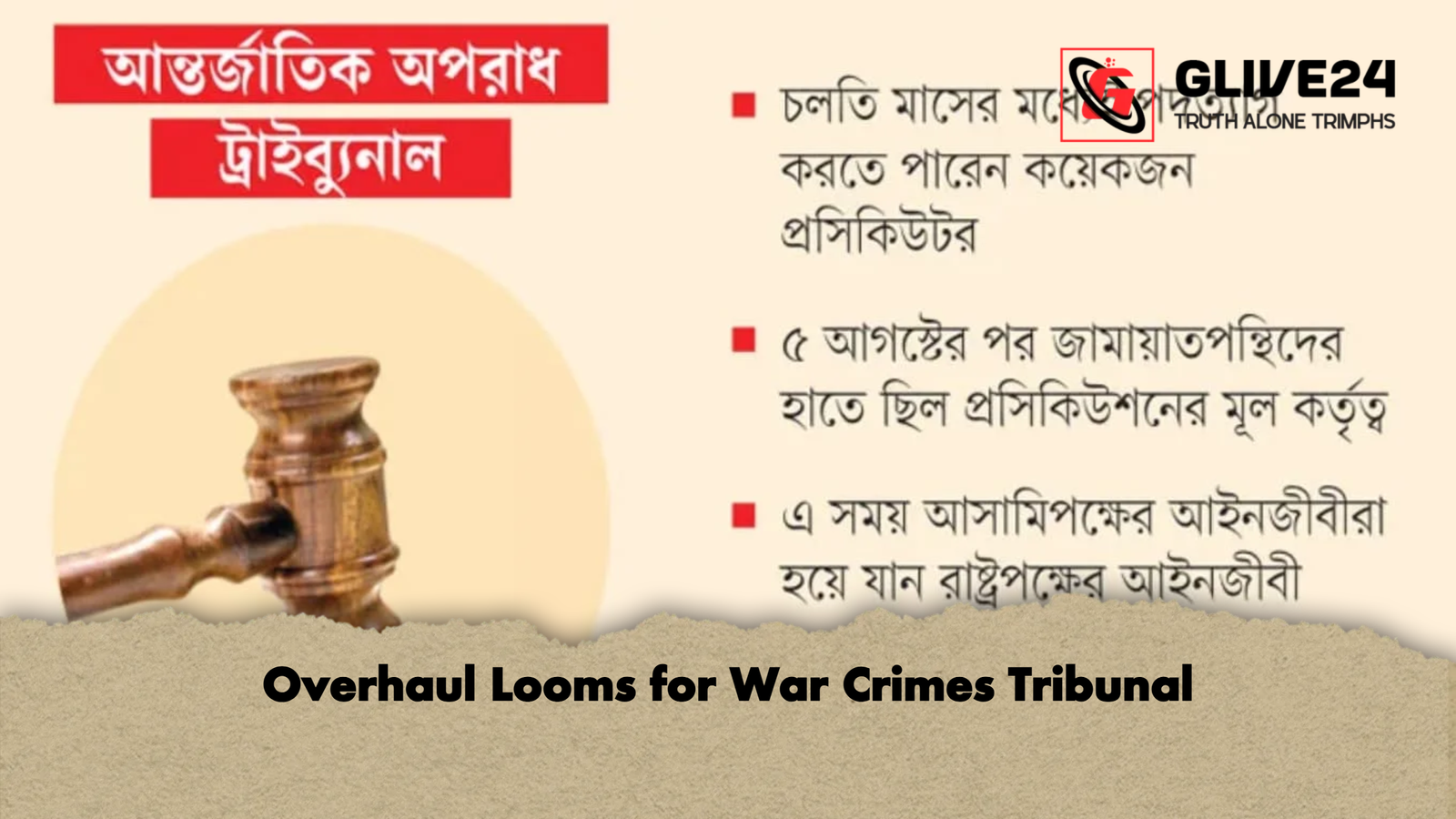
Bangladesh’s International Crimes Tribunal (ICT) is poised for a significant institutional overhaul, as the government moves to restructure both its prosecution and investigative wings in an effort to ensure greater transparency, efficiency, and credibility in the adjudication of alleged crimes against humanity linked to the July 2024 uprising.
Officials familiar with the process indicate that the reforms are being spearheaded by the newly appointed Chief Prosecutor, Aminul Islam. The initiative aims to revitalise the tribunal’s operations and address allegations of procedural irregularities and professional misconduct within the prosecution service.
Table of Contents
Potential Changes in Prosecution
At present, two ICT benches are hearing 21 cases connected to the violent events of July 2024, including allegations of murder, torture, and other crimes against humanity. Sources within the tribunal suggest that several controversial prosecutors may resign or be quietly removed from their posts within the month.
The previous Chief Prosecutor, Mohammad Tajul Islam, along with a number of other prosecutors, has faced accusations ranging from breaches of professional ethics to disciplinary violations. Authorities are reportedly considering the formation of a special investigation team to examine these complaints.
In addition, the new leadership plans to re-examine the case files and verdicts in three high-profile rulings delivered during the tenure of the interim administration. Among them is a verdict sentencing former Prime Minister Sheikh Hasina and her former Home Minister Asaduzzaman Khan Kamal to death in a controversial case.
Chief Prosecutor Aminul Islam has stated that the tribunal will review whether there were significant investigative flaws, procedural lapses, or legal inconsistencies in those rulings. Should irregularities be identified, appropriate legal steps may follow.
Concerns Over Case Selection
Legal experts have also raised questions about how many of the current cases were initiated. According to sources within the prosecution, a large number of the 21 ongoing cases were filed based on verbal instructions from officials during the interim government period. In some instances, decisions regarding who would be named as defendants were allegedly made in informal meetings held at a private university office.
The new prosecution team intends to investigate these allegations and determine whether the accused were selected in accordance with proper legal procedures.
At the same time, the tribunal’s leadership will examine the legality and constitutional validity of four ordinances introduced during the interim administration. These measures reportedly included provisions related to banning political parties and allowing the prosecution of military personnel under the tribunal’s jurisdiction.
Current Status of ICT Cases
The present caseload of the tribunal reflects the scale and complexity of the ongoing proceedings.
| Category | Number |
|---|---|
| Ongoing cases | 21 |
| Total accused individuals | 457 |
| Fugitives | 283 |
| Defendants in custody | 164 |
| Cases under investigation | 34 |
| Cases formally charged (as of 9 February) | 24 |
| Verdicts delivered | 3 |
One of the pending cases concerns the killing of Abu Sayeed in Rangpur, for which a verdict is expected on 9 April.
Historical Background of the Tribunal
The ICT has a long and complex history. The tribunal was first established in 1973 under the government of Sheikh Mujibur Rahman following the country’s 1971 War of Independence. Its purpose was to prosecute members of the Pakistani military and their local collaborators, including the Razakar, Al-Badr, and Al-Shams militias, accused of committing atrocities during the conflict.
However, after the political upheaval of 15 August 1975, the process stalled for decades.
The tribunal was revived in 2010 under legislation amended by the government of the Awami League. A second tribunal was formed in 2012 as the number of cases increased. Over the following years, the courts delivered verdicts in 66 cases involving individuals linked to various political organisations.
Political Transition and Controversy
The tribunal’s role expanded again following the political transition of 5 August 2024. During the interim government period, the ICT was reconstituted and a new prosecutorial leadership installed.
However, the recent removal of Tajul Islam and the appointment of Aminul Islam on 23 February have raised fresh questions about whether the tribunal can operate free from political controversy. Allegations have surfaced that sensitive information was leaked from the prosecution office, further undermining confidence within the institution.
Senior Supreme Court lawyer Sara Hossain has criticised aspects of the previous process, stating that many individuals had remained in detention for up to 17 months without trial.
According to her, the change in prosecutorial leadership may offer an opportunity to restore fairness and reduce the perception of politically motivated prosecutions.
For his part, Chief Prosecutor Aminul Islam has pledged to bring order and legal discipline to the tribunal’s proceedings, emphasising that future decisions will be guided strictly by the rule of law and judicial propriety.