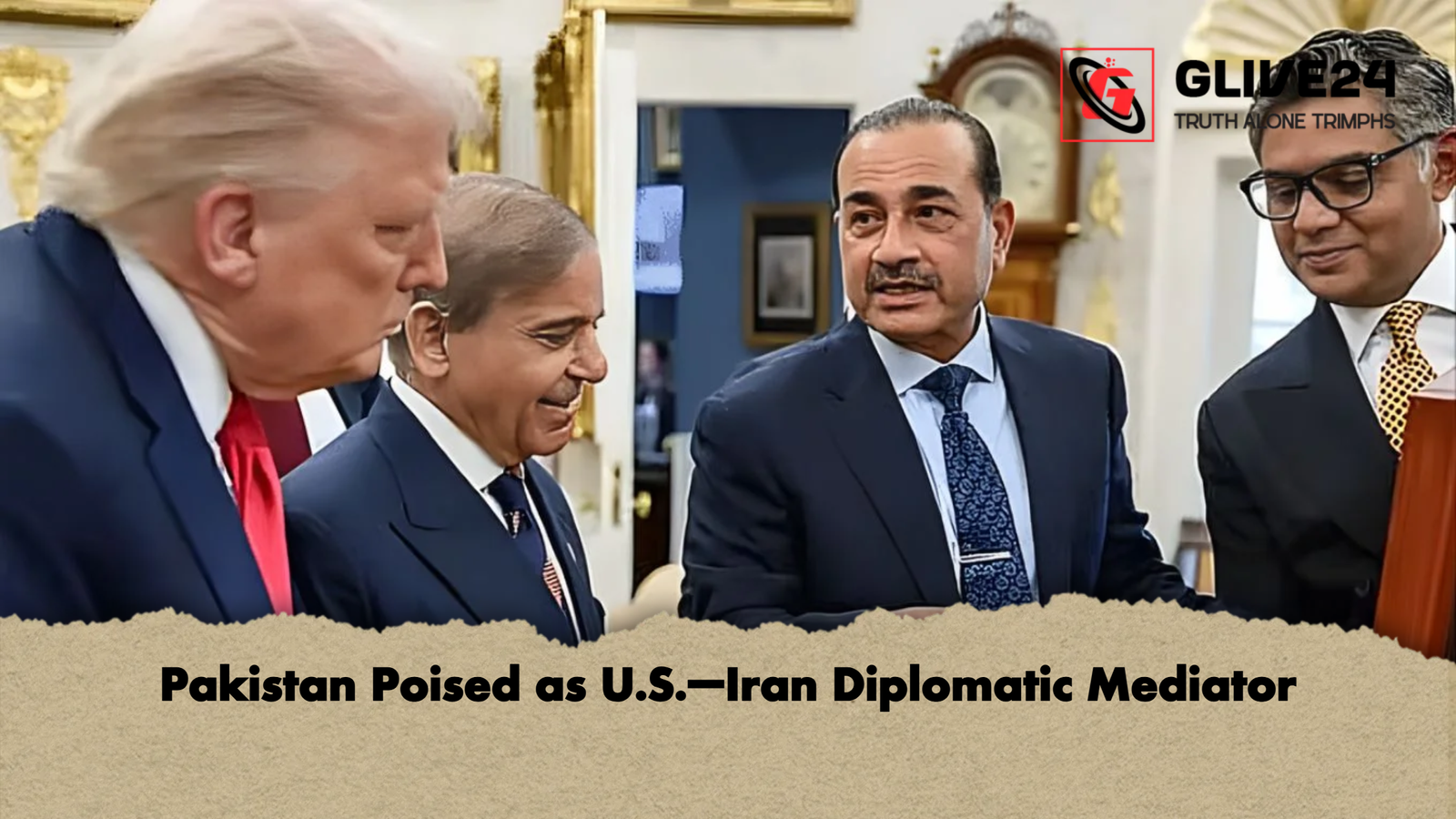
Tensions between Iran and the United States have now entered their fourth consecutive week, with both military posturing and diplomatic efforts intensifying. In this context, Pakistan has emerged as a potential mediator, offering a platform for dialogue between Tehran and Washington. According to international media reports and diplomatic sources, Islamabad has proposed hosting high-level meetings between officials of both nations within its capital.
Analysts suggest that Pakistan’s initiative may carry the tacit backing of Saudi Arabia. Valley Nasr, a Washington-based researcher, observed, “Islamabad would not undertake such a major step without Riyadh’s consent.” Neither Washington nor Tehran has officially confirmed Pakistan’s role, but diplomatic circles increasingly regard Islamabad as a natural intermediary.
Michael Kugelman, an expert on South Asian affairs, notes, “Over the past year, Pakistan and Iran have conducted several high-level discussions. Additionally, Pakistan represents Iranian diplomatic interests in the United States. This makes Islamabad a logical choice for mediation.”
Like other countries in West Asia, Pakistan is playing a critical role in facilitating communication between Tehran and Washington to reduce the risk of escalation. Turkey and Egypt are also participating in these efforts. For Pakistan and Turkey in particular, stability along Iran-adjacent border regions is vital, given the direct security and economic implications.
Egypt’s role is likewise significant. Leveraging its direct channels with Israel, Cairo can relay messages between Tehran and Washington. Diplomatic observers highlight that direct discussions remain politically sensitive for both sides, creating a gap that Pakistan has now moved to fill.
The close ties between Pakistan and the United States further ease Islamabad’s diplomatic manoeuvres. Earlier this year, Pakistan nominated former President Donald Trump for the Nobel Peace Prize in recognition of his mediation efforts during the Iran–India tensions. Additionally, in June and September of last year, Pakistan’s Chief of Army Staff, General Asim Munir, and Prime Minister Shahbaz Sharif undertook official visits to the United States at Trump’s invitation.
Key Facts on Pakistan’s Mediation Efforts
| Issue | Details |
|---|---|
| Proposed Mediation Venue | Islamabad, Pakistan |
| Likely Supporter | Saudi Arabia |
| Other Intermediary Countries | Turkey, Egypt |
| Pakistan–U.S. Relations | Close; represents Iranian diplomatic interests in the U.S. |
| Previous Initiatives | Nominated Trump for Nobel Peace Prize; high-level official visits |
Diplomatic analysts argue that Islamabad’s personal relationships and trust networks, particularly at the level of the military chief and prime minister, position Pakistan at the centre of this emerging diplomatic effort. Observers suggest that Pakistan could play a pivotal role in mediating between Tehran and Washington, offering a neutral platform for dialogue.
In doing so, Pakistan is establishing itself as a strategically significant actor in South Asian diplomacy, where third-party mediation has become essential to facilitate ceasefires and negotiations amid escalating regional tensions.