
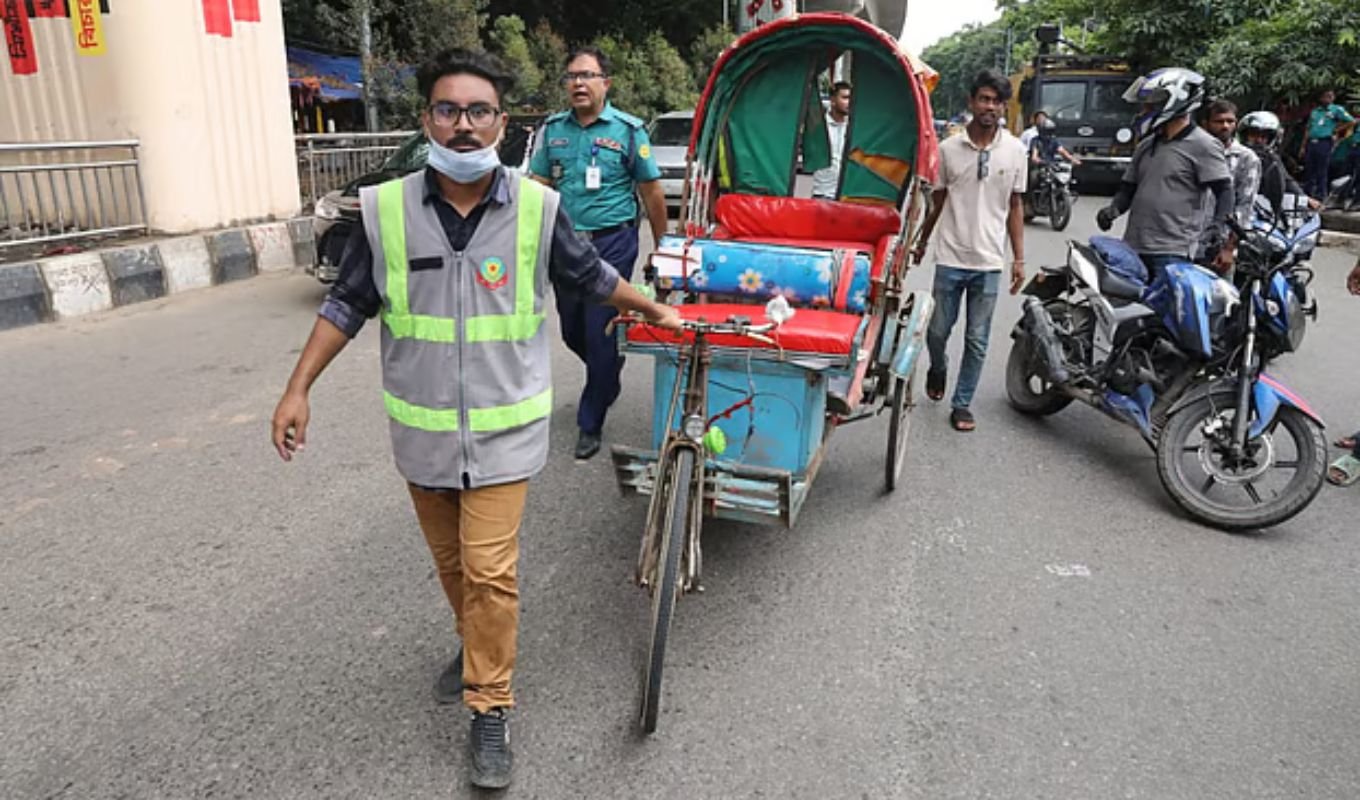
At half past five in the evening, two young traffic assistants are seen running to stop an auto-rickshaw at Karwan Bazar in the capital, with vehicles approaching from the opposite direction. Alongside them is a traffic police officer, attempting to restore some order on Dhaka’s chaotic roads. Following political changes on 5 August 2024, the city’s traffic system experienced instability. At that time, students volunteered to manage traffic. Later, the interim government and Dhaka Metropolitan Police (DMP) jointly appointed students as part-time traffic assistants.
Students receive 500 taka for four hours of duty per day, but salaries are often delayed beyond the 7th of each month, with many not paid in June and July. Muhammad Mian, a student at Sonargaon University, said, “Managing Dhaka’s traffic is difficult. Every second requires vigilance. We don’t just enforce the law, we also bridge the gap between police and the public. Controlling auto-rickshaws is the most challenging task.”
Before starting their duties, students undergo one week of training and receive a vest, though ID cards have not yet been issued. Many students participate hoping to gain experience certificates for future employment. Irregular salaries, lack of security, and absence of respect have led to frustration among them.
Traffic management is physically exhausting and risky. Exposure to congestion, sunlight, dust, and heat causes strain. A student on duty at Shahbagh stated, “Initially, people applauded our efforts, but now that respect is gone, and the dangers have increased.” Female traffic assistants face even greater difficulties. Anisha said, “Some view us dismissively. However, female participation adds humanity to traffic management.”
Four-hour shifts often extend, affecting study, rest, and personal time. Dust, smoke, and noise pollution cause allergies, back pain, and mental stress. Former assistant Abid Hasan said, “There were no problems initially. After a month, dust allergies and headaches began, and I could not focus on studies, so I left the job.”
Currently, around 870 students work as traffic assistants in Dhaka. DMP Joint Commissioner (Traffic) Md. Anishur Rahman stated, “Traffic assistants support our work. Despite some issues, we are working to resolve ID card and salary problems promptly.”
Experts suggest that part-time employment within universities or colleges would allow students to work safely. Professor Masud Imran of Jahangirnagar University said, “Opportunities as research assistants, teaching assistants, in libraries, or IT roles would give students both financial benefits and practical experience.”
GLIVE/TSN