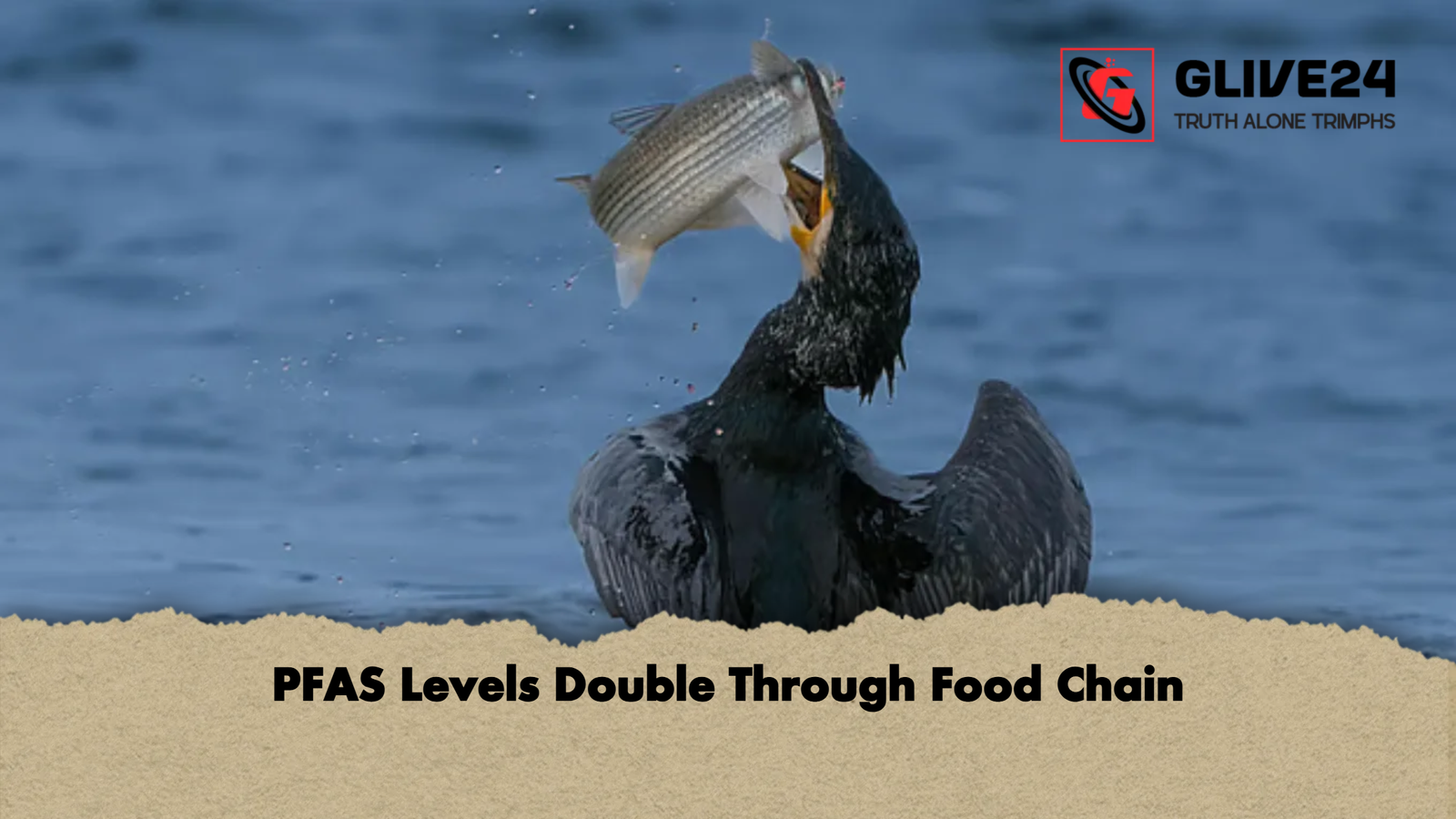
Chemical pollution often exerts harmful effects that cannot be detected by sight or smell alone. Certain pollutants intensify over time once released into the environment. A recent study published in Nature Communications by researchers at the University of New South Wales, Sydney, has revealed that “forever chemicals” or PFAS (per- and polyfluoroalkyl substances) accumulate progressively at every stage of the food chain. When one organism consumes another, the chemical concentration almost doubles.
PFAS are widely used in everyday products, from cooking utensils and non-stick pans to food packaging and fire-resistant foams. According to lead researcher Lorenzo Ricolfi, the chemical concentration doubles on average at each higher trophic level. Industrial waste and sewage systems first release PFAS into rivers, lakes, and oceans, where plankton and algae absorb it. Small fish feeding on this plankton incorporate PFAS into their bodies, which then transfers to larger fish when they consume multiple small fish. PFAS are persistent chemicals that do not easily degrade or leave the body, causing cumulative effects.
Top predators in the food chain, including large fish, seabirds, and marine mammals, accumulate dangerously high levels. Ricolfi warns that even in areas with low environmental contamination, apex predators experience abnormal PFAS exposure. Humans are not exempt, as consumption of seafood and other animal products directly exposes people to these hazardous chemicals.
The research team analysed 64 international studies covering 119 distinct food chains and 72 PFAS compounds. Both aquatic and terrestrial ecosystems exhibited similar patterns, with top-tier predators displaying high PFAS concentrations even in minimally polluted regions.
| Food Chain Level | Example Organisms | PFAS Concentration Increase |
|---|---|---|
| Primary Producers | Algae, Plankton | 1× (baseline) |
| First-Level Consumers | Small Fish | 2× |
| Second-Level Predators | Large Fish, Seabirds | 4× |
| Apex Predators | Marine Mammals, Humans | 8× or higher |
The researchers emphasise the urgent need for strict international regulations. Ricolfi notes, “It is not enough to study the chemical’s toxicity alone; monitoring how PFAS magnifies through the food chain is equally critical.” Global action is required to prevent widespread exposure and safeguard both human health and wildlife.