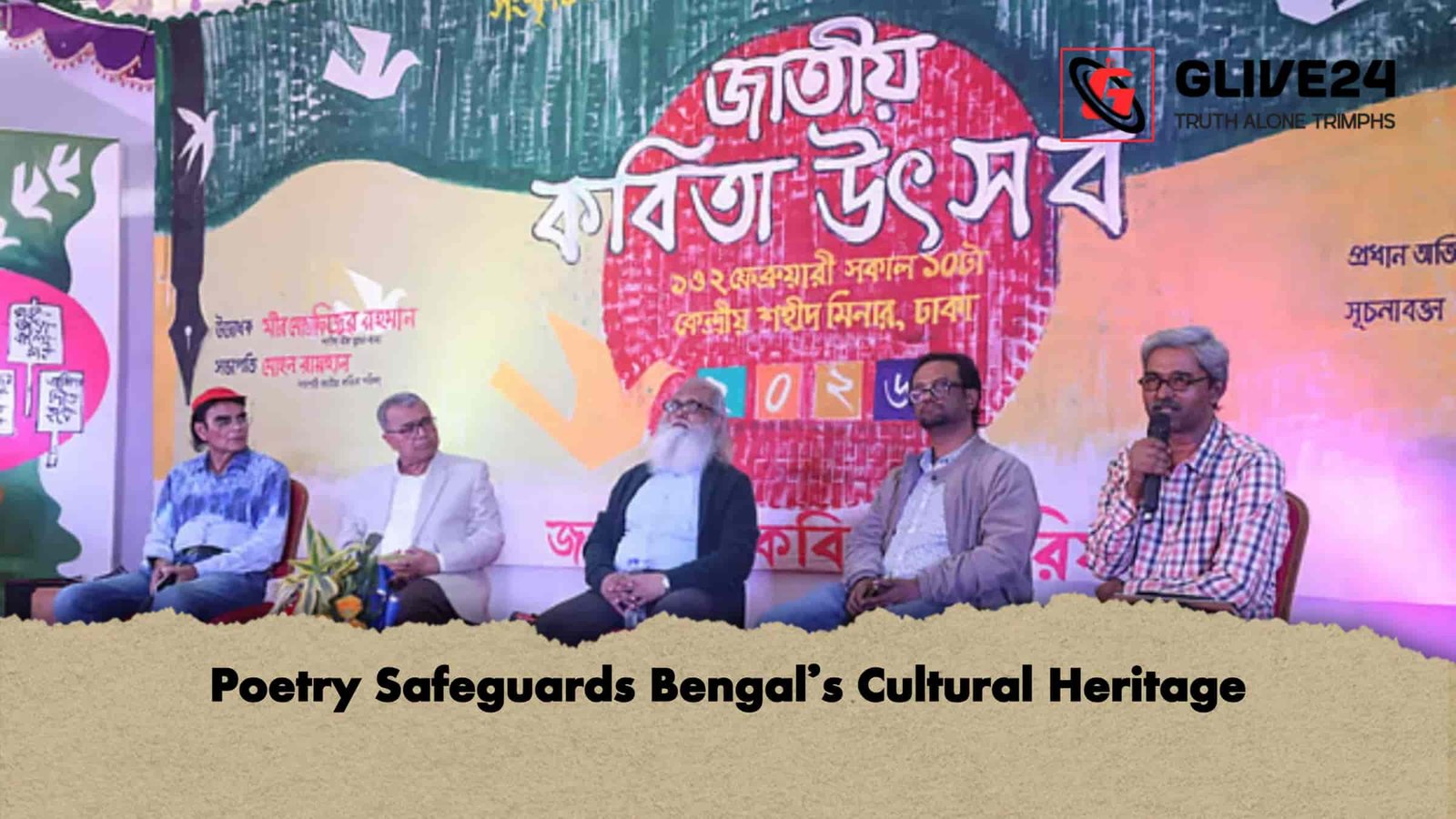
The 38th National Poetry Festival concluded on Monday with a vibrant closing ceremony at the Central Shaheed Minar, celebrating the timeless flow of Bengal’s cultural heritage. Spanning two days, the festival showcased poetry recitations, seminars, music, and dance performances, reflecting unwavering devotion to the nation’s cultural identity while calling for its preservation amidst contemporary challenges.
Organised by the National Poetry Council, this year’s festival commenced on Sunday, 1 February 2026, under the banner “Poetry Will Resist Anti-Cultural Forces.” Poets from across the country transformed the Shaheed Minar into a focal point of artistic expression and cultural engagement.
The final day opened with a youth music performance led by Sunil Das and his ensemble, setting a lively tone for the proceedings. Before the afternoon break, registered poets presented their works in three sessions, chaired respectively by Golam Shafiq, Manzur Rahman, and Abu Said Khan. Each session highlighted the diversity and depth of contemporary Bengali poetry, with participants drawing inspiration from social, political, and personal narratives.
Following the sessions, a seminar titled “From ’71 to ’24: The Role of Poetry in People’s Movements” delved into the profound link between language and poetry. The keynote speaker, Professor Selimullah Khan, a prominent media and social scientist, emphasised, “Poetry is not merely rhythm; it is the articulation of thought and emotion.” Expressing concern over the diminishing use of Bengali in courts, offices, and commercial establishments, he urged renewed commitment to language preservation.
Presiding over the seminar, Professor Faizul Latif Chowdhury remarked, “Poetry encapsulates the present era. Poets articulate contemporary experiences in verse, ensuring relevance across generations.” Distinguished attendees included Professor Mohammad Azam, Director General of the Bangla Academy, and poet-director Sokhawat Tipu of the National Book Centre. The session was chaired by the President of the National Poetry Council, poet Mohon Raihan.
The festival’s concluding ceremony, overseen by Harshit Bala, featured an impressive blend of poetry readings, musical renditions, recitations, and dance performances, culminating in a celebration of Bengali literary and cultural spirit.
Key details of the festival are summarised below:
| Organiser | Duration | Venue | Main Slogan | Keynote Speaker | Chairpersons | Special Programmes |
|---|---|---|---|---|---|---|
| National Poetry Council | 1–2 February 2026 | Central Shaheed Minar | Poetry Will Resist Anti-Cultural Forces | Professor Selimullah Khan | Prof. Faizul Latif Chowdhury, Harshit Bala | Poetry readings, seminar, music, dance |
The festival sent a powerful message to poets and cultural enthusiasts alike: the enduring strength of poetry can safeguard Bengal’s heritage against any challenge, ensuring that the language and culture continue to thrive for generations to come.