
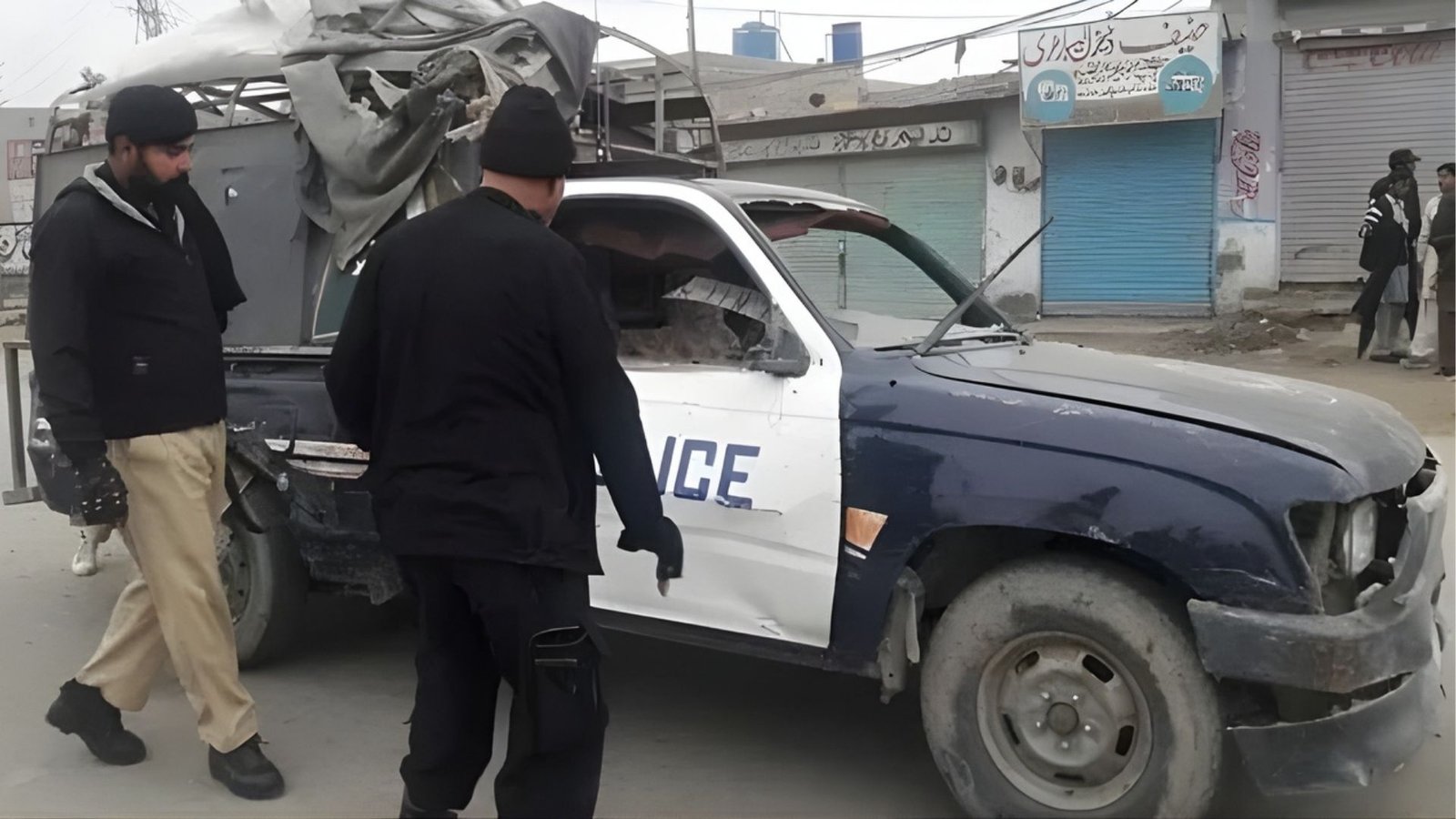
Three police personnel, including an Assistant Sub-Inspector (ASI), have been killed in a targeted bomb attack in Pakistan’s troubled Khyber Pakhtunkhwa province. The attack, which took place on Wednesday (3 December), is the latest in a series of violent incidents that have shaken the region over the past week, signalling a renewed wave of terrorist activity.
According to officials, militants planted an improvised explosive device (IED) along a road frequently used by police patrols. When the targeted police vehicle neared the spot, the device detonated with force. Moments later, the attackers opened fire on the disoriented officers, killing three of them before fleeing the scene. Initial reports indicate significant damage to the police vehicle and suggest that the perpetrators had monitored the movement of the patrol beforehand.
This attack follows two separate incidents earlier in the week. In Bannu district, unknown assailants shot and killed two police officers. Additionally, four people—including Assistant Commissioner Shah Waliullah—were killed in North Waziristan in an attack that authorities believe was orchestrated by militant groups operating near the Afghan border. The latest bombing underscores the deteriorating security situation in the region.
The country’s top leadership, including Prime Minister Shehbaz Sharif, Interior Minister Mohsin Naqvi and regional Governor Faisal Kundi, condemned the attack in strong terms. They pledged to pursue those responsible and to strengthen counter-terrorism efforts across the province. Officials insisted that the state would not succumb to the fear tactics deployed by extremist organisations.
The rise in violence is widely attributed to the shifting regional landscape following the Taliban’s return to power in Afghanistan in 2021. Security officials say militant groups—particularly those with ideological or organisational ties to factions across the border—have become more active in Pakistan’s frontier provinces. Khyber Pakhtunkhwa and Balochistan have been especially affected, as militants exploit the rugged terrain and historically limited government presence.
A security report revealed that more than 600 terrorist incidents were recorded in Khyber Pakhtunkhwa in the first eight months of 2025 alone. These have claimed the lives of nearly 80 police personnel and 138 civilians. Such figures illustrate the high risks faced by security forces, who frequently conduct operations in remote and volatile areas.
Residents of the affected districts report living under constant fear of roadside bombings and targeted shootings. Police convoys and government officials often travel under heavy protection, yet attacks persist with alarming regularity. The instability has disrupted daily life, hindered local business activity, and discouraged investment in the region—compounding long-standing socio-economic challenges.
Following Wednesday’s bombing, security forces launched an extensive search operation to track down the attackers. No militant group had claimed responsibility at the time of reporting, but officials suspect the involvement of the Tehreek-e-Taliban Pakistan (TTP) or associated groups, which have been linked to several recent assaults.
As the government prepares to enhance security measures, many analysts warn that the situation may worsen unless comprehensive political and regional strategies are implemented. The relentless pace of attacks highlights the need for fortified border management, improved intelligence coordination and stronger community engagement to counter radicalisation.
Despite the mounting challenges, the authorities remain resolute. Pakistan’s leadership has reaffirmed its commitment to safeguarding both security personnel and civilians as the country confronts one of its most pressing internal threats in recent years.