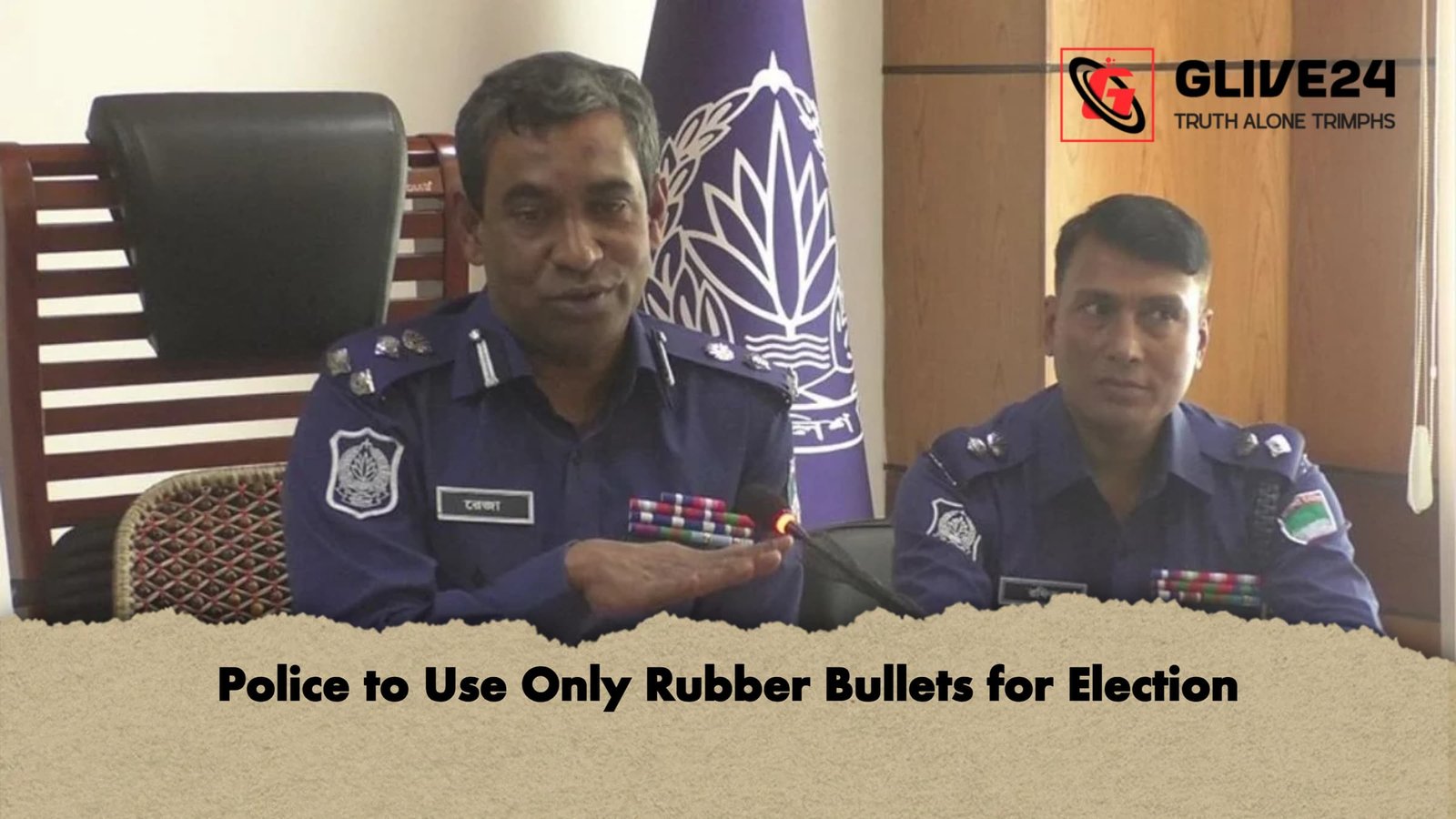
As Bangladesh prepares for the 13th National Parliamentary Election, the Deputy Inspector General (DIG) of the Khulna Range, Rezaul Haque, has announced a significant shift in the deployment of force. In a tactical move aimed at minimising casualties and ensuring public safety, police personnel stationed at polling centres will be prohibited from using metal ammunition, relying instead solely on rubber bullets for crowd control.
A Shift Towards Non-Lethal Engagement
Speaking during a press briefing at the office of the Superintendent of Police in Jashore on Tuesday, DIG Haque clarified the technical nature of police armament. Historically, police shotguns have been equipped with two types of ammunition: rubber bullets and lead balls (metal slugs). While metal bullets are known to cause severe, often permanent injuries, the DIG emphasised that the current objective is to maintain order without inflicting lasting physical harm.
“Our goal is not to cause injury to our citizens,” the DIG stated. “While both types of ammunition were utilised in the past during civil unrest, we have made the executive decision to withhold the issuance of metal bullets entirely for this election. We hope and pray that we do not have to discharge even a single rubber bullet.”
Protocols for Escalation
Despite the emphasis on restraint, the DIG warned that the police would not remain idle if democratic processes were compromised. He outlined specific scenarios where force would be sanctioned under the Code of Criminal Procedure (CrPC) and the Police Regulations of Bengal (PRB).
| Scenario | Authorised Action |
| Normal Polling Operations | Vigilance and assistance; no discharge of firearms. |
| Attempted Ballot Box Snatching | Use of rubber bullets to deter perpetrators. |
| Attack on Polling Centres | Graduated response following CrPC/PRB protocols. |
| Voter Intimidation/Assault | Immediate intervention to secure the safety of the electorate. |
Integrity and Institutional Conduct
In addition to tactical matters, DIG Haque addressed the historic and systemic concerns regarding police corruption. When questioned about the notorious “envelope culture”—the practice of officers accepting bribes from political candidates—the DIG expressed firm confidence in his subordinates across the 64 police stations within the Khulna Range.
He asserted that as the head of the regional police family, he believes his colleagues will uphold professional standards. However, he extended an invitation to the public and the press to report any instances of misconduct, promising rigorous investigations and disciplinary action against anyone who “brings dishonour to the force.”
The briefing was also attended by Jashore Superintendent of Police, Syed Rafiqul Islam, as security measures were finalised ahead of the national vote on Thursday.