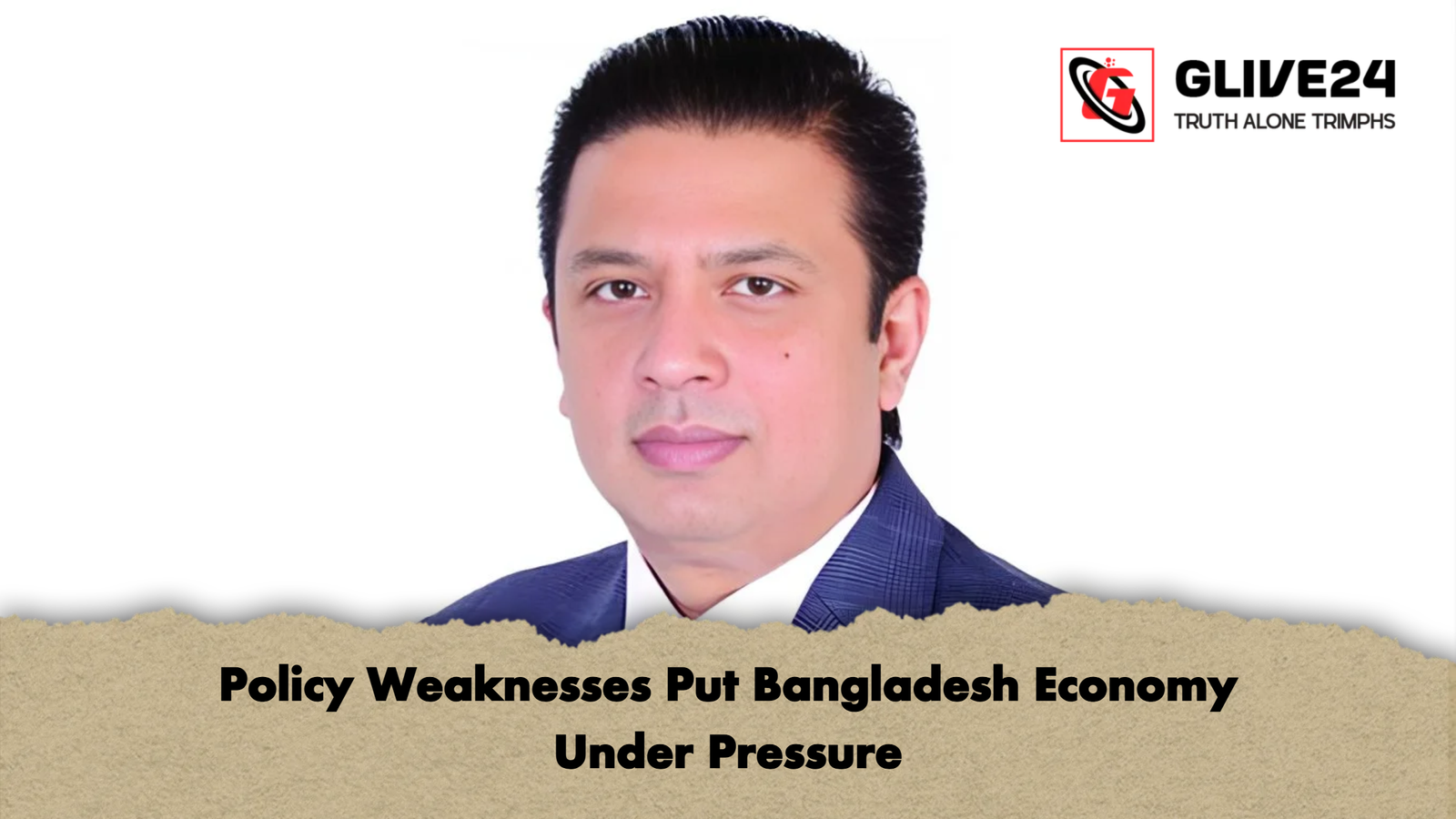
Dhaka Chamber of Commerce and Industry (DCCI) President Taskin Ahmed has warned that Bangladesh’s economy is facing severe strain due to high interest rates, cumbersome administrative processes, and policy weaknesses. Speaking at a recent seminar, he highlighted that private sector credit growth has fallen to its lowest level in recent years, creating a challenging environment for industrial and commercial activities.
The seminar, titled “Current Status and Future Prospects of Bangladesh’s Economy from the Perspective of the Private Sector”, was attended virtually by Planning State Minister Mohammad Junaid Abdur Rahim Saki as the chief guest.
Other distinguished participants included:
Dr. Manjur Hossain, Member (Secretary), Bangladesh Planning Commission
A H M Jahangir, Additional Secretary & Project Director, SSGP
Dr. Mohammad Aktar Hossain, Chief Economist, Bangladesh Bank
Panel discussants comprised:
Dr. Zaidy Sattar, Chairman, PRI
Dr. A K Enamul Haque, Director General, BIDS
Dr. Mohammad Abu Yusuf, Professor, University of Dhaka
Dr. M Riaz Asadullah, Professor, University of Reading, UK
Faisal Samad, Director, BGMEA and Managing Director, Surma Garments
State Minister Mohammad Junaid Saki emphasised the government’s vigilance in navigating the ongoing Middle East crisis and outlined preparedness measures. He stressed the importance of maximising revenue mobilisation to reduce dependency on domestic and global borrowings.
President Taskin Ahmed cautioned that geopolitical tensions, particularly the Iran–US and Israel conflicts, pose significant threats to global trade. He added that the country’s industrial sector remains heavily reliant on imported fuel, exacerbating private sector uncertainty. Furthermore, new US tariff policies could influence both domestic and international investments.
Bangladesh Bank’s Chief Economist Dr. Mohammad Aktar Hossain highlighted that current inflation stands at 9 per cent and warned that Middle Eastern instability could intensify economic volatility. He recommended a contractionary monetary policy, noting that sudden interest rate cuts or excessive currency supply could create economic uncertainty.
Private sector representative Faisal Samad added that markets in the US and EU remain vulnerable due to the absence of Free Trade Agreements. He noted that high bank interest rates discourage entrepreneurs, while proper utilisation of the GTF fund is now particularly crucial.
Key Economic Indicators (Comparative Snapshot)
| Indicator | Current Value | Comment |
|---|---|---|
| Private sector credit growth | 5.2% | Fallen to lowest level |
| Inflation | 9% | Could rise amid crisis |
| Average bank interest rate | 12–13% | High for entrepreneurs |
| Dependence on fuel imports | 70% | Significantly impacts industrial costs |
The seminar concluded that policy weaknesses and global uncertainties have placed Bangladesh’s economy in a vulnerable state. Experts emphasised the urgent need for targeted credit expansion, interest rate moderation, and active measures to boost foreign trade in order to stabilise and sustain economic growth.