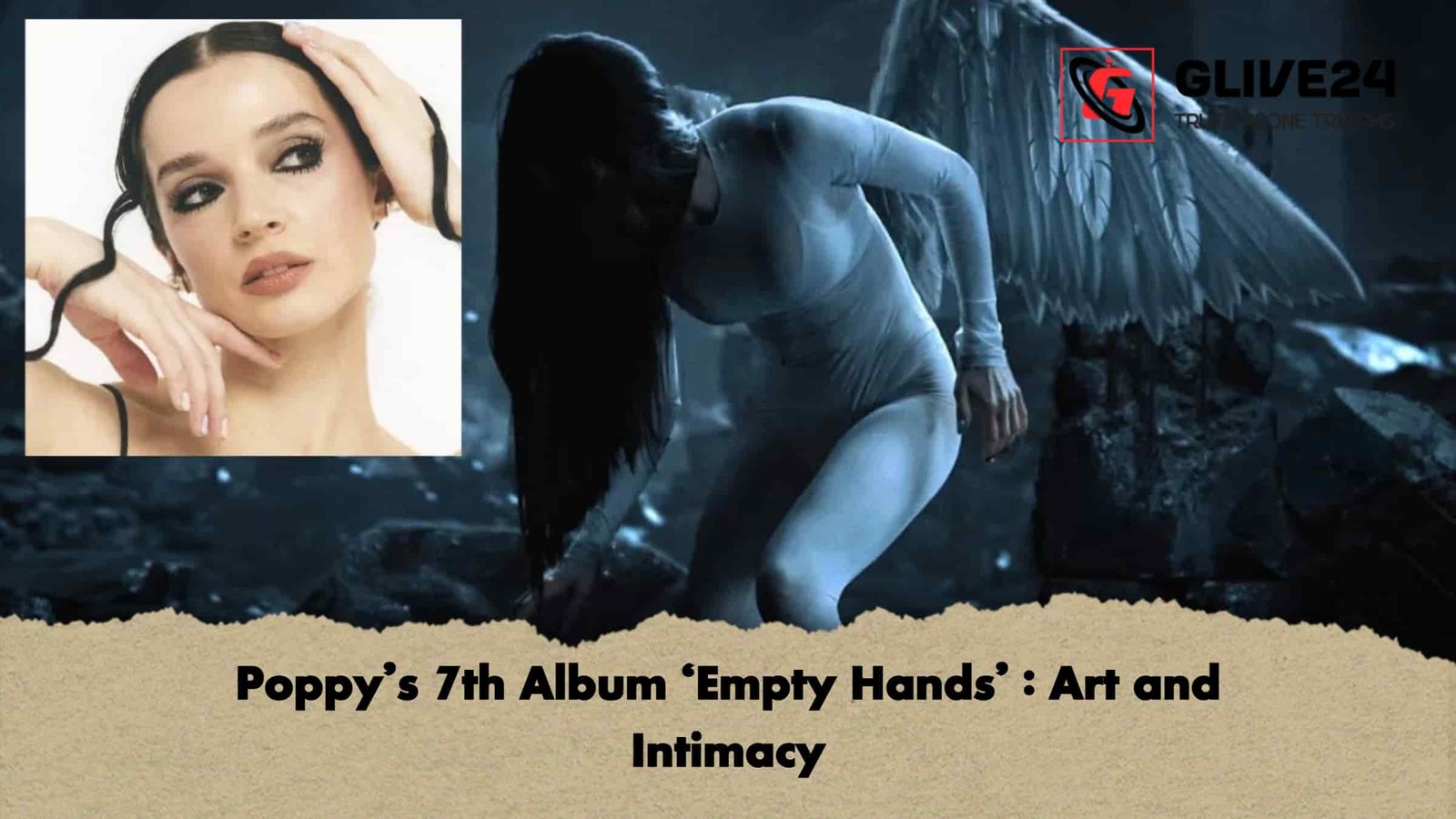
Alternative pop luminary Poppy (Moriah Rose Pereira) is set to release her seventh studio album, Empty Hands, on Friday, 23 January. Arriving just fifteen months after her previous record, Negative Spaces, this latest work marks a deliberate evolution towards denser, more visceral soundscapes. In 2025 alone, Poppy performed an astounding 95 live shows and collaborated with renowned artists including Babymetal, Amy Lee of Evanescence, and Courtney LaPlante of Spiritbox, cementing her status as one of contemporary heavy music’s most versatile figures.
She began 2026 with a quiet, introspective celebration of her 31st birthday, retreating to a woodland cabin to spend time with her cat and reflect away from the public gaze. Speaking to NME, she reflected, “I love my birthday. It feels like a beautiful way to start the year.”
Poppy’s musical journey has always been fluid, ranging from viral YouTube clips to imaginative explorations of pop, industrial metal, and glam rock. Empty Hands amplifies her heavier sonic inclinations, produced in collaboration with Jordan Fish (formerly of Bring Me The Horizon) and lyricist Stephen Harrison (House Of Protection). The result is an album rich in metalcore intensity, ’90s-style riffs, and apocalyptic sonics, blending aggression with subtle, emotive interludes.
The following table summarises key details of Poppy’s last four studio albums:
| Album | Year | Lead Producer(s) | Stylistic Features | Notable Details |
|---|---|---|---|---|
| Flux | 2021 | Justin Meldal-Johnsen | Experimental pop | Collaborative, arrangement-focused process |
| Zig | 2023 | Ali Payami | Pop-infused mechanised production | Structured, less free-flowing |
| Negative Spaces | 2024 | Jordan Fish, Stephen Harrison | Rock, Metalcore | Explored dense textural layers |
| Empty Hands | 2026 | Jordan Fish, Stephen Harrison | Metalcore, Rock | Cohesive and dynamic; balances intensity and softness |
Poppy emphasises the creative fluidity that defines her work: “Once you reach a certain stage, you don’t have to explain yourself—everything is understood naturally.” Despite recurring collaborators and sonic motifs, she insists that Empty Hands is fundamentally distinct from its predecessor. “Critics or fans may try to confine it to a single style, but I know where the boundaries lie,” she explains.
The album’s lyrics and moods ebb and flow, from tracks such as Dying To Forget, which channels raw anger while leaving space for tenderness. Poppy elaborates, “Capturing the truth of a moment is what matters most to me.” Her enigmatic refrain, “I am always in/at emptiness,” reflects a dual existence—constantly present in digital culture, yet retaining the capacity for personal solitude.
Life on tour necessitates mental isolation. Away from the online crowd, Poppy finds solace in books, journals, and collage-making, preparing mentally for upcoming North American shows alongside her cat. Even after a decade in the industry, her creative ambition remains undiminished. “Discontent drives me toward new exploration,” she says. Empty Hands stands as the latest testament to her relentless, ever-evolving artistic journey.