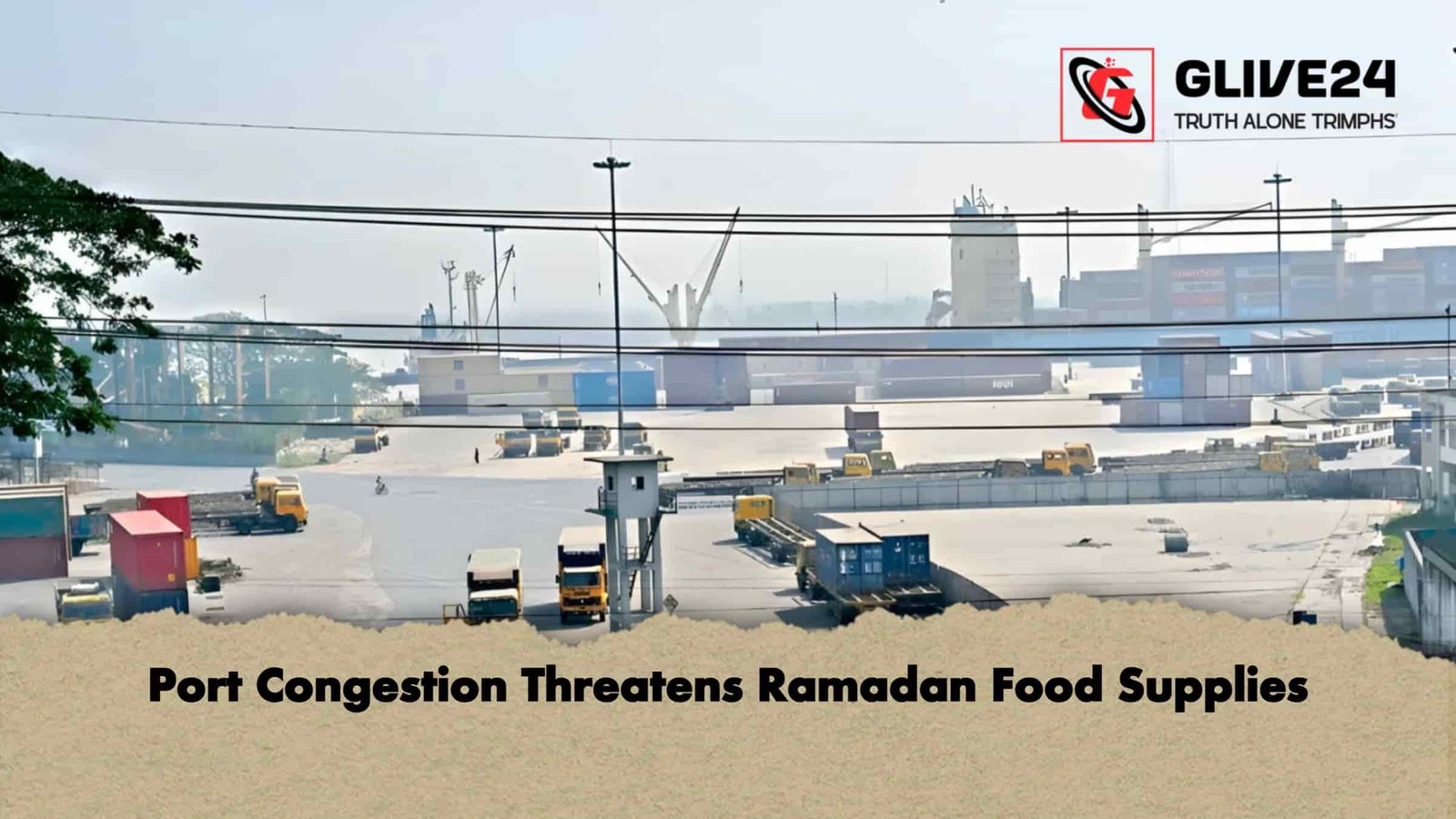
Chittagong Port is grappling with severe operational disruptions as ongoing strikes by employees and labourers continue to delay the clearance of essential food imports ahead of Ramadan. Key commodities such as dates, lentils, sugar, and other staple items are facing significant hold-ups, raising concerns over potential supply shortages in domestic markets and increasing financial risks for businesses.
Currently, 35 vessels remain anchored, waiting to load and unload cargo. Port officials have warned that if the strike persists, the situation could escalate into a broader supply chain crisis.
According to port and shipping sources, each delayed vessel incurs additional costs of approximately BDT 2.5 million (around USD 20,000) per day. Shafiqul Alam Jewel, former vice-chairman of the Bangladesh Shipping Agents Association, noted, “Prolonged delays before Ramadan will have far-reaching consequences. Ship owners are likely to pass on these extra expenses to importers, ultimately affecting consumers at the retail level.”
Ruhul Amin Sikdar, general secretary of the Private Container Depot Owners Association, reported that port operations have dropped by nearly 50%, with export container transactions declining at a similar rate.
Impact of the Strike on Port Operations
| Category | Pre-Strike Volume (TEU/ship) | First Day of Strike (TEU/ship) | Change (%) |
|---|---|---|---|
| Import Containers | 1,410 | 481 | -66% |
| Export Containers | 2,941 | 1,610 | -45% |
| Containers Unloaded per Ship | 3,102 | 1,750 | -44% |
No vessel is currently able to complete unloading within the standard eight-hour window. This backlog has affected operations across the New Mooring Terminal (NCT), Chittagong Container Terminal (CCT), and General Cargo Berth (GCB). Despite the availability of adequate cranes, straddle carriers, and rubber-tyred gantry cranes, a shortage of experienced operators has left activity near a standstill.
Mohammad Omar Faruk, Director of Chittagong Port Authority, cautioned, “Such strikes ahead of Ramadan are having a profound negative impact on the national economy. While workers have yet to return to duty, strict administrative measures will be enforced.”
Law enforcement authorities have restricted gatherings and processions at the port, and an investigative committee has been established. Nevertheless, striking workers remain committed to continuing their protest, planning an assembly with black flags to demonstrate their resolve.
Experts have warned that unless cargo is cleared swiftly, prices of essential food items are likely to rise before Ramadan, directly affecting consumers. Prolonged supply chain disruptions could also reverberate throughout the nation’s food logistics network, potentially triggering broader inflationary pressures in the coming months.