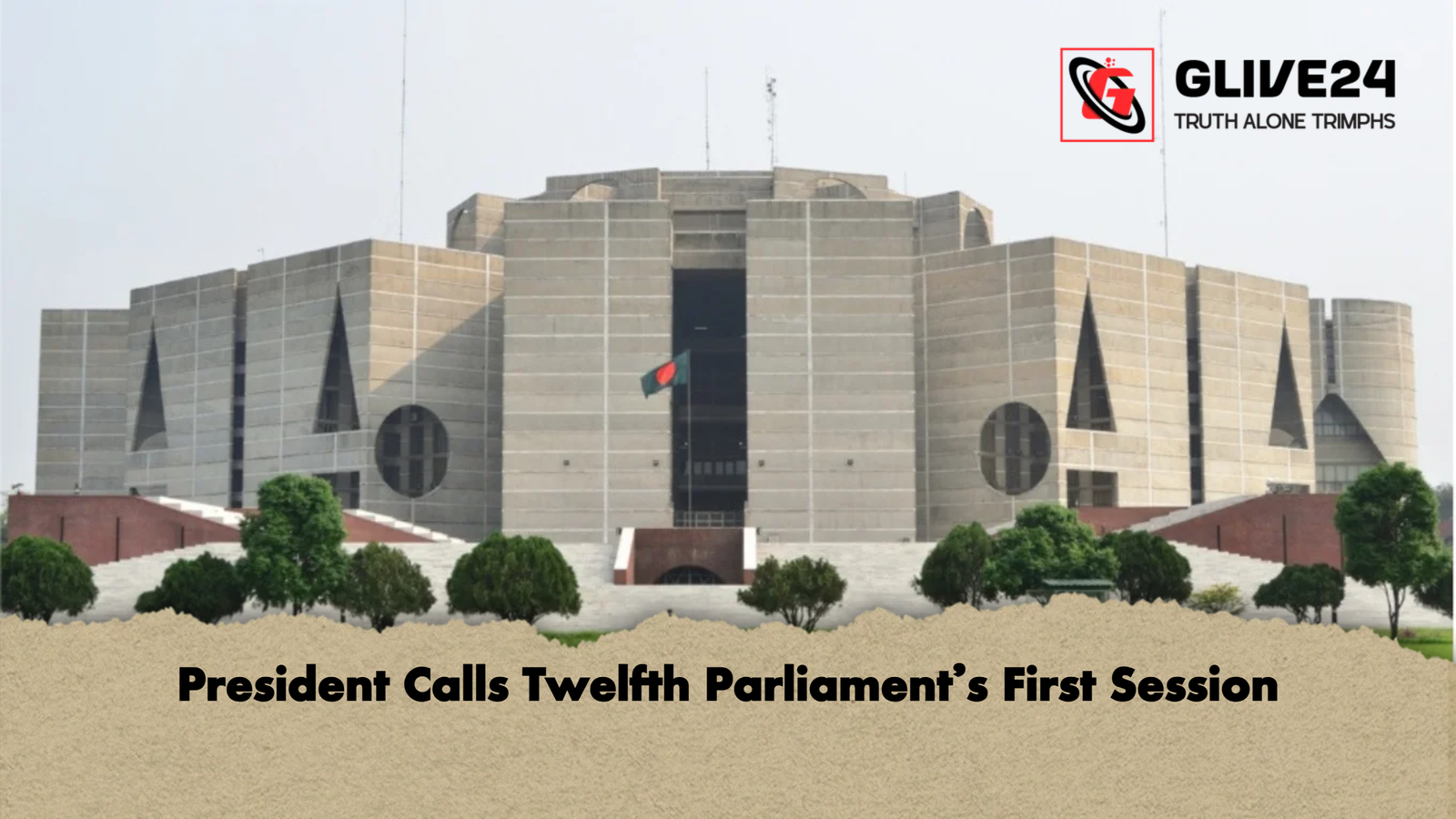
The thirteenth National Parliament of Bangladesh is set to commence its inaugural session on 12 March 2026, according to an official statement issued today by the Public Relations Division of the Secretariat of the Jatiya Sangsad. The announcement confirms that the session has been convened by the President under the authority granted by Article 72(1) of the Constitution of the People’s Republic of Bangladesh.
The official directive, signed by Md. Emadul Haque, Director (Public Relations) of the Secretariat, states that President Md. Sahabuddin will formally open the first session of the thirteenth National Parliament at 11:00 a.m. on 12 March. This marks the first parliamentary gathering of the year 2026 and the beginning of legislative proceedings for the newly elected assembly.
Parliamentary Procedures and Formalities
According to established parliamentary tradition and legal requirements, the first day of a new parliament is dedicated to the election of the Speaker and Deputy Speaker. Following these elections, the newly elected Speaker will preside over the formal commencement of parliamentary business.
Key inaugural session activities are expected to proceed as follows:
| Activity | Time | Description |
|---|---|---|
| Session Opening | 12 March, 11:00 a.m. | Convened by the President of Bangladesh |
| Speaker Election | First day | Members vote to elect the Speaker |
| Deputy Speaker Election | Immediately after | Members vote to elect the Deputy Speaker |
| Presidential Address | Post-elections | President delivers a keynote speech on government achievements and future plans |
| Vote of Thanks & General Discussion | Following the speech | MPs engage in discussion and debate on the President’s address and national priorities |
Significance of the Presidential Address
The President’s speech traditionally outlines the achievements of the incumbent government and provides an overview of forthcoming administrative and economic plans. It serves as a crucial guide for parliamentary priorities and helps frame legislative and policy discussions for the term ahead.
Following the address, Members of Parliament are afforded the opportunity to debate and discuss a formal vote of thanks. This session of general discussion provides a platform for legislators to scrutinise government performance, offer commendations, or raise concerns regarding ongoing and planned development initiatives.
The convening of the thirteenth National Parliament marks a significant event in Bangladesh’s political calendar. With both ceremonial and substantive parliamentary functions, the first session sets the tone for governance, lawmaking, and policy implementation throughout the parliamentary term. The proceedings beginning on 12 March will be closely observed for indications of legislative priorities and the government’s strategic direction in the coming years.
In essence, the inaugural session is not only a constitutional requirement but also a pivotal occasion that underscores the democratic process and parliamentary governance in Bangladesh.