
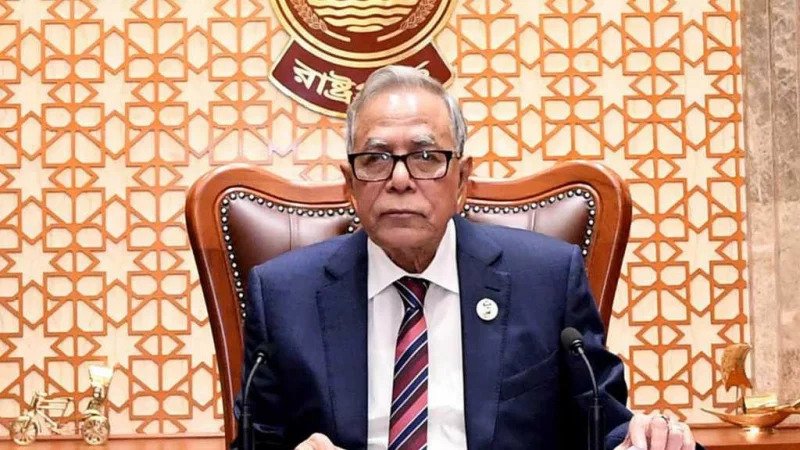
In a ceremony of profound administrative and symbolic significance, the President of Bangladesh, M Abdul Hamid, officially unveiled an inaugural envelope and a set of commemorative postage stamps this evening at Bangabhaban. The release celebrates the commencement of the Population and Housing Census 2022, a pivotal undertaking that represents a technological milestone for the nation.
During the event, the Head of State was briefed on the intricate mechanisms of the upcoming survey, which is the sixth of its kind since the country’s independence. This particular census is noteworthy as it marks the first time the Bangladesh Bureau of Statistics (BBS) will conduct the exercise in a fully digital format, transitioning away from traditional paper-based methods to enhance data veracity and processing speed.
The Digital Shift and Data Integrity
The Population and Housing Census 2022 is scheduled to take place nationwide from 15 June to 21 June. President Hamid emphasised that an accurate census is the bedrock of effective governance, stating that precise demographic data is indispensable for formulating and implementing robust development plans. He issued a stern directive to the relevant authorities, urging them to ensure that enumerators visit every household personally to collect authentic information.
To facilitate this digital transition, the BBS has deployed a sophisticated infrastructure. Approximately 370,000 enumerators will traverse the country, equipped with nearly 395,000 tablet computers. The data collection will utilise the Computer Assisted Personal Interviewing (CAPI) system, integrated with Geographic Information System (GIS) mapping. This dual approach ensures that every structure is accounted for and that data entry occurs in real-time, significantly reducing the margin for human error and preventing geographical overlaps.
Historical Context and Logistical Framework
The tradition of the national census in Bangladesh dates back to 1974, shortly after the nation’s founding, when the first survey provided the necessary baseline for a nascent state. Over the subsequent decades, the process has evolved to reflect the country’s growing complexity and its aspirations for a “Digital Bangladesh.”
The following table provides a comparison of the key logistical parameters and historical markers of the census programme:
| Feature | Details of the 2022 Census | Historical Context |
| Duration | 7 Days (15–21 June) | Traditionally 10-day cycles |
| Format | Fully Digital (CAPI & GIS) | Primarily Paper-based (1974–2011) |
| Field Staff | ~3.7 Lakh Enumerators | Scaled based on population growth |
| Hardware | 3.95 Lakh Tablet PCs | N/A (Manual Entry) |
| Agency | Bangladesh Bureau of Statistics | Established in 1974 |
| National Sequence | 6th National Census | 1st Census held in 1974 |
The unveiling ceremony was attended by a cohort of senior government officials, including Planning Minister M A Mannan, Posts and Telecommunications Minister Mustafa Jabbar, and State Minister for Planning Shamsul Alam. Their presence underscores the inter-departmental cooperation required to synchronise the technological requirements of the census with the planning needs of the government.
By modernising the collection of vital statistics, Bangladesh aims to align its demographic tracking with international standards, ensuring that future resource allocation—from healthcare to infrastructure—is driven by data rather than estimates.