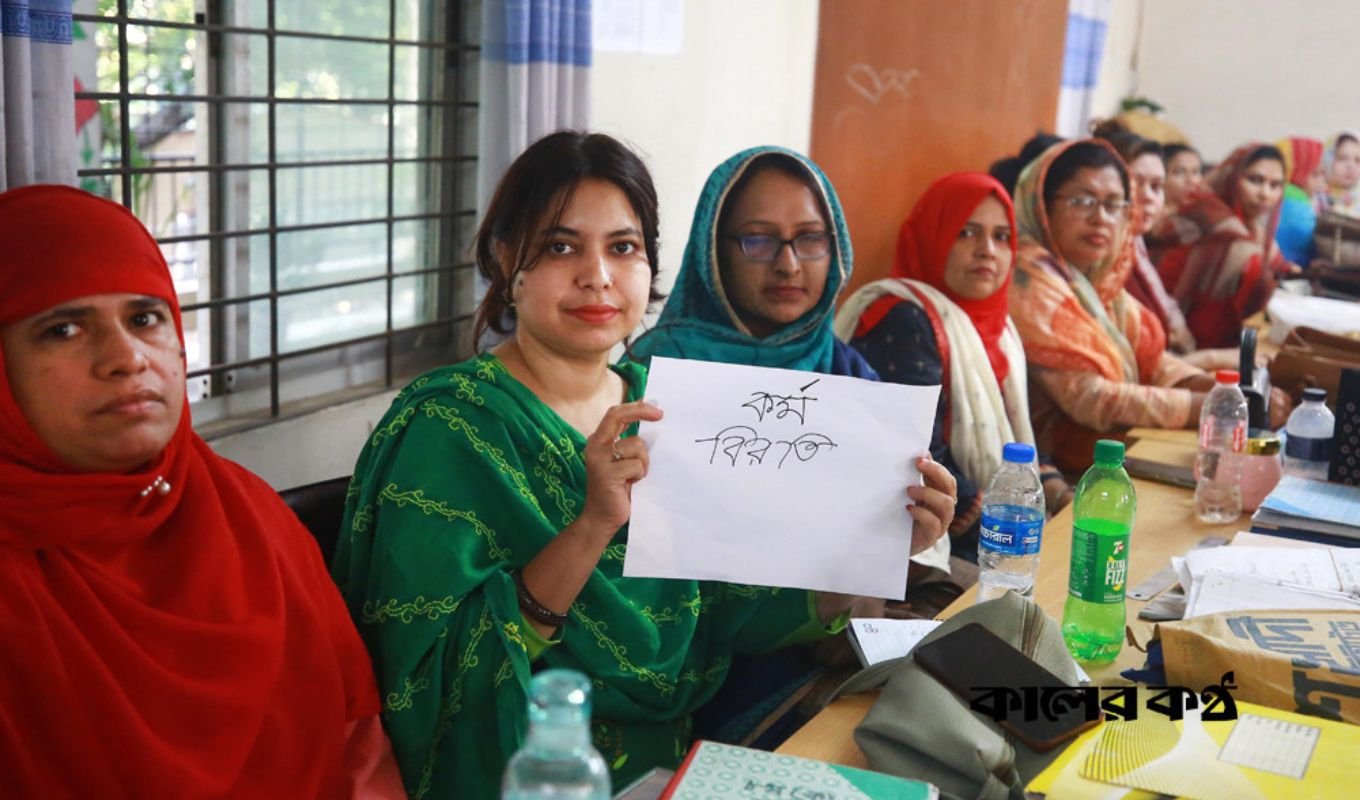
Assistant teachers in government primary schools across the country have launched an indefinite work stoppage, halting academic activities in an estimated 65,000 institutions. The protest is centred on a three-point demand, with educators declaring that annual examinations scheduled for Monday, 1 December, will be boycotted unless their grievances are addressed.
The movement, led by the Primary Teachers’ Demand Implementation Council (PTDIC), has warned that failure by the authorities to take satisfactory action by tonight will compel teachers to refuse participation in the examinations.
In a joint statement on Saturday, the council noted that although 18 days have passed since verbal assurances were made by senior officials, including ministry secretaries, little progress has been achieved regarding the three key demands. The statement also commemorated the sacrifices of Shaheed Fatema and the 200 teachers injured during earlier demonstrations, expressing gratitude to colleagues for observing a full-day strike on 27 November.
The three principal demands of the assistant teachers are outlined as follows:
| Demand | Details |
|---|---|
| Pay scale adjustment | Fix the pay scale for assistant teachers at the 10th grade level. |
| Higher-grade complexities | Resolve issues concerning promotion and grade placement after 10 and 16 years of service. |
| Promotion assurance | Ensure 100% departmental promotion from assistant teacher to head teacher. |
On 27 November, Abu Noor Md Shamsuzzaman, Director General of the Directorate of Primary Education, met with leaders of the movement and urged them to reconsider any boycott of the examinations. Despite these appeals, teachers maintained that the strike would continue until concrete assurances were provided by the government.
The ongoing protest has already disrupted regular teaching schedules, with concerns mounting among parents and students who are preparing for end-of-year examinations. Education analysts warn that prolonged strikes of this scale could significantly impact academic timelines, potentially delaying the publication of results and affecting students’ progression to higher grades.
The PTDIC has emphasised that the protest is non-political and focused solely on the welfare and career progression of primary school educators. However, with negotiations stalling, the country faces the prospect of a historic disruption in the primary education sector.
TSN