Assistant teachers at government primary schools across Bangladesh have suspended their ongoing “complete shutdown” protest, a decision reached late on Thursday night following days of severe disruption to annual examinations nationwide. One of the key leaders of the movement confirmed the decision shortly after 11:30 pm, stating that the pause was intended to prevent further harm to young learners.
The teacher leader said the strike would remain suspended only until the examinations were completed. He emphasised that the decision resulted from a desire to put students’ interests first. A formal announcement was expected later that same night, and he clarified that the movement’s core demands remain unchanged.
Table of Contents
The Demands Driving the Movement
The teachers’ three-point demand consists of upgrading the national pay scale for assistant teachers to the 11th grade (they are currently positioned at the 13th grade), resolving procedural complications linked to higher grade benefits after ten and sixteen years of service, and ensuring that all promotions from assistant teacher to headteacher are made solely through departmental channels.
These demands have been longstanding and have prompted several waves of protests in recent years. Assistant teachers argue that their pay scale and promotional system do not reflect the critical role they play in shaping the nation’s educational foundation.
Impact Across Bangladesh’s School System
Bangladesh’s government primary school network is vast, comprising 65,569 schools with more than ten million enrolled pupils. The system employs over 375,000 teachers, including more than 352,000 assistant teachers. The scale of the workforce means that any widespread industrial action has immediate and far-reaching consequences.
The latest wave of protests began on 27 November, led by the “Primary Teachers’ Demand Implementation Council”, which launched a work stoppage. On Monday, they extended the protest by declaring a boycott of annual examinations. On Wednesday, the programme escalated into a “complete shutdown”, with teaching activities brought to a halt in thousands of schools.
Another organisation, the “Assistant Teachers’ Unity Council”, had earlier held a separate strike from 23 to 27 November. They too began locking school gates from Thursday, leading to even wider disruptions. As a result, annual examinations failed to take place for a fourth consecutive day in many regions.
Scenes of Disarray: Locked Schools, Police Guards, and Broken Padlocks
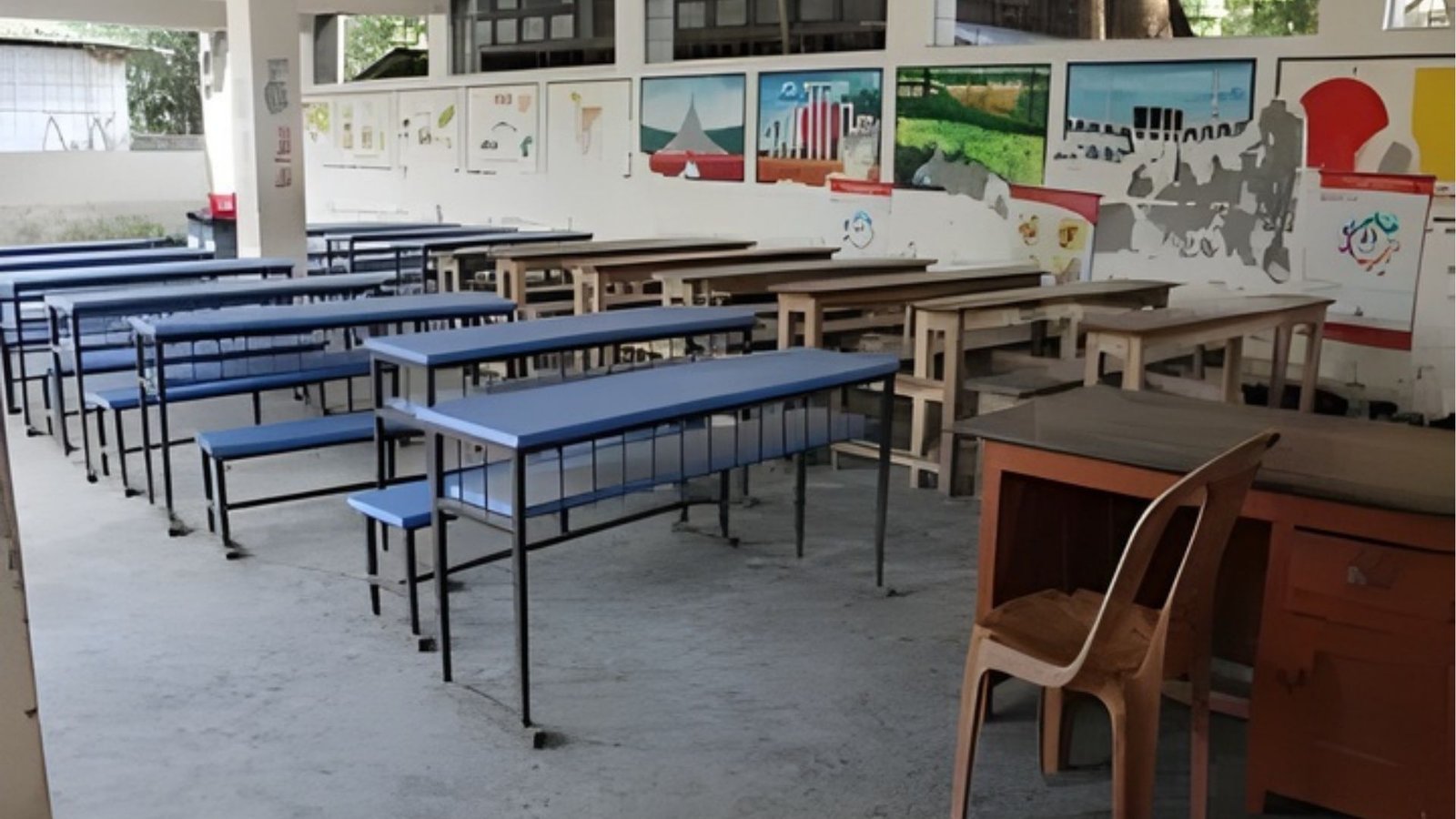
In several schools, teachers themselves locked the gates, preventing exams from being held. In some areas, local authorities intervened by breaking open the padlocks to allow assessments to proceed. Reports have surfaced of examinations being held under police and Ansar guard, reflecting the heightened tensions surrounding the situation.
Even where examinations did go ahead, concerns remain about the reliability of marking and evaluation. Teachers and administrators fear that rushed or disrupted assessment processes may compromise academic standards for the entire year.
Parents, meanwhile, expressed growing frustration. With the academic calendar already tight, the disruption of annual exams has sparked fears about learning setbacks and the psychological toll on children.
Government Tightens Stance
The Ministry of Primary and Mass Education, under pressure to maintain order, responded by adopting stricter administrative measures. On Thursday, several teachers—including prominent organisers of the movement—were transferred to different districts. Officially labelled “administrative transfers”, the move is widely viewed as an attempt to exert pressure on the protesters.
Strike Paused—Not Ended
Against this tense backdrop, teacher leaders opted to suspend the shutdown. They maintain, however, that the pause is temporary and was made solely to prevent further harm to students’ education during the examinations. They insisted that if authorities fail to address their demands, protests will resume immediately once the annual exams are concluded.
With the suspension now in place, attention shifts back to completing the examinations smoothly. But looming over the school system is the anticipation of renewed industrial action unless a resolution is reached.