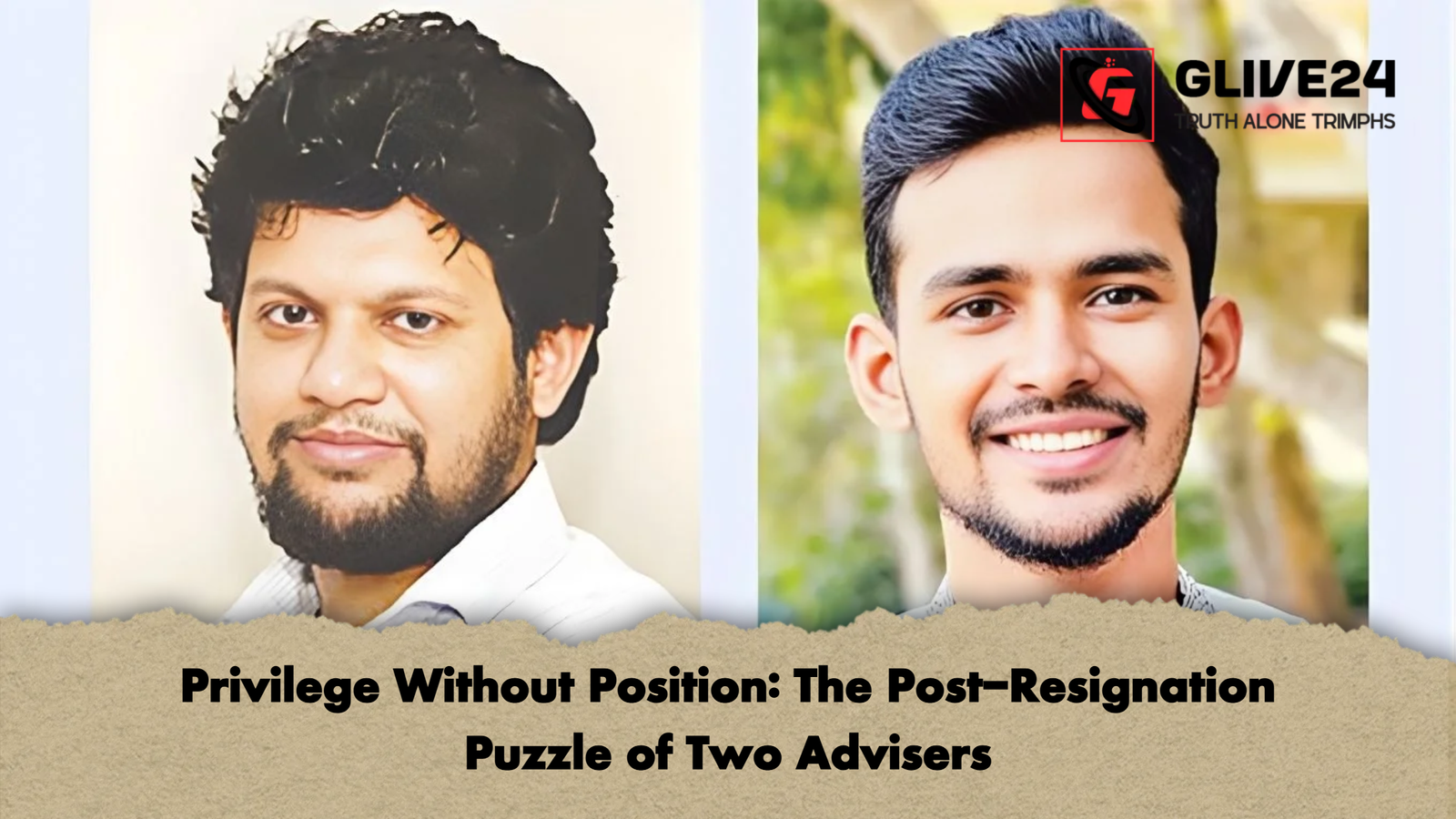
The continued occupation of state residences by two resigned advisers has placed Bangladesh’s interim government in an uncomfortable spotlight, raising difficult questions about privilege, policy gaps, and political ethics during a sensitive electoral period.
Asif Mahmud Sajib Bhuiyan and Mahfuj Alam, both former student leaders turned advisers, formally stepped down from the advisory council following the announcement of the national election schedule. Yet, despite no longer holding office, they remain in government accommodation—an arrangement that appears to fall into a legal grey area.
Officials from the Housing and Public Works Ministry concede that existing policies offer no explicit guidance for such situations. While there are detailed rules governing civil servants and election candidates, advisers to interim governments appear to exist outside clearly defined boundaries.
This absence of regulation has allowed the situation to drift unresolved. According to sources, no formal eviction notice has been issued, nor have the former advisers communicated any intention to vacate. The ministry has reportedly attempted contact, but without success.
Critics argue that the matter is not merely administrative but symbolic. The interim government, formed in the aftermath of a historic popular uprising, was meant to represent a break from the culture of entitlement long associated with political power. Allowing resigned advisers to retain state privileges, they say, risks undermining that narrative.
Both men rose to prominence during the intense student-led protests of July 2024, which culminated in the collapse of the Awami League government. Asif Mahmud’s role was particularly visible, as he publicly announced the “March to Dhaka” that mobilised thousands and accelerated political change.
His subsequent appointment to the interim cabinet was widely seen as recognition of that leadership. Over time, he held key responsibilities across local government, labour, youth, and sports—portfolios that placed him at the centre of grassroots governance.
Mahfuj Alam, though less visible domestically, gained international attention when he accompanied Professor Yunus to the United Nations. Introduced as a principal architect of the student movement, his presence on the world stage symbolised the youth-driven nature of Bangladesh’s political transformation.
Their resignations were understood as a necessary step to ensure neutrality ahead of elections. However, the unresolved housing issue has created an awkward contradiction: advisers who have stepped away from power but continue to enjoy its material benefits.
Political analysts warn that such contradictions, if left unaddressed, can erode public confidence. “Revolutions are judged not only by how power is taken, but by how it is relinquished,” said one commentator.
As Bangladesh moves closer to a critical election, the handling of this seemingly minor issue may serve as a broader test of the interim government’s commitment to fairness, discipline, and reform.