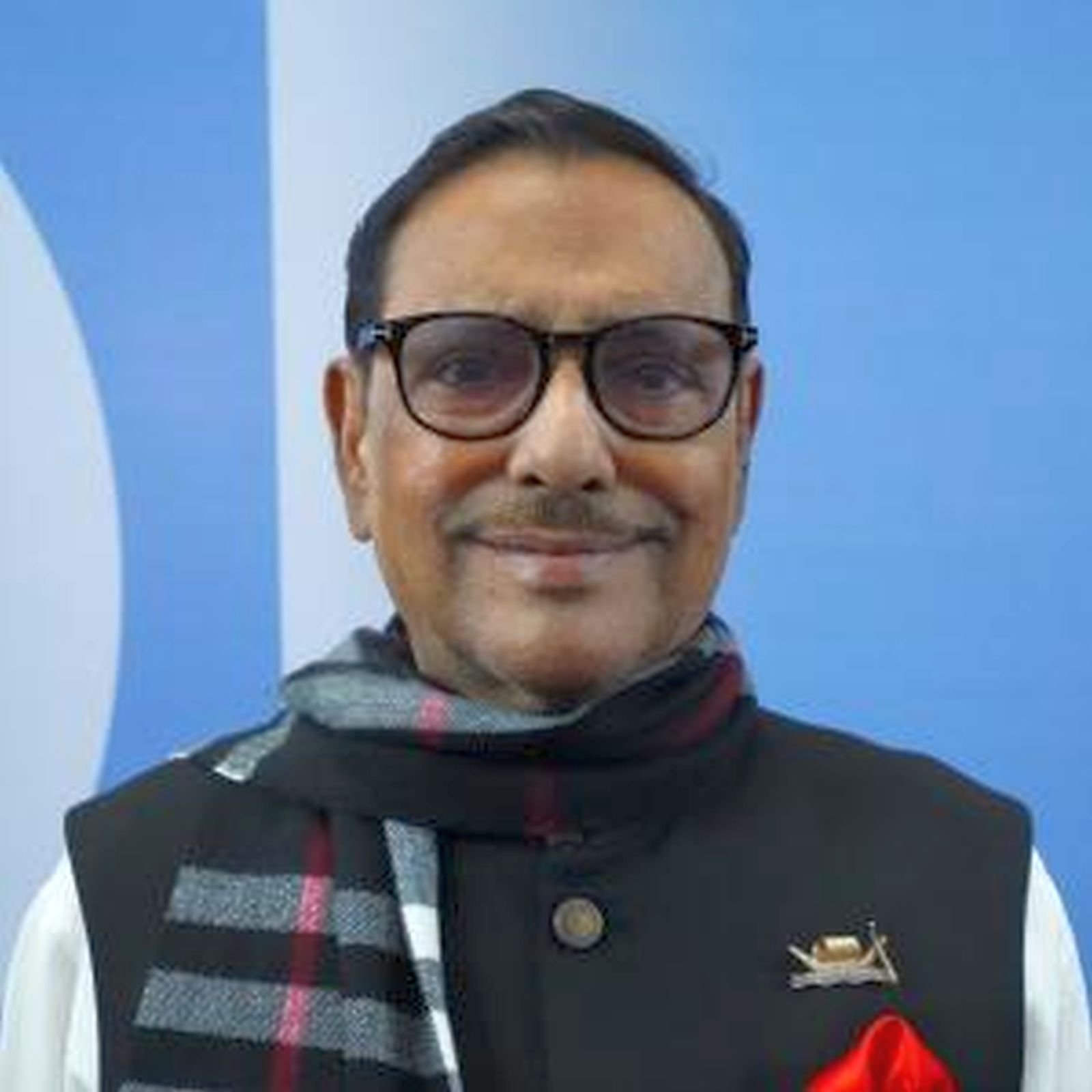
In a scathing critique of the opposition’s strategy, Obaidul Quader, the General Secretary of the Awami League and Minister for Road Transport and Bridges, has asserted that the citizens of Bangladesh will not respond to political movements orchestrated via “remote control”. Addressing the three-yearly conference of the Awami League units for Ward Nos. 14 and 22 of Dhaka South City, Quader directed his remarks at the expatriate leadership of the Bangladesh Nationalist Party (BNP), specifically its acting chairman, Tarique Rahman.
Table of Contents
The Critique of Expatriate Directives
Speaking via video conference from his official residence, Quader challenged the BNP’s top leadership to engage with the domestic political landscape directly rather than issuing instructions from abroad. He urged Tarique Rahman, who currently resides in London, to demonstrate political courage by returning to Bangladesh to lead any movement against the government from the front lines.
Quader’s metaphor of “remote control” highlights a long-standing point of contention in Bangladeshi politics: the effectiveness and legitimacy of a leadership that operates from outside the country’s borders. According to the Minister, the general public remains disconnected from such external directives, preferring leaders who share in the day-to-day realities of the nation.
Comparative Analysis of Political Positions
To understand the current friction between the ruling party and the opposition as presented in Quader’s address, the following table outlines the core arguments:
| Political Theme | Awami League Assertion (Quader) | BNP Perspective (as addressed) |
| Leadership Location | Leaders must be present on the ground. | Agitation directed from London. |
| Method of Power Shift | Exclusively through general elections. | Calls for movements to oust the government. |
| Democratic Status | Functioning democracy through the ballot. | Allegations of a lack of democracy. |
| Electoral Intent | Predicts BNP will participate for survival. | Boycott rhetoric or conditions for entry. |
The Path to Power via the Ballot Box
A significant portion of the Minister’s address focused on the sanctity of the electoral process. Quader maintained that the “state power” can only be transitioned through legitimate, democratic elections. He expressed dismay that opposition leaders appear to become “upset” whenever the country achieves stability or prosperity, suggesting that their political interests are misaligned with national progress.
Addressing the BNP’s frequent allegations regarding a supposed deficit of democracy in Bangladesh, Quader offered a pragmatic prediction. He argued that, despite their current rhetoric, the BNP leadership would ultimately feel compelled to participate in the upcoming elections. Participation, he suggested, is not merely a political choice but a necessity for the “protection of their existence” as a significant political entity.
Local Strengthening and Notable Attendees
The triennial conference, chaired by Haji Mohammad Salim Ahmed, the acting president of Hazaribagh Thana Awami League, served as a platform to bolster grassroots support in the capital. The event saw contributions from several high-profile figures within the party, including:
- Mirza Azam: Awami League Organising Secretary.
- Barrister Sheikh Fazle Noor Taposh: Mayor of Dhaka South City Corporation (DSCC).
- Abu Ahmed Mannafi: President of Dhaka South City Awami League.
- Humayun Kabir: General Secretary of Dhaka South City Awami League.
- Nurul Amin Ruhul, MP.
The speakers collectively reinforced the message that the Awami League remains prepared for any political challenge, provided it is conducted within the constitutional framework. The conference concluded with a call to party workers to remain vigilant and committed to the government’s developmental agenda, ignoring the “absurdity” of movements directed from afar.