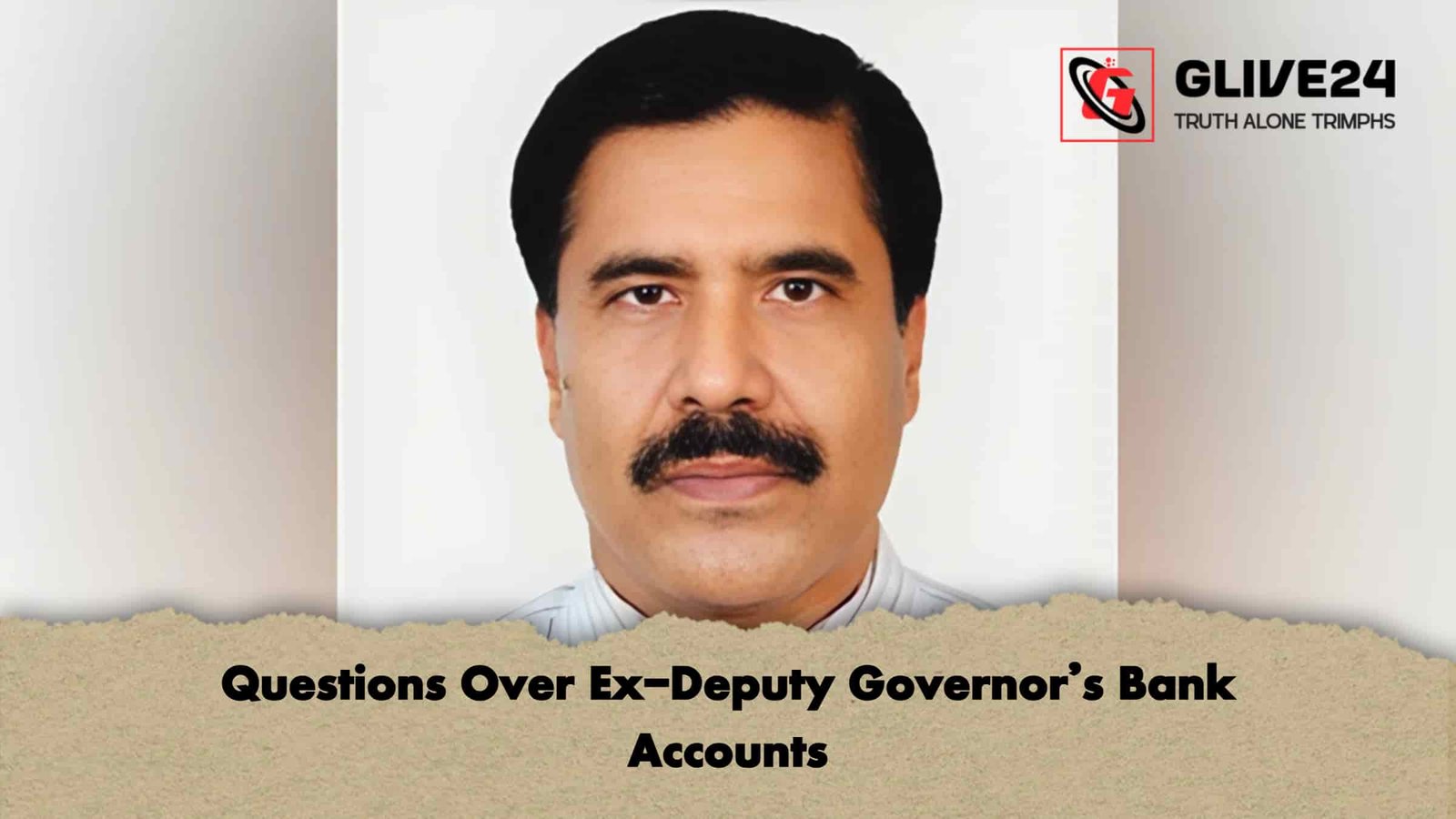
Fresh concerns over financial transparency and regulatory accountability have surfaced in Bangladesh’s banking sector following disclosures about an unusually large volume of bank accounts and transactions linked to former central bank deputy governor S M Moniruzzaman.
An inspection conducted by the Bangladesh Financial Intelligence Unit (BFIU) found that Moniruzzaman maintained a total of 159 bank accounts across 11 commercial banks. According to the inspection report, cumulative transactions through these accounts amounted to approximately Tk 3.91 billion, while the combined balance at the time of review stood at around Tk 18 million.
Investigators noted that such a high number of savings and fixed deposit receipt (FDR) accounts, coupled with large deposits and withdrawals over relatively short periods, does not align with typical personal banking behaviour. On this basis, the transactions were flagged as “suspicious” and referred to the Anti-Corruption Commission (ACC) for further examination. While the BFIU does not itself file criminal cases, it is legally mandated to notify relevant authorities when potential financial irregularities are detected.
The report highlights several transaction patterns that drew scrutiny. In August 2021, a savings account was opened in Moniruzzaman’s name at a Gulshan branch of Islami Bank Bangladesh. Within two days, a pay order of Tk 20 million was deposited into the account from an entity named S Alam Vegetable Oil. The following day, three FDRs—two of Tk 7 million each and one of Tk 6 million—were opened at the same branch. Investigators stated that account documentation did not adequately explain the source or purpose of these funds.
In addition, regular inflows were traced from SS Power, another concern of the S Alam Group. Over a 27-month period, Tk 16.3 million was credited to the account, described as “salary” and “vehicle maintenance allowance”. Records indicate that after his retirement, Moniruzzaman served as a commercial adviser to SS Power.
A similar pattern was observed in March 2023 at a Gulshan branch of Prime Bank, where a savings account and multiple FDRs were reportedly opened on the same day—an arrangement investigators again described as atypical.
Moniruzzaman was appointed deputy governor of Bangladesh Bank in November 2016. After completing a three-year term, his tenure was extended until he reached the age limit, and he retired on 31 December 2020. During his time in office, he was associated with inspection-related departments, a period that coincided with controversy over the supervision and control of Islami Bank.
Bangladesh Bank has not issued an official statement on the matter, though officials have reiterated the importance of strengthening cashless transactions and enhancing monitoring mechanisms.
Responding to the allegations, Moniruzzaman said the Tk 20 million deposit represented proceeds from the sale of residential property and that all his accounts were declared in tax filings. He denied receiving any undue benefits from the S Alam Group and claimed that the reported number of accounts had been overstated.
Overall, the episode has reignited debate over post-retirement employment for senior regulators, oversight of large personal transactions, and the robustness of Bangladesh’s banking supervision framework.
Snapshot of Flagged Transactions
| Item | Details |
|---|---|
| Number of banks | 11 |
| Total accounts | 159 |
| Cumulative transactions | Approx. Tk 3.91 billion |
| Latest combined balance | Approx. Tk 18 million |
| Single large deposit | Tk 20 million |
| Regular inflows | Tk 16.3 million over 27 months |