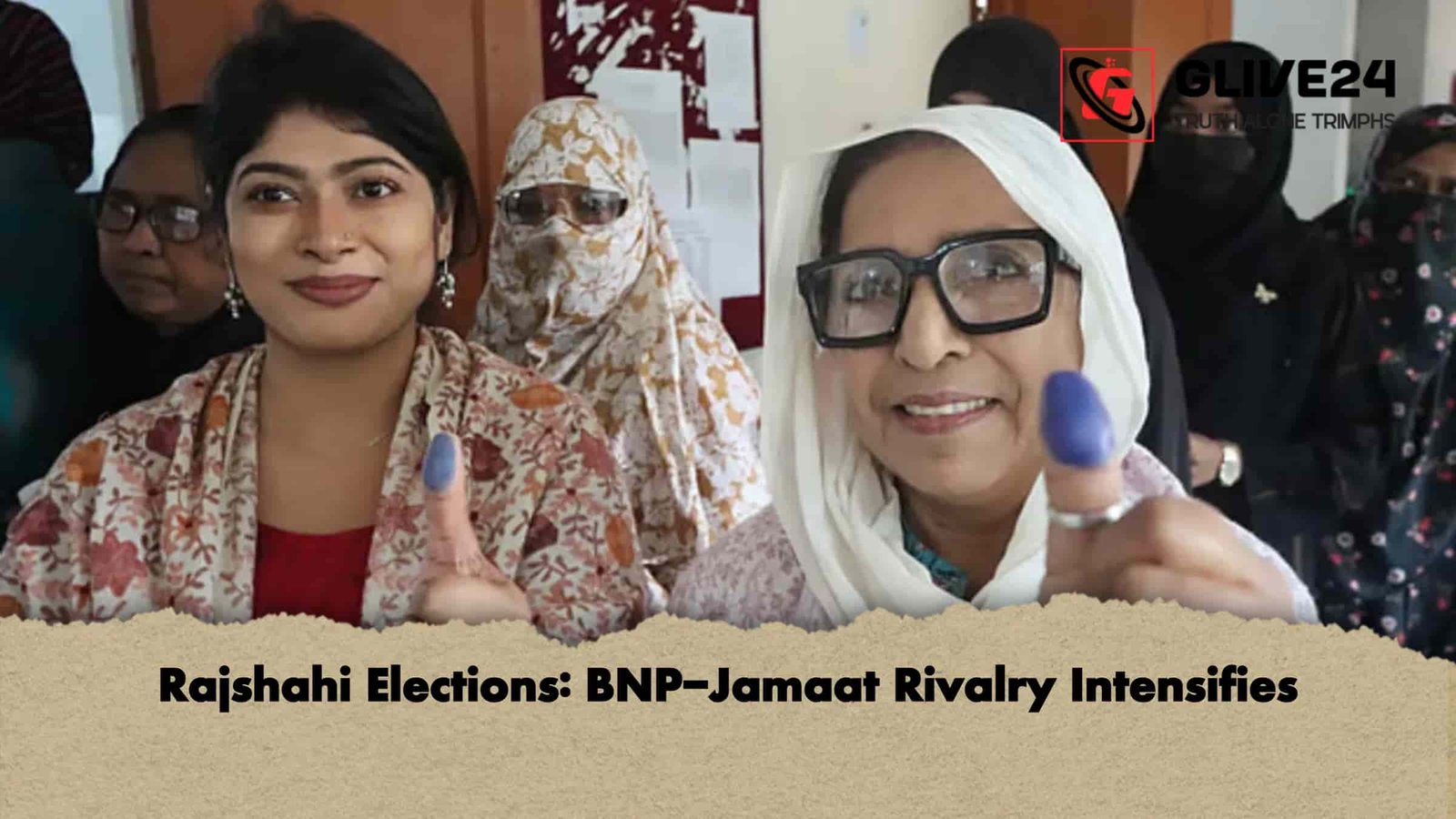
The 13th national parliamentary elections in Bangladesh have injected a new dynamic into the politics of Rajshahi Division, traditionally a stronghold of the Bangladesh Nationalist Party (BNP). While the BNP retained a majority of the seats, the Jamaat-e-Islami party made significant inroads, signalling a notable shift in the region’s political landscape.
Of the division’s 39 parliamentary seats, the BNP secured 28, maintaining its dominance, whereas Jamaat captured 10 seats—a remarkable performance given that in the 2008 elections, the party failed to win a single seat, and during the 2001 Four-Party Alliance, it had only managed two victories.
Table of Contents
Rajshahi Division: Political Landscape
Rajshahi Division comprises eight districts: Rajshahi, Chapainawabganj, Naogaon, Natore, Pabna, Joypurhat, Bogura, and Sirajganj. Political analysts attribute the BNP’s partial loss of seats to organisational weaknesses and delayed campaign mobilisation. Conversely, Jamaat’s gains are credited to effective grassroots campaigning and heightened awareness among female voters, who turned out in unprecedented numbers.
Newly Elected Jamaat Members
This election saw 10 new Jamaat members elected to parliament, reflecting both generational renewal and strategic expansion within the party. The table below lists the elected Jamaat candidates by district and constituency:
| District | Constituency | Elected Jamaat Candidate |
|---|---|---|
| Chapainawabganj | 1 | Keramat Ali |
| Chapainawabganj | 2 | Mizanur Rahman |
| Chapainawabganj | 3 | Nurul Islam Bulbul |
| Sirajganj | 4 | Rafiqul Islam Khan |
| Rajshahi | 4 | Abdul Bari Sardar |
| Joypurhat | 1 | Fazlur Rahman Saeed |
| Naogaon | 2 | Enamul Haq |
| Pabna | 1 | Mohammad Najibur Rahman |
| Pabna | 3 | Muhammad Ali Asgar |
| Pabna | 4 | Md. Abu Taleb Mondal |
Additionally, Professor Mujibur Rahman was re-elected from Rajshahi-1, returning to parliament for the first time since 1986.
BNP Retains Strongholds
BNP maintained complete control in Bogura and Natore, winning all seven seats in Bogura and four in Natore. Notably, BNP chairman Tarique Rahman contested from Bogura-6, underscoring the party’s entrenched position in these districts. Historically, Jamaat had no representation in these areas during the 2001 and 2008 elections, reinforcing BNP’s strong organisational base.
Jamaat’s Breakthrough in Chapainawabganj
Jamaat’s clean sweep of all three constituencies in Chapainawabganj, previously a BNP bastion, drew significant attention. Political analyst Shafiqul Alam observed, “The active mobilisation of female voters was pivotal to Jamaat’s success. Their grassroots campaigning began as early as August, whereas BNP finalized its candidates only three months before the polls.”
BNP district secretary Rafiqul Islam attributed the defeat of local candidate Harunur Rashid to his limited local activity since 2018 and a lack of coordination with party committees, which dampened voter enthusiasm.
Changing Political Map
The election results in Rajshahi Division illustrate a shifting political map. Jamaat’s resurgence, coupled with strategic campaigning and increased voter awareness—particularly among women—has posed a serious challenge to BNP’s traditional dominance, signalling a more competitive and evolving political landscape in the region.