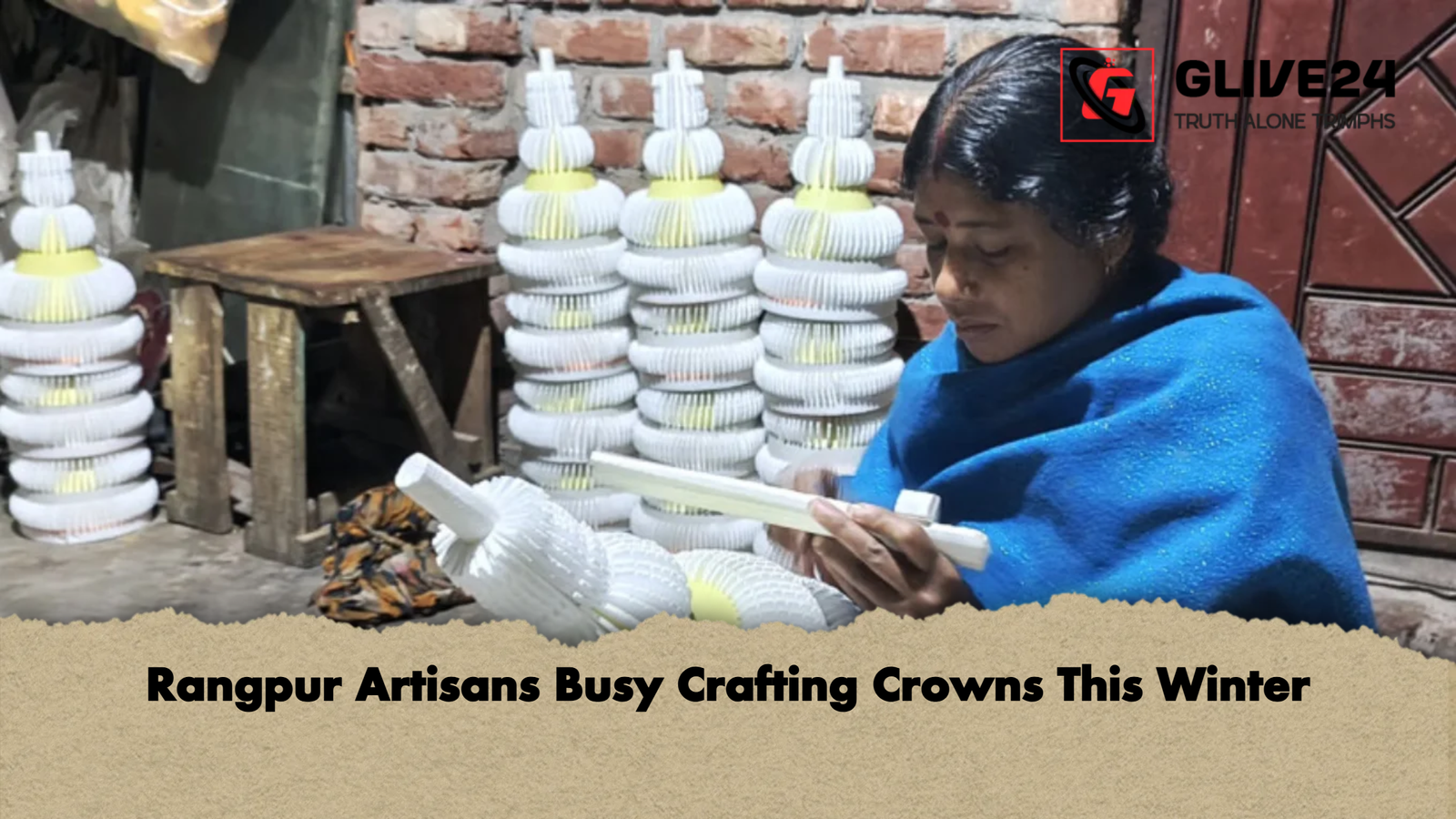
As winter arrives in northern Bangladesh, it brings with it the peak season for weddings, religious ceremonies, and cultural festivities. In Rangpur, this seasonal surge has translated into a significant rise in activity for local pith (shola) craftsmen, whose intricate creations—from wedding crowns to deity figurines—are now in high demand.
According to the Bangladesh Small and Cottage Industries Corporation (BSCIC), more than 500 families in the Rangpur region are involved in the shola craft sector. These artisans produce a wide variety of items, including crowns for weddings and rice-feeding ceremonies (annaprashan), traditional toys, and decorative figurines used during festivals. Their work is particularly sought after for ceremonial decorations, mandaps, and festive stages.
Craftspeople report that November to April marks the most profitable period for shola products. One prominent artisan, Ramanuj Barman (50) from Sadhutari village in Lalmonirhat, learned the craft from his father and now operates a small workshop from home. Visiting his workshop reveals workers busy cutting, colouring, and assembling shola into ornate designs. Ramanuj explains:
“We work with shola all year, but winter is the busiest season. Wholesalers place advance orders for wedding and annaprashan crowns. Each crown sells for 400–600 Taka, yielding a profit of 250–350 Taka. Annually, our sales reach 700,000–800,000 Taka.”
Despite growing sales, rising raw material costs have affected overall earnings. Many artisans continue the craft to preserve a family tradition. Basana Rani (44), also from Sadhutari, notes:
“Our family has been in this trade for generations. For Hindu weddings and annaprashan ceremonies, shola crowns are essential, so demand never diminishes. With sufficient raw materials, a skilled artisan can make five to six crowns a day.”
Sourcing quality shola has become increasingly difficult. Sudhir Chandra Sen (65) of Mahiganj, Rangpur, remarks:
“Previously, we sourced shola locally. Now, we must buy it from distant regions. Despite challenges, annual sales of shola items reach around 1,000,000 Taka. However, younger generations are reluctant to join this work, as it requires patience and precision.”
Average Production and Sales of Shola Products :
| Product Type | Production Cost (Taka) | Selling Price (Taka) | Approx. Profit (Taka) |
|---|---|---|---|
| Wedding Crown | 400–600 | 700–800 | 250–350 |
| Annaprashan Crown | 300–500 | 600–700 | 250–300 |
| Deity Figurines | 500–700 | 900–1000 | 350–400 |
| Traditional Toys | 200–300 | 400–500 | 200–250 |
Hiralal Roy (70), a senior Hindu community leader in Lalmonirhat, emphasises the cultural importance of shola crafts:
“Though not expensive, these pieces are extraordinarily beautiful. Generation after generation, we have used these crowns and figurines. Even today, wedding venues and festive stages call for shola artisans. Government support is crucial to preserve this heritage.”
In Rangpur, winter weddings not only celebrate traditions but also sustain a centuries-old craft, providing livelihoods and preserving cultural identity. While modern challenges loom, the dedication of artisans ensures that this delicate, ornamental craft continues to flourish.