
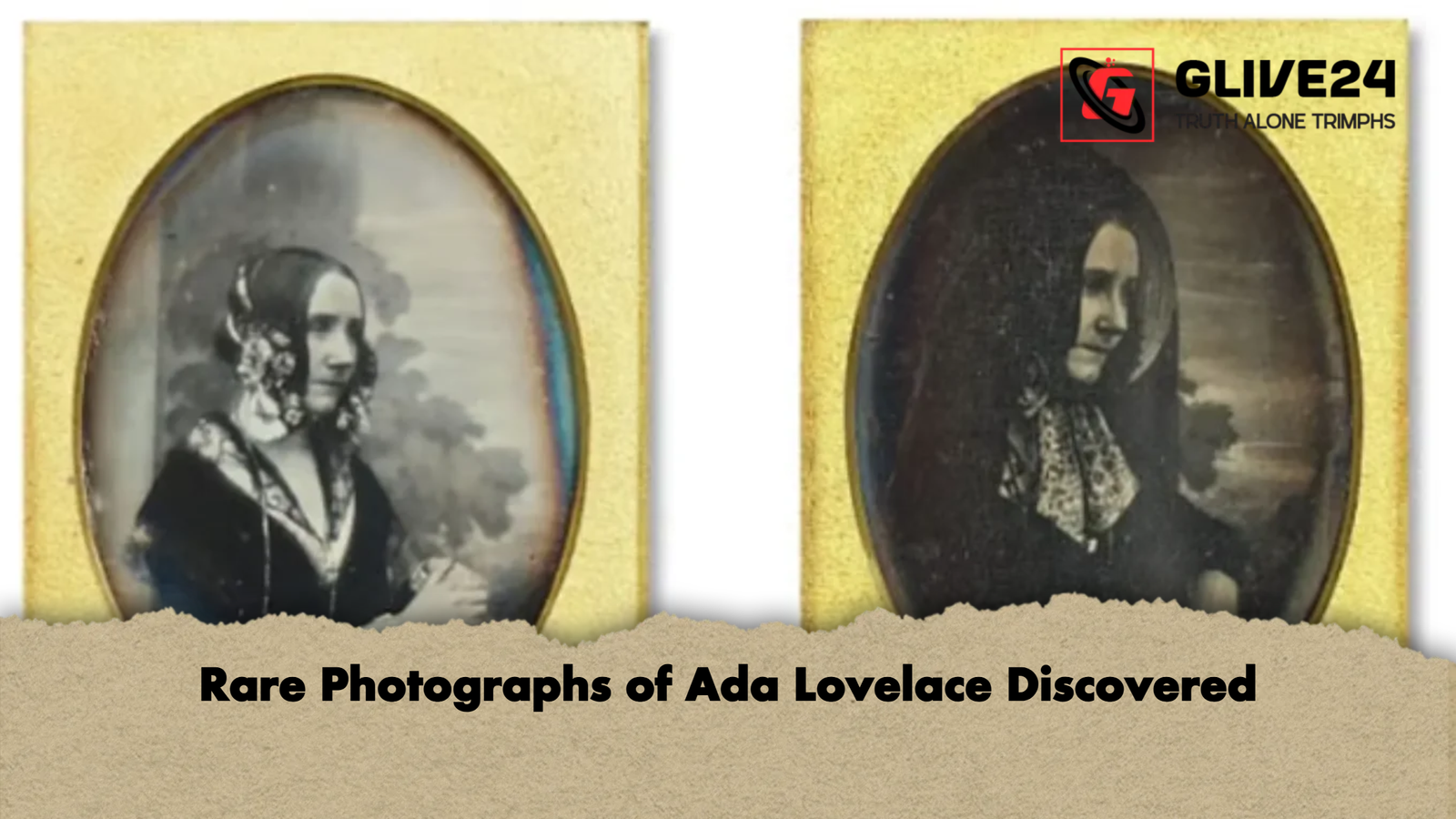
Some of the most fragile and rare photographs of Ada Lovelace, widely celebrated as the world’s first computer programmer, have now secured a permanent place in Britain’s national collections. Hidden from public view for generations, these images provide a remarkable visual record of a pioneering mathematician whose work laid the foundation for modern computing and machine operations.
Ada Lovelace, a 19th-century English mathematician and writer, was renowned not only for her calculations but for her insight into how machines could follow structured, sequential instructions. For decades, many of her portraits remained in private hands, but London’s National Portrait Gallery has recently acquired them through a private sale, adding them to its permanent collection.
A gallery statement noted that this acquisition honours Lovelace’s groundbreaking contributions and provides inspiration for future generations. The photographs are daguerreotypes—images created on silver-plated copper sheets. In the 19th century, photographers would chemically prepare the plate, expose it in a camera, and then reveal the image using mercury vapour. Each plate is unique, and even minor scratches or discoloration can permanently alter the image. Given their extreme sensitivity, the gallery is storing them away from light and humidity while producing digital versions for researchers and public study.
Born in 1815, Ada Lovelace collaborated extensively with London’s scientific community. Her work with Charles Babbage, in particular, was pivotal. Babbage had designed the Difference Engine and later the Analytical Engine. Lovelace recognised that these machines’ potential extended far beyond simple number-crunching. In 1843, she published a series of instructions for the Analytical Engine, effectively creating the world’s first algorithm intended for a machine. This landmark achievement earned her recognition as history’s first computer programmer.
While analysing the Analytical Engine, Lovelace drew a clear distinction between computation and innovation. She wrote, “The machine does not originate anything; it can only carry out operations for which we are already aware.” Her visionary understanding foreshadowed the principles of modern programming and computer science.
Lovelace was the daughter of the renowned poet Lord Byron. Despite her extraordinary intellect, she led a brief life, succumbing to uterine cancer in 1852 at the age of 36. Today, her legacy endures both in the digital world she helped conceptualise and through these newly publicised images, which offer a rare glimpse into the life of a truly remarkable thinker.
Key Details of Ada Lovelace’s Life
| Attribute | Details |
|---|---|
| Birth | 10 December 1815, London, England |
| Parentage | William King-Noel and Annabella Milbanke (Lord Byron’s daughter) |
| Major Achievement | Developed the first algorithm intended for a machine (Analytical Engine) |
| Key Collaboration | Charles Babbage (Difference Engine & Analytical Engine) |
| Death | 27 November 1852, London, England (aged 36) |
| Legacy | Recognised as the world’s first computer programmer; foundational contributions to computing |
These photographs are more than mere portraits; they are tangible connections to a figure whose intellect anticipated the digital age. By safeguarding and digitising them, the National Portrait Gallery ensures that Lovelace’s pioneering vision continues to educate and inspire scholars, historians, and programmers alike.