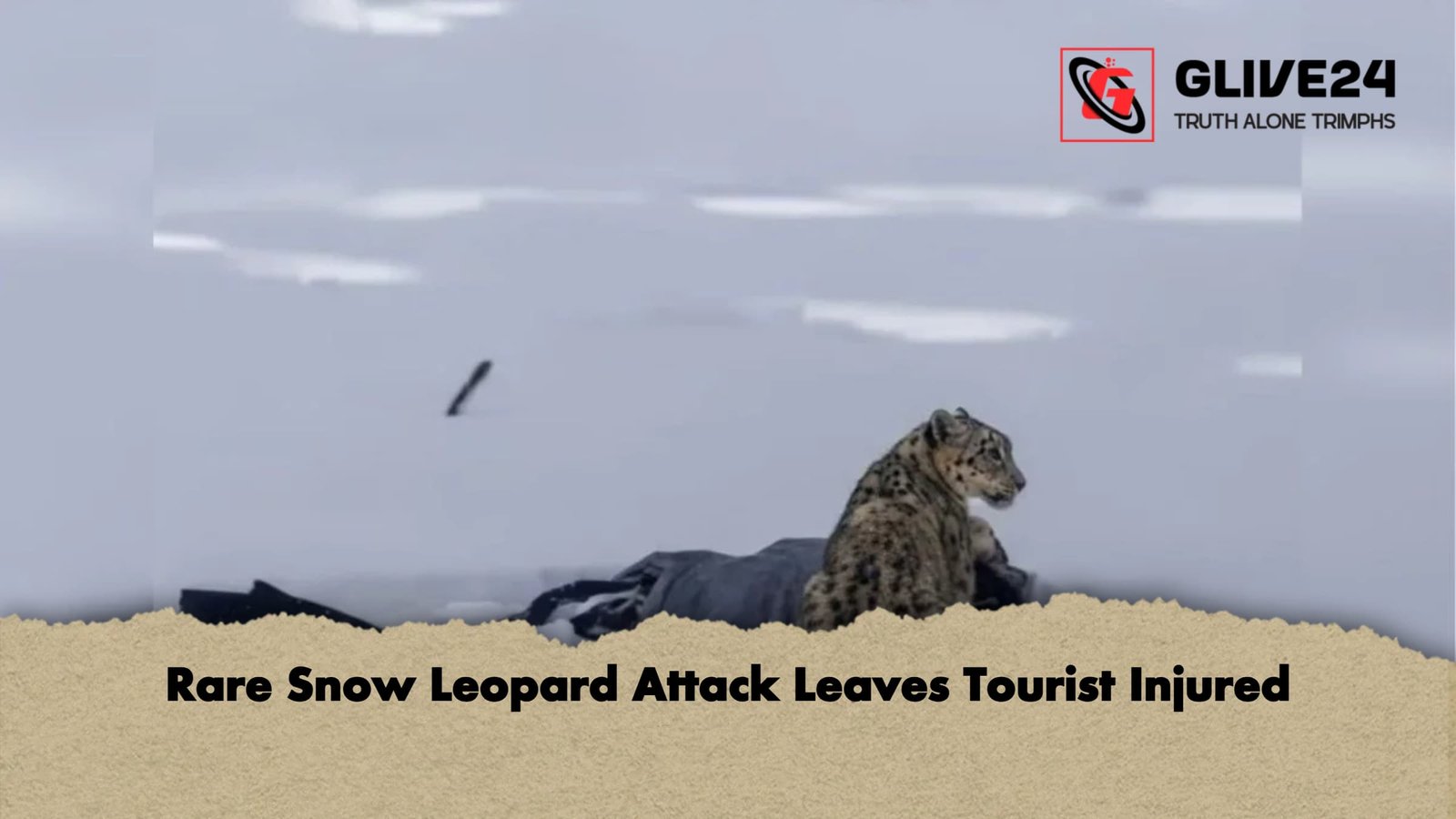
In a highly unusual and harrowing encounter, a tourist was seriously injured following an attack by a snow leopard in China’s Xinjiang Uyghur Autonomous Region. The incident occurred last Friday near a prominent ski resort in the town of Koktokay, sending shockwaves through a region typically celebrated for its serene, rugged landscapes.
According to reports from local authorities and the state broadcaster CCTV, the individual was returning to his hotel when he spotted the elusive predator—often referred to as the “ghost of the mountains.” In a moment of ill-judged enthusiasm, the tourist reportedly exited his vehicle to capture photographs of the creature from a close distance. Faced with the perceived intrusion, the normally shy animal turned aggressive and lunged at the man.
A Rare and Violent Encounter
Footage circulating on social media captured the grim aftermath. One video shows the victim lying motionless on the snow with the leopard standing nearby, while a subsequent clip depicts the man, still wearing his ski helmet and covered in blood, being assisted to safety by two passers-by. He was immediately rushed to a nearby hospital, where the local forestry bureau has since confirmed his condition is stable.
While the snow leopard is a formidable apex predator, unprovoked attacks on humans are virtually unheard of. Conservationists suggest that the proximity of the tourist likely triggered a defensive predatory response.
Conservation Status and Population
The snow leopard is one of the world’s most endangered and reclusive big cats. They inhabit the high-altitude, oxygen-thin regions of Central Asia, making sightings—let alone physical encounters—extraordinarily rare.
| Key Fact | Data Detail |
| Global Population | 4,000 to 6,500 individuals |
| Primary Habitat | High-altitude mountain ranges (Himalayas, Altai) |
| China’s Share | Approximately 60% of the global population |
| Conservation Status | Vulnerable (IUCN Red List) |
| Typical Behaviour | Crepuscular, reclusive, avoids human contact |
Expert Warnings
The World Wildlife Fund (WWF) emphasises that while China is home to the largest portion of the world’s snow leopard population, these cats typically go to great lengths to avoid human interaction. Wildlife experts have used this incident to reiterate the importance of maintaining a respectful distance from wild animals, particularly in protected habitats like Xinjiang.
Authorities have warned that as tourism expands into remote mountainous regions, the likelihood of “human-wildlife conflict” increases. Visitors are urged to remain inside their vehicles and use long-range lenses for photography to avoid encroaching on the territory of these majestic, yet unpredictable, predators.