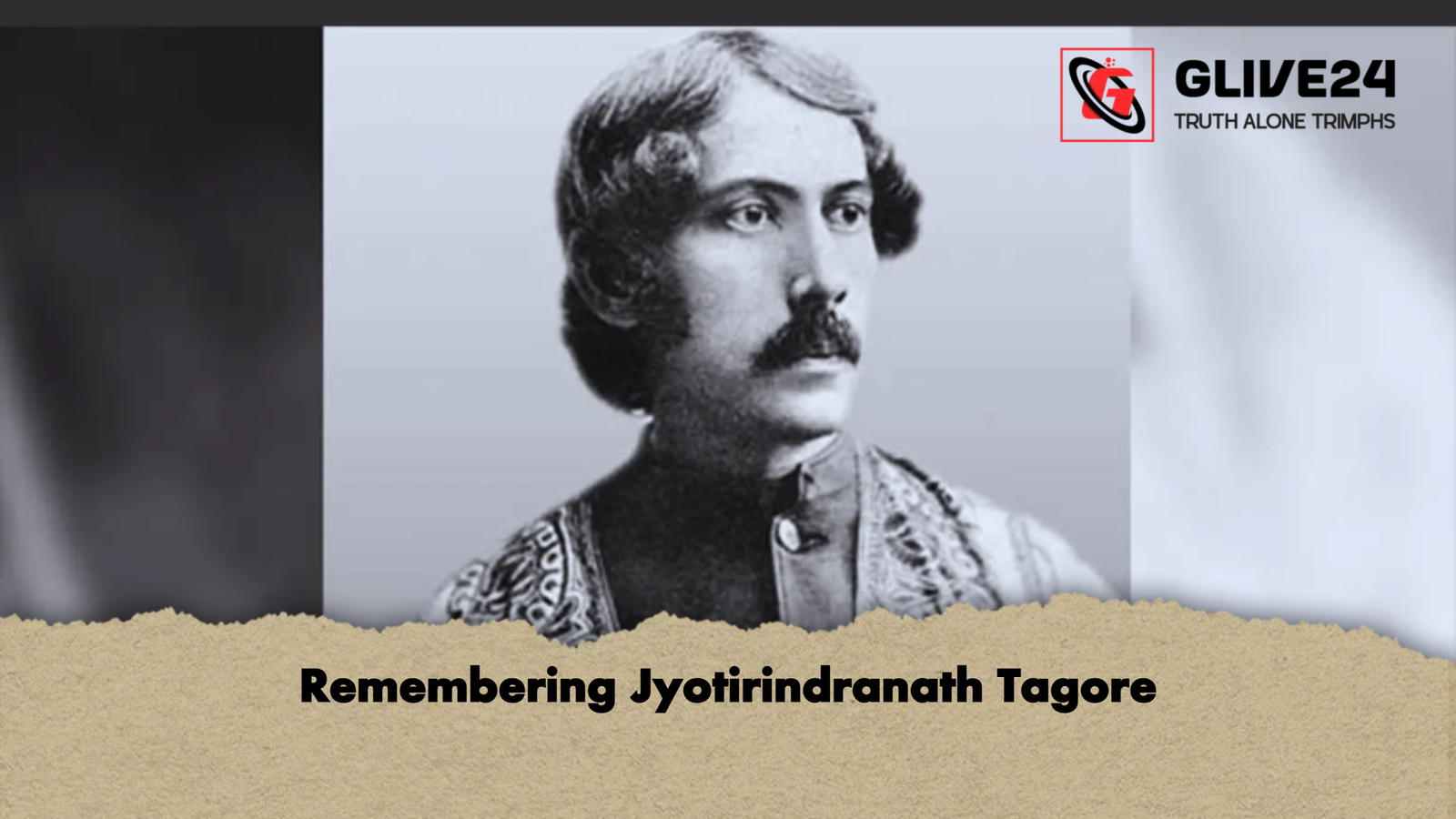
Jyotirindranath Tagore, a distinguished scion of the historic Jorasanko Tagore family, shone as a multifaceted luminary of the Bengal Renaissance. Poet, playwright, translator, composer, painter, and organiser, he carved a unique place in the intellectual and cultural landscape of 19th-century Bengal through his versatile genius.
Born on 4 May 1849 in Kolkata’s Jorasanko neighbourhood, Jyotirindranath was the son of the revered philosopher Debendranath Tagore and the elder uncle of Rabindranath Tagore, the Nobel laureate poet. His influence on Rabindranath’s early literary development was profound, providing inspiration and guidance in literature, theatre, and music.
Table of Contents
Education and Cultural Endeavours
Jyotirindranath passed the entrance examination from Kolkata College and enrolled in the F.A. course at Presidency College. However, his dedication to family-led cultural initiatives, especially the establishment and management of the Jorasanko Theatre, prevented him from completing formal education. From an early age, he served as editor of the Adi Brahmo Samaj and actively led the organisation’s cultural and intellectual activities.
He was instrumental in founding and managing several key institutions:
| Organisation | Contribution |
|---|---|
| Brahmodharma Bodhini Sabha | Promotion of literature and philosophy |
| Adi Brahmo Samaj Music School | Music education and preservation |
| Sanjibani Sabha | Theatre and cultural innovation |
| Saraswat Samaj | Literary and cultural advancement |
Dramatic Contributions
Jyotirindranath’s theatrical career began with the play Purubikram, which resonated with themes of nationalism and patriotism. Some of his notable plays include:
| Play | Distinctive Features |
|---|---|
| Kinchit Joljog | Social satire and humanist values |
| Sarojini | Advocacy for women’s emancipation |
| Hothat Nawab | Commentary on contemporary society |
| Alik Babu | Fusion of humour and national consciousness |
He also had a deep appreciation for classical Sanskrit literature, translating works such as Kalidasa’s Shakuntala, Ratnavali, Uttam Charit, Malati-Madhav, and Mrichchhakatik to make them accessible to Bengali readers. His Marathi-to-Bengali translation of Jhansi Rani is celebrated, and he was also proficient in English and Persian.
Music and Visual Arts
Jyotirindranath was an accomplished musician. His collection Swarlipi Gitimala remains an invaluable archive of Bengali musical notation. A skilled sitarist, he meticulously preserved melodies and rhythms for future generations. In the visual arts, his talent for portraiture was widely admired, with contemporaries praising his extraordinary skill.
Philosophy and Social Vision
A liberal and culturally engaged thinker, he strongly supported women’s emancipation and voiced opposition to societal conservatism and superstition. His writings consistently reflected patriotism and a yearning for human liberation.
Final Years
Jyotirindranath Tagore passed away on 4 March 1925 in Ranchi. Yet, his contributions to Bengali literature, theatre, and culture remain enduring. He exemplifies how a single individual, through multidimensional creativity, can enrich the intellectual life of an era. His name continues to shine brightly in the annals of the Bengal Renaissance.
Summary of Life and Contributions
| Aspect | Details |
|---|---|
| Birth | 4 May 1849, Kolkata |
| Family | Son of Debendranath Tagore; elder uncle of Rabindranath Tagore |
| Professions | Poet, playwright, translator, composer, painter, organiser |
| Major Organisations | Brahmodharma Bodhini Sabha, Adi Brahmo Samaj Music School, Sanjibani Sabha, Saraswat Samaj |
| Notable Plays | Purubikram, Kinchit Joljog, Sarojini, Hothat Nawab, Alik Babu |
| Literary Contributions | Sanskrit and Marathi translations, proficiency in English & Persian |
| Musical Contributions | Swarlipi Gitimala, sitar performance and notation preservation |
| Death | 4 March 1925, Ranchi |
Jyotirindranath Tagore’s legacy remains a testament to the power of multifaceted talent in shaping the cultural and intellectual heritage of Bengal.