
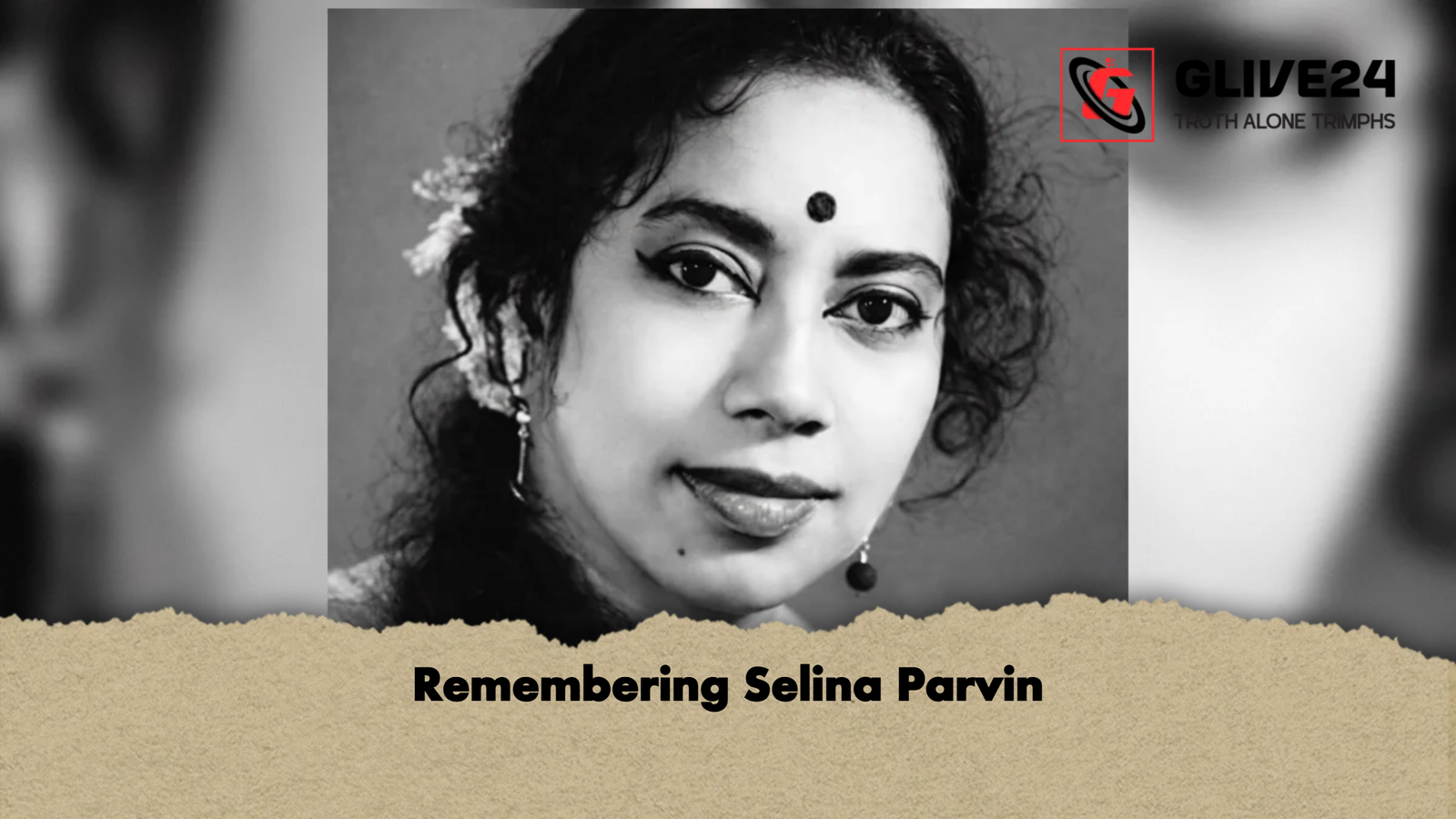
Selina Parvin stands among the most courageous female voices in the history of Bangladesh’s Liberation War, remembered for her unwavering commitment to truth, intellectual integrity, and fearless journalism. A martyr of the nation’s darkest days in 1971, she transformed her pen into a powerful instrument of resistance against oppression and injustice.
Born on 31 March 1931 in Small Kalianpur in the Feni District, Selina Parvin displayed an early affinity for literature. By the time she was in Class VI, she had already begun writing poems and short stories, marking the emergence of a promising literary talent. Although her education was interrupted by an early marriage, her determination led her to resume studies later, demonstrating remarkable resilience and intellectual discipline.
Her professional journey began modestly in the advertising department of the magazine Lollona. Over time, she established herself within intellectual circles and developed associations with prominent cultural and literary figures, including Munier Choudhury and Shahidullah Kaiser, both of whom were influential voices in the cultural landscape of East Pakistan.
In 1969, defying political pressure and social constraints, she founded and published Shilalipi, a magazine that openly supported the cause of autonomy and freedom. As editor and publisher, she played a hands-on role in shaping its editorial stance. The publication soon became a bold platform for anti-authoritarian expression, reflecting her deep political awareness and moral conviction.
During the Bangladesh Liberation War in 1971, Selina Parvin extended her support to freedom fighters in various ways, including providing moral and logistical assistance. However, her outspoken editorial work and the publication of Shilalipi drew the attention of pro-Pakistani paramilitary forces, particularly the Al-Badr militia, placing her on their target list.
On 13 December 1971, just days before victory, she was abducted from her residence in Siddheshwari, located in Dhaka, by Al-Badr collaborators. The following day, 14 December—now commemorated as Martyred Intellectuals Day—she was brutally killed along with numerous other intellectuals. Her body was later discovered at the Rayerbazar Martyred Intellectuals Memorial mass killing site, blindfolded and bearing the marks of violence.
Key Milestones in the Life of Selina Parvin
| Year | Event |
|---|---|
| 1931 | Born in Small Kalianpur, Feni District |
| Early 1940s | Begins writing poetry and short stories in school |
| 1950s | Joins Lollona magazine in advertising department |
| 1960s | Becomes active in literary and intellectual circles |
| 1969 | Publishes Shilalipi, a pro-liberation magazine |
| 1971 (13 Dec) | Abducted from her home in Dhaka |
| 1971 (14 Dec) | Martyred by Al-Badr forces |
Selina Parvin remains a symbol of intellectual courage and moral clarity. Her life and sacrifice continue to inspire generations, reminding the nation of the immense cost of freedom and the enduring power of truth.