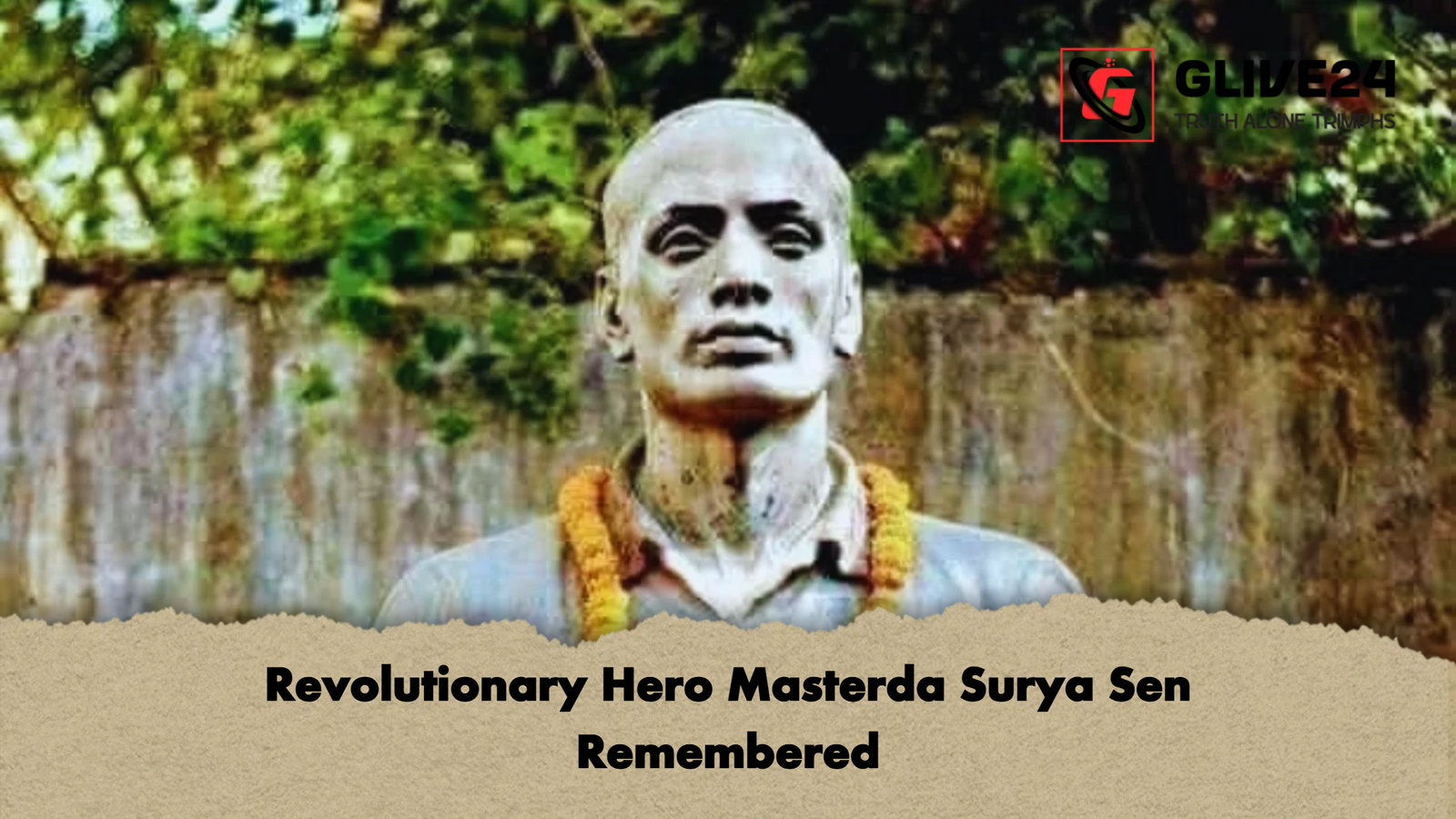
In the annals of Bengal’s struggle for independence, a few names shine like eternal beacons, and Surya Sen is among the brightest. Leading the charge of fearless Bengali youth against British colonial rule, he epitomised courage, sacrifice, and an unwavering commitment to the liberation of his motherland. The example he set by dedicating his life to the cause of freedom remains etched in history.
Born on 22 March 1894 in Noapara village of Rauzan, Chittagong, Surya Sen’s early life was marked by both affection and tragedy. His father, Rajmoni Sen, and mother, Shashibala Sen, nurtured his formative years, but he became fatherless at the tender age of five. Subsequently, under the care of his elder uncle, Gourmoni Sen, he grew up in an environment that quietly instilled values of humanity, responsibility, and patriotic zeal.
After the 1757 Battle of Plassey, Bengal’s light of sovereignty dimmed. Nearly two centuries of oppressive colonial rule had cast a long shadow over the region, yet revolutionaries like Surya Sen reignited the flame of freedom. Their sacrifice and struggle gradually paved the way for the realisation of independence.
It was during his college years that Surya Sen was introduced to revolutionary ideas. Although he later pursued a teaching career, his primary aim was to awaken and inspire the youth. At Umachara High English School in Chittagong, he did more than impart lessons; he sowed seeds of nationalism and courage in his students’ hearts. His dedication and charisma earned him the affectionate title of “Masterda.”
An active member of the revolutionary organisation Jugantar, he took part in numerous anti-British operations. Repeated arrests, imprisonment, and torture failed to deter him.
The night of 18 April 1930 remains unforgettable in Chittagong’s history. Under Masterda’s leadership, the historic Chittagong Armoury Raid took place. Surya Sen and his team captured the armoury, hoisted the national flag, and declared Chittagong free. This audacious act shook the foundations of British authority and inspired revolutionary fervour across the subcontinent. Among his courageous comrades was the revolutionary heroine Pritilata Waddedar, whose bravery and sacrifice symbolised the spirit of women in the freedom struggle.
After a prolonged period in hiding, Surya Sen was eventually captured. Subjected to brutal torture in prison—a grim chapter in colonial history—he was sentenced to death in 1933. On 12 January 1934, the sentence was carried out. Fearing public outrage, the British authorities disposed of his body in the Bay of Bengal.
Surya Sen: Key Life Events
| Event | Details |
|---|---|
| Birth | 22 March 1894, Noapara, Rauzan, Chittagong |
| Parents | Rajmoni Sen & Shashibala Sen |
| Education | Teacher at Umachara High English School |
| Revolutionary Group | Jugantar |
| Historic Act | Chittagong Armoury Raid, 18 April 1930 |
| Arrest & Torture | Captured after prolonged hiding, subjected to brutal imprisonment |
| Death | Sentenced 1933, executed 12 January 1934 |
| Body Disposal | Bay of Bengal, to avoid public unrest |
Surya Sen lives on—not in flesh, but in the enduring ideals of freedom, the spirit of protest, and every act of courage. He was not merely a revolutionary; he was a guiding light, an inspiration, and a symbol of unbroken resolve. His legacy remains immortal in the hearts of Bengal’s freedom-loving people.
A profound tribute to Masterda Surya Sen.