Citizens across the world often look to their governments in the hope of securing a better life. When those expectations are dashed, frustration can quickly escalate into mass protest—and, in some cases, full-scale revolution. Yet history repeatedly demonstrates that the fall of an entrenched regime does not guarantee lasting stability. Elections may follow, but their outcomes and consequences vary widely. The experiences of five countries—Sri Lanka, Tunisia, Egypt, Ukraine, and Georgia—offer a compelling comparative perspective.
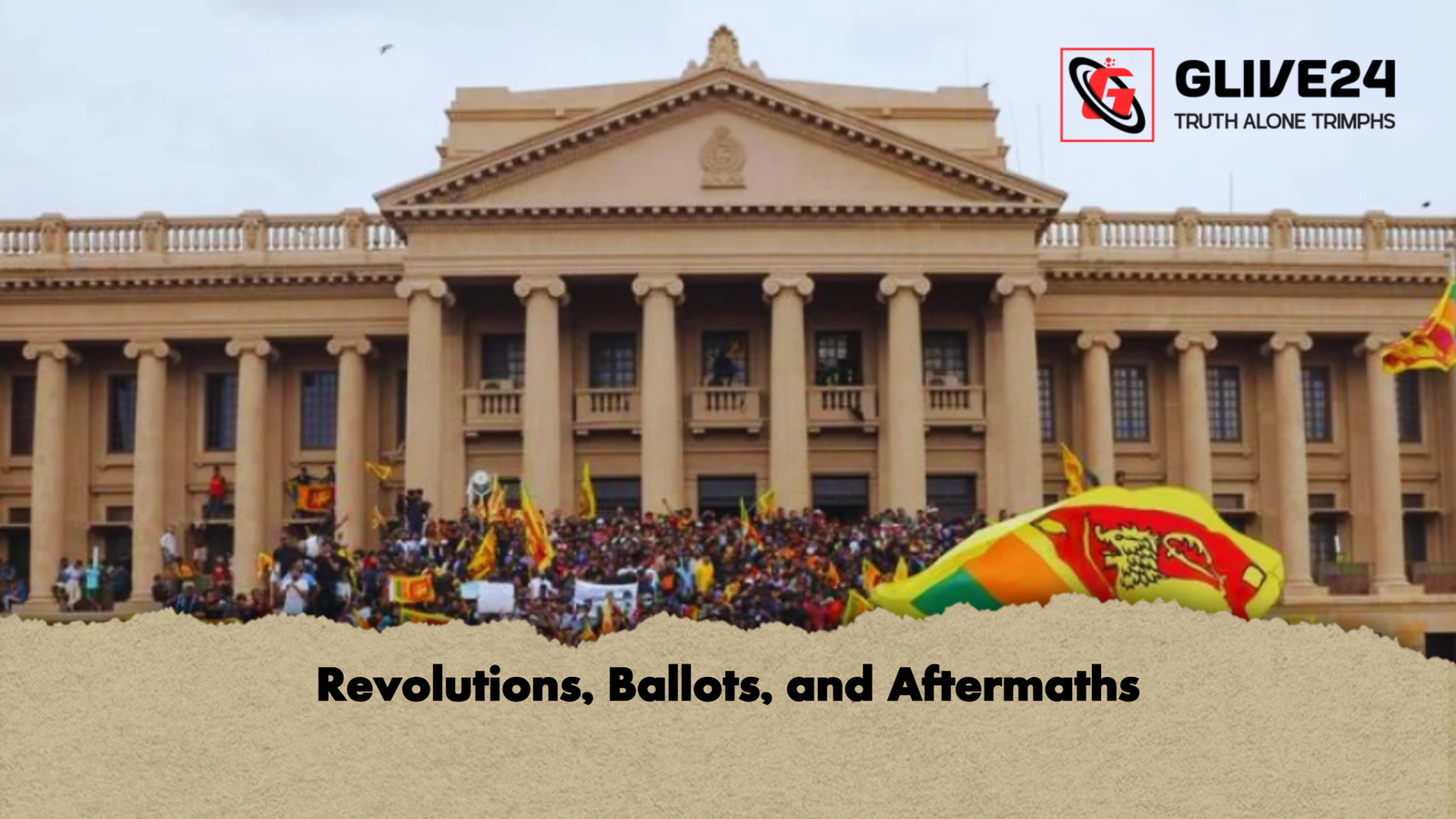
In Sri Lanka, a severe economic crisis in 2022—triggered by mounting debt, dwindling foreign reserves, and soaring inflation—sparked widespread unrest. Protesters took to the streets, eventually forcing then-President Gotabaya Rajapaksa to flee the country. Scenes of jubilant crowds occupying the presidential residence circulated globally, symbolising the dramatic collapse of authority. Two years later, elections brought a decisive shift: Anura Kumara Dissanayake secured the presidency, while his alliance, the National People’s Power, achieved a parliamentary majority. Since then, the country has experienced a degree of political calm, with fewer large-scale protests dominating headlines.
Tunisia, widely regarded as the birthplace of the Arab Spring, witnessed the fall of long-time ruler Zine El Abidine Ben Ali in January 2011 following mass protests against corruption and economic hardship. Elections held later that year were largely deemed free and fair, marking a historic democratic opening. However, despite constitutional progress, political fragmentation and limited economic reform have fuelled public dissatisfaction. Many analysts argue that the promise of the “Jasmine Revolution” has faded, leaving the country mired in uncertainty.
Egypt’s trajectory proved even more turbulent. The 2011 uprising forced President Hosni Mubarak to resign after nearly three decades in power. Subsequent elections saw Islamist parties, including the Muslim Brotherhood, dominate parliament, and Mohamed Morsi became the country’s first democratically elected president. Yet political polarisation and governance challenges culminated in a 2013 military coup led by Abdel Fattah el-Sisi. The democratic experiment was short-lived, underscoring the fragility of post-revolution transitions.
Ukraine’s 2004–05 “Orange Revolution” emerged from allegations of electoral fraud in a presidential contest between Viktor Yanukovych and Viktor Yushchenko. Mass protests forced a rerun of the vote, which Yushchenko won. The movement reoriented Ukraine towards Europe, but it also intensified geopolitical tensions with Russia—a rivalry that continues to shape the country’s destiny.
In Georgia, the peaceful “Rose Revolution” of 2003 ousted the ruling establishment amid allegations of electoral manipulation. Opposition leader Mikheil Saakashvili subsequently won the presidency with an overwhelming mandate. While initially hailed as a reformer, his tenure later drew criticism for centralising power, illustrating how revolutionary optimism can give way to more complex political realities.
Comparative Overview
| Country | Revolution Period | Election Outcome | Long-term Consequence |
|---|---|---|---|
| Sri Lanka | 2022 | Left-leaning leadership elected | Relative stability restored |
| Tunisia | 2011 | Democratic elections held | Persistent political uncertainty |
| Egypt | 2011 | Civilian government, later military coup | Return to authoritarian governance |
| Ukraine | 2004–05 | Re-run election, pro-European victory | Ongoing geopolitical tension |
| Georgia | 2003 | Reformist leader elected overwhelmingly | Mixed legacy, partial instability |
Conclusion
These case studies highlight a crucial lesson: revolutions may dismantle old regimes, but they do not automatically construct resilient democracies. Elections are merely one step in a long and often fragile process. Without strong institutions, inclusive governance, and sustained reform, the aspirations that ignite revolutions risk fading into renewed disillusionment.