
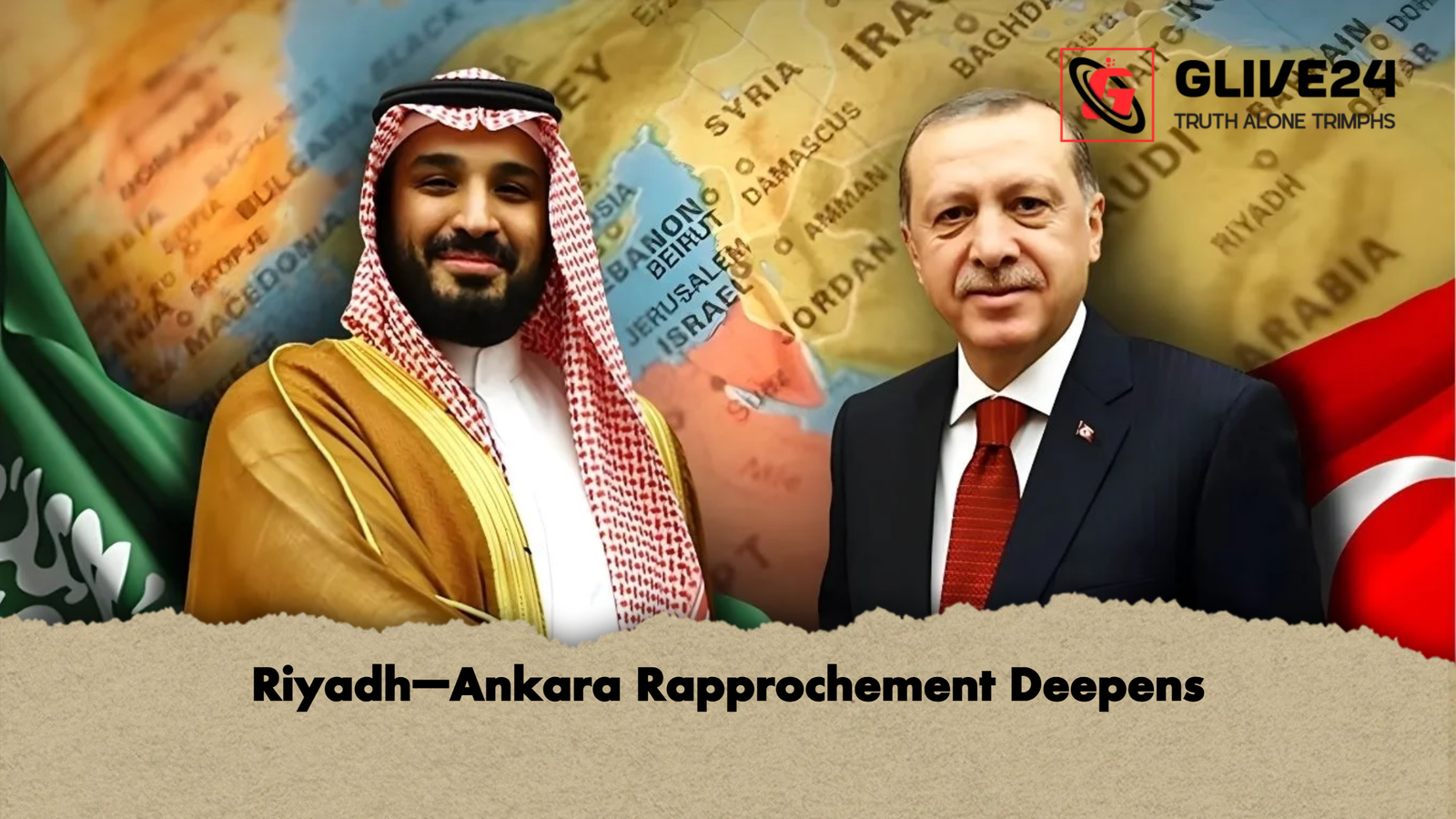
In a markedly altered Middle Eastern geopolitical landscape, relations between Saudi Arabia and Turkey have entered a new and consequential phase. The recent visit of Turkish President Recep Tayyip Erdoğan to Riyadh has signalled a renewed determination on both sides to consolidate a strategic partnership that only a few years ago appeared strained, if not fractured.
The rupture in ties followed the 2018 killing of journalist Jamal Khashoggi, an घटना that provoked widespread international condemnation and cast a long shadow over bilateral relations. During that period, Riyadh faced intense diplomatic pressure, while Crown Prince Mohammed bin Salman focused inward, accelerating domestic reforms and administrative restructuring under the ambitious Saudi Vision 2030 programme. The initiative seeks to transform the Kingdom’s oil-dependent economy into a diversified, innovation-driven model capable of generating employment for its youthful population.
In recent years, however, shifting global power dynamics and persistent regional crises have prompted Saudi Arabia to resume a more assertive diplomatic posture. From the protracted conflict in Yemen to instability in Gaza, Sudan and the wider Red Sea corridor, Riyadh has sought to reposition itself as a stabilising force and indispensable interlocutor.
Within this recalibration, Turkey has emerged as a pivotal partner. Ankara’s advances in defence manufacturing—particularly in drone technology—alongside its experience in large-scale construction and infrastructure projects, are of considerable interest to Saudi planners. For Turkey, grappling with economic headwinds and currency pressures, closer ties with Saudi Arabia promise fresh investment flows and expanded trade.
Recent joint statements underscore cooperation on Somalia’s territorial integrity, efforts towards peace in Gaza, stabilisation in Sudan and a political settlement in Syria. These commitments suggest that the rapprochement extends beyond commerce into the strategic and security domains.
Key Drivers of Saudi–Turkish Convergence
| ক্ষেত্র (Field) | Saudi Arabia’s Objective | Turkey’s Interest |
|---|---|---|
| Regional Security | Expand influence in Yemen and the Red Sea | Broaden diplomatic footprint in the Middle East |
| Economic Policy | Diversify beyond oil dependency | Increase trade and attract Gulf investment |
| Defence Cooperation | Enhance military capability and technology | Expand defence exports |
| Africa & Gaza | Strengthen diplomatic and humanitarian engagement | Bolster leadership credentials in the Muslim world |
Some analysts speculate that, should Turkey align more closely with a prospective Saudi–Pakistan security understanding, a new axis of influence could emerge. While such a configuration remains hypothetical, the very discussion reflects evolving calculations in regional power balances.
Ultimately, the renewed warmth between Riyadh and Ankara represents more than a bilateral thaw. It forms part of a broader reconfiguration of Middle Eastern politics, shaped by pragmatic diplomacy, economic necessity and shared strategic interests. Whether this partnership proves durable will depend upon sustained mutual trust, tangible economic outcomes and the capacity of both states to navigate an increasingly volatile regional environment.