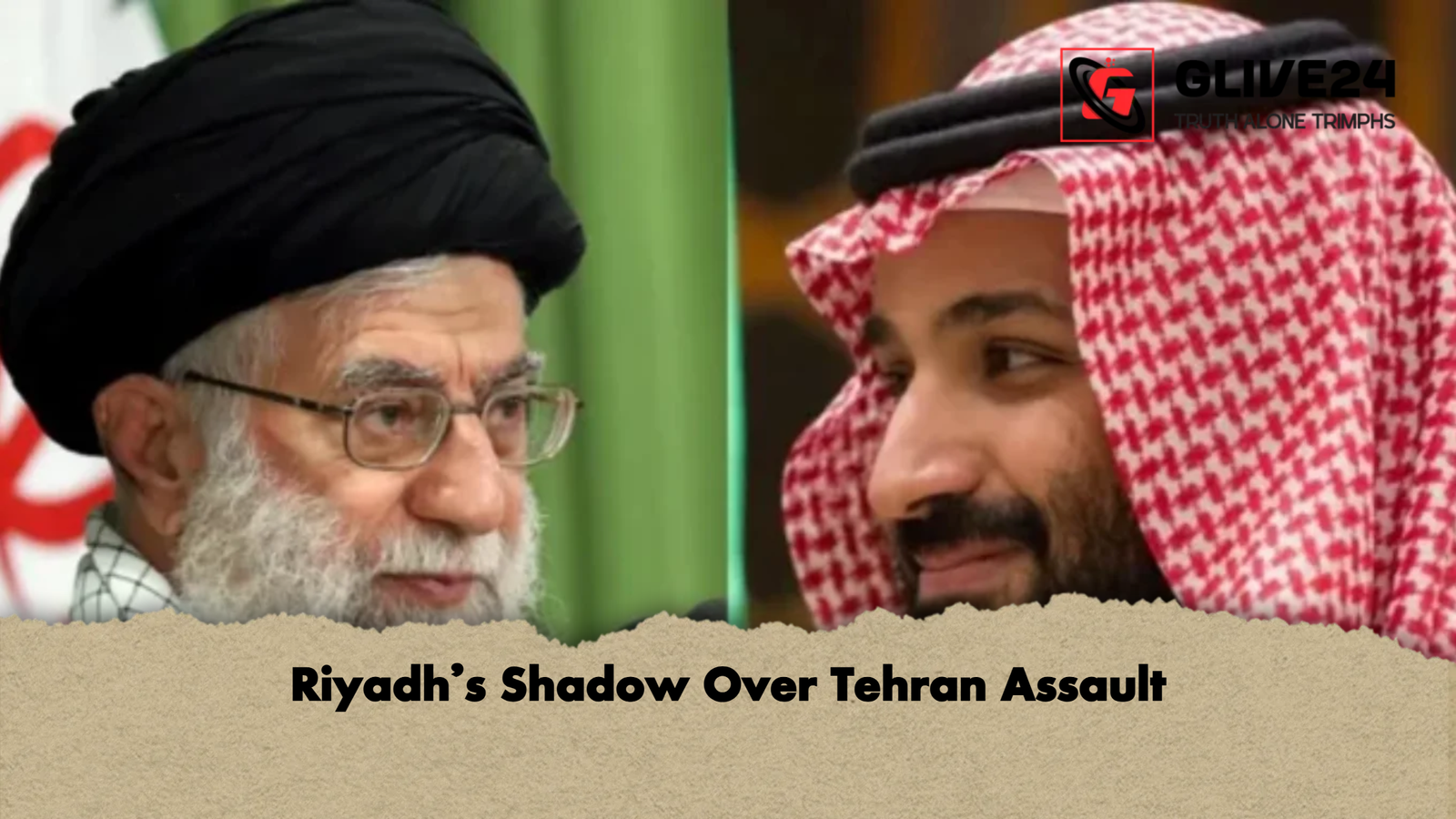
A major escalation in Middle Eastern tensions unfolded on Saturday, 28 February, when coordinated air strikes by Israel and the United States struck multiple targets in Tehran and several other Iranian cities. Reports carried by The Washington Post and Reuters claim that the operation resulted in the death of Iran’s Supreme Leader, Ayatollah Ali Khamenei, along with a number of senior political and military figures.
If confirmed, the killing of Iran’s highest authority would represent one of the most consequential geopolitical developments in the region since the 1979 Islamic Revolution. While neither Washington nor Tel Aviv has publicly released comprehensive operational details, mounting reports suggest that Saudi Arabia may have exerted significant behind-the-scenes influence in the lead-up to the assault.
Table of Contents
Divergent Public and Private Messages
According to Reuters, Saudi Crown Prince Mohammed bin Salman publicly maintained that diplomacy remained the preferred path and insisted that Saudi territory would not be used for strikes against Iran. However, two sources familiar with high-level discussions allege that in private conversations with United States President Donald Trump, the Crown Prince warned that failure to confront Iran decisively could embolden Tehran and heighten regional instability.
The Washington Post characterised Saudi Arabia and Israel as an “unusual American-aligned pairing”, united by a shared determination to curb Iran’s regional reach and military capabilities. The publication suggests that coordinated diplomatic pressure from Riyadh and Tel Aviv played a decisive role in shaping President Trump’s decision to authorise military action.
In contrast, Saudi officials reportedly assured Iranian President Masoud Pezeshkian that Saudi airspace and territory would not facilitate any assault on Tehran. American officials cited in the reports contend that Riyadh consistently underscored the strategic urgency of countering Iran’s expanding influence.
Moments Before the Strike
Reuters further reports that shortly before the strikes commenced, Ayatollah Khamenei was meeting in a secure compound with two senior advisers, Ali Larijani and Ali Shamkhani. The location was subsequently targeted in what sources described as a precision strike. Iranian state media has acknowledged “heavy losses”, though full casualty figures and independent verification remain outstanding.
Broader Strategic Background
The confrontation follows years of mounting tensions over Iran’s ballistic missile programme, its nuclear ambitions, and its support for allied armed groups across the Middle East. Israel has long argued that Iran’s military posture poses an existential threat, while successive United States administrations have imposed sanctions and maintained a policy of containment. Saudi Arabia, viewing Tehran as its principal regional rival, has frequently aligned itself with Washington’s broader strategic aims.
The positions of the principal actors, as reported, are summarised below:
| Actor | Public Position | Reported Private Position | Strategic Objective |
|---|---|---|---|
| Saudi Arabia | Advocated diplomacy; denied territorial involvement | Encouraged robust action against Iran | Limit Iranian regional dominance |
| Israel | Opposed Iranian military expansion | Supported direct strikes | Remove perceived security threats |
| United States | Warned Iran over nuclear and regional conduct | Authorised joint military operation | Prevent further escalation |
| Iran | Condemned foreign aggression | Not applicable | Preserve regime continuity |
Prospects for Escalation
President Trump has since stated that operations will continue until there is “a fundamental change in Iran’s governing structure”, signalling the possibility of a sustained campaign. Such remarks have heightened fears of retaliatory action by Iranian forces or allied groups.
Regional analysts caution that the removal of Iran’s Supreme Leader could trigger internal power struggles within the ruling establishment, potentially destabilising the country at a sensitive juncture. Meanwhile, diplomatic efforts across Europe and Asia are reportedly intensifying in an attempt to prevent the conflict from expanding into a broader regional war.
As events continue to unfold, the Middle East faces a moment of profound uncertainty, with the regional balance of power and long-term security architecture hanging in the balance.