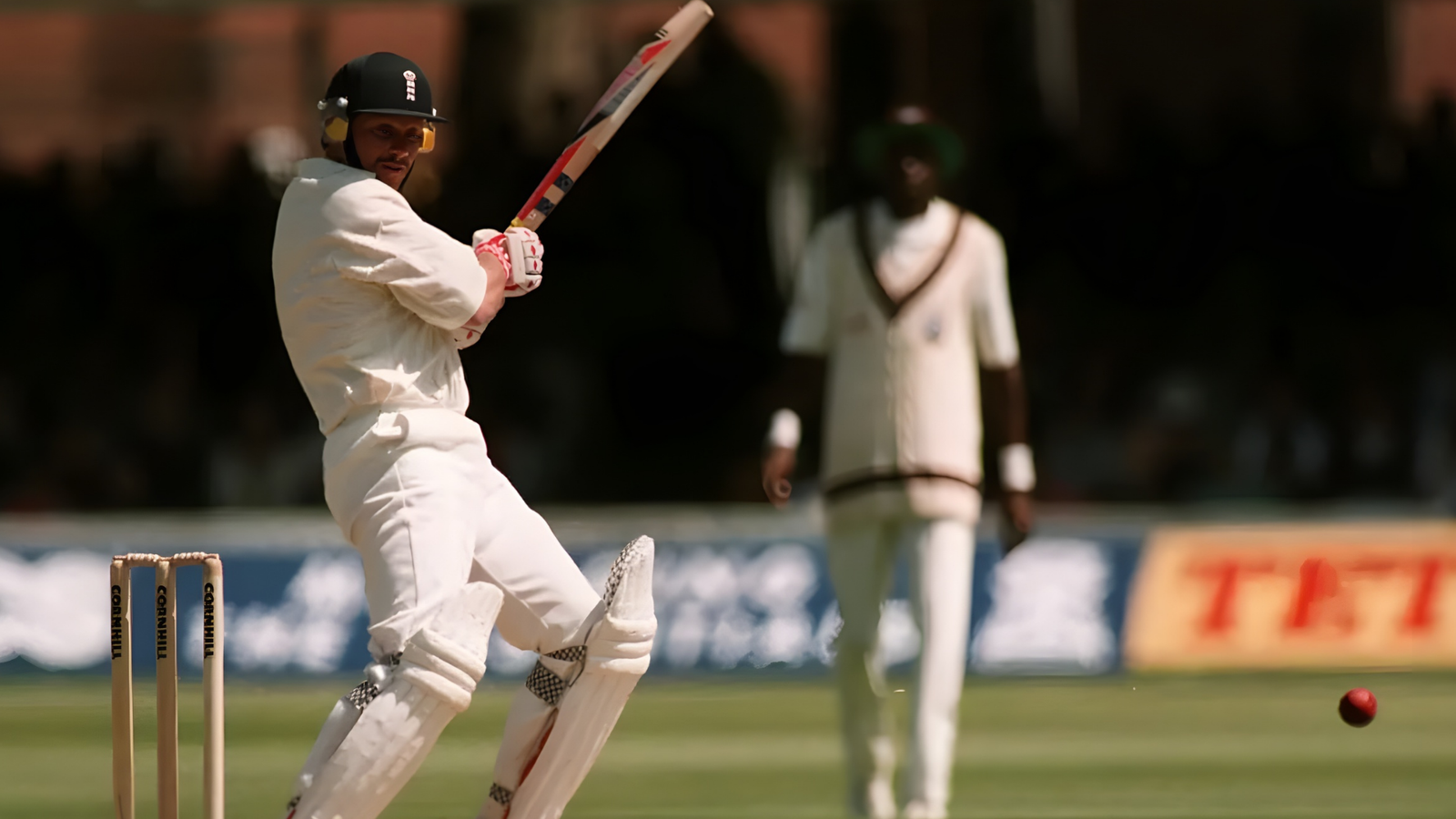
Robin Smith, the charismatic and combative former England batter famed for his square-cut mastery and his bravery against the world’s top fast bowlers, has died aged 62 at his residence in Perth, Australia. The announcement was made by his family, who said the cause of death remains unknown pending medical examination and asked for privacy as they grieve.
Smith, affectionately nicknamed “The Judge,” was one of England’s most recognisable cricketers during a challenging era for the national team. From his debut in 1988 until his final Test in 1996, he was a pillar of England’s batting order, accumulating more than 4,200 Test runs at an outstanding average.
His game revolved around courage. Against West Indies—home to Ambrose, Marshall, Walsh, and Bishop—Smith consistently held his own. His trademark square cut became iconic, a stroke that captured the imagination of fans who saw him as a symbol of resistance. He seemed to thrive when the bowling got faster, the conditions tougher, and the pressure higher.
His unbeaten 167 against Australia in 1993 remains one of England’s most beloved ODI innings. At a time when England were still searching for a white-ball identity, Smith delivered a knock of pure brilliance that stood as the national record until 2016.
Yet his career was not without setbacks. Smith’s vulnerability against spin was scrutinised heavily by selectors. When Shane Warne exploded onto the world stage in the 1993 Ashes, Smith’s place in the Test side became unstable, culminating in his omission from the next Ashes tour. Despite that disappointment, Smith later developed a deep friendship with Warne, and helped persuade him to join Hampshire.
Smith’s cricketing roots began in Durban, where his father built a training facility in their backyard and where he shared practice sessions with legends like Barry Richards. Moving to England unlocked the opportunity for both him and his brother Chris to represent their adopted country.
His final Test came in 1996 in Cape Town, after which England began a period of transition. Many still believe Smith had years of cricket left in him, but in a restructuring phase he was grouped with the “old guard” and never wore the England Test shirt again.
After cricket, Smith confronted personal demons. His 2019 autobiography offered a candid and emotional account of his struggles with alcoholism and mental health issues. Despite these hardships, recent appearances suggested a man rebuilding his life. He attended the first Ashes Test in Perth last week and also visited England Lions players at training.
Tributes have poured in from across the cricketing world. ECB Chair Richard Thompson described him as “a batter ahead of his time” and praised his ability to stand fearlessly against the toughest bowling attacks. Hampshire Cricket also acknowledged his profound impact, calling him one of the greatest players in the club’s history.
Smith leaves behind a legacy defined by courage, charisma, and an unwavering love for the game. He remains one of the most admired batters of his generation—an icon whose story will endure in cricket’s rich history.