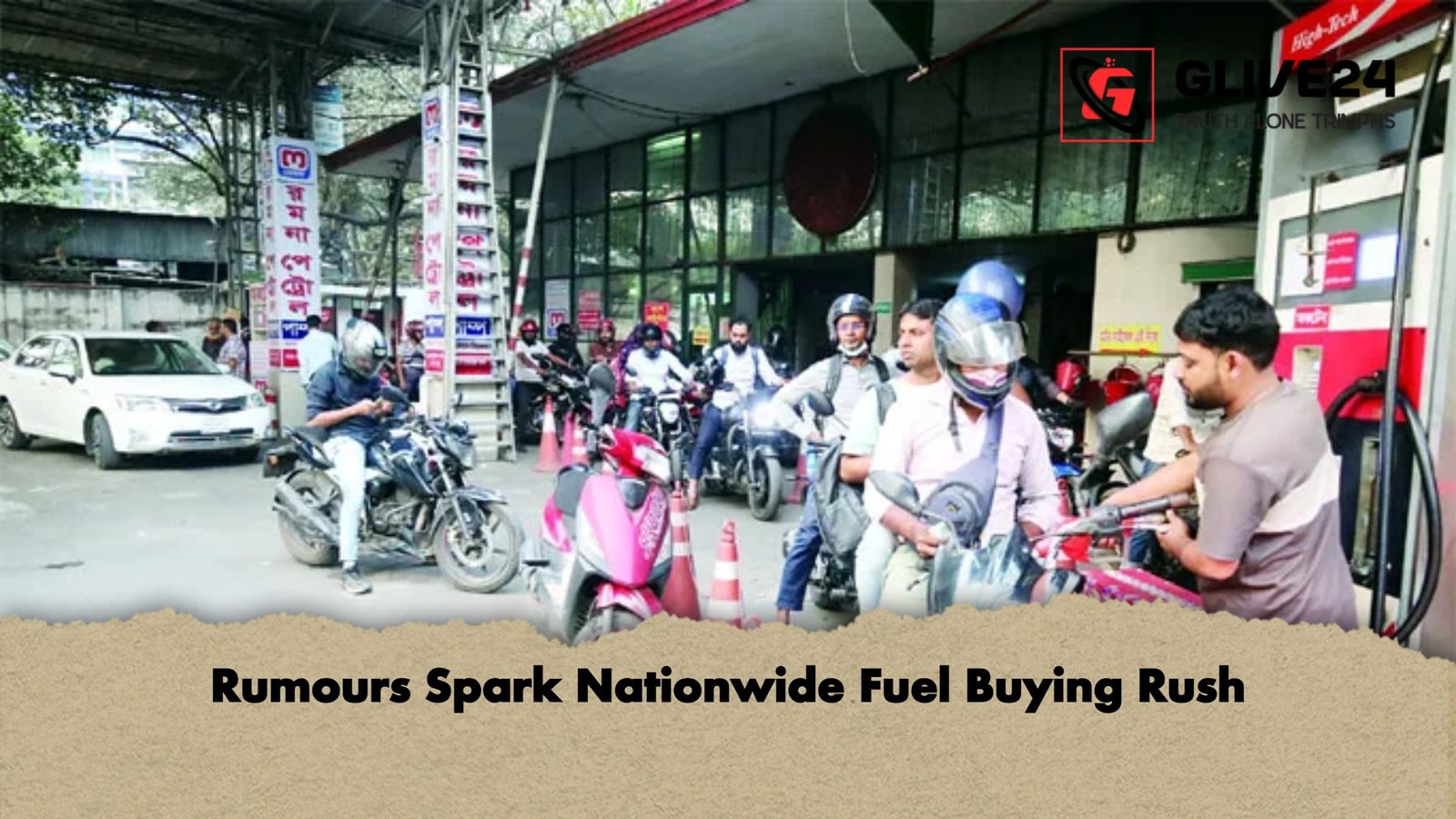
A wave of panic buying has been reported across Bangladesh following widespread rumours of a potential fuel shortage linked to ongoing conflict in the Middle East and uncertainty in the global energy market. The speculation, largely circulated through social media, has prompted motorists to rush to filling stations in the capital, Dhaka, as well as in several districts across the country.
From early morning, long queues of motorcycles, private cars, buses and trucks were seen outside petrol pumps in many parts of the capital. In some locations, drivers reportedly waited for hours to refuel. The sudden surge in demand led to temporary disruptions at a few filling stations, where fuel stocks were briefly exhausted before fresh supplies arrived.
Industry insiders say the situation appears to have been triggered not by an actual shortage, but by growing public anxiety fuelled by unverified reports online. Many consumers feared that geopolitical tensions in the Middle East could disrupt global oil supply chains, potentially affecting fuel imports into Bangladesh. As a precaution, some motorists attempted to purchase larger quantities of fuel than usual, intensifying pressure on retail supply points.
Representatives of petrol pump owners’ associations have sought to reassure the public that there has been no official announcement from the government regarding an increase in fuel prices or any interruption in supply. According to them, filling stations across the country continue to sell petrol, diesel and octane at government-fixed prices, and supply from depots remains largely stable.
Officials from the Energy and Mineral Resources Division have also issued several operational directives to filling stations in order to maintain orderly distribution and prevent artificial shortages. These measures include issuing purchase receipts for every fuel sale, verifying previous receipts where necessary, and restricting supply beyond the authorised allocation. Authorities hope such steps will discourage hoarding and reduce panic-driven purchases.
Energy analysts note that Bangladesh relies heavily on imported petroleum products, making the country sensitive to fluctuations in the global oil market. However, they emphasise that short-term disruptions in supply are unlikely unless international shipping routes or refining capacities face severe constraints. Nevertheless, sustained increases in global oil prices could raise the country’s import costs and place additional pressure on the national economy.
According to data from the Bangladesh Petroleum Corporation, the country supplies roughly 7 million tonnes of petroleum products annually to meet domestic demand. The transport sector accounts for the largest share of fuel consumption, followed by agriculture and power generation.
| Sector | Estimated Share of Fuel Consumption |
|---|---|
| Transport | 63.41% |
| Agriculture | 15.41% |
| Power Generation | 11.67% |
| Industry | 5.96% |
| Household and Others | Remaining portion |
Experts caution that rumours and panic-driven behaviour can create temporary disruptions in otherwise stable supply systems. When large numbers of consumers attempt to purchase excess fuel at the same time, distribution networks may come under strain, leading to the perception of shortages even when adequate reserves exist.
Authorities and industry stakeholders have therefore urged the public to remain calm, avoid unnecessary stockpiling, and follow official guidance. Maintaining normal consumption patterns, they say, will help ensure that the country’s fuel supply chain continues to operate smoothly.