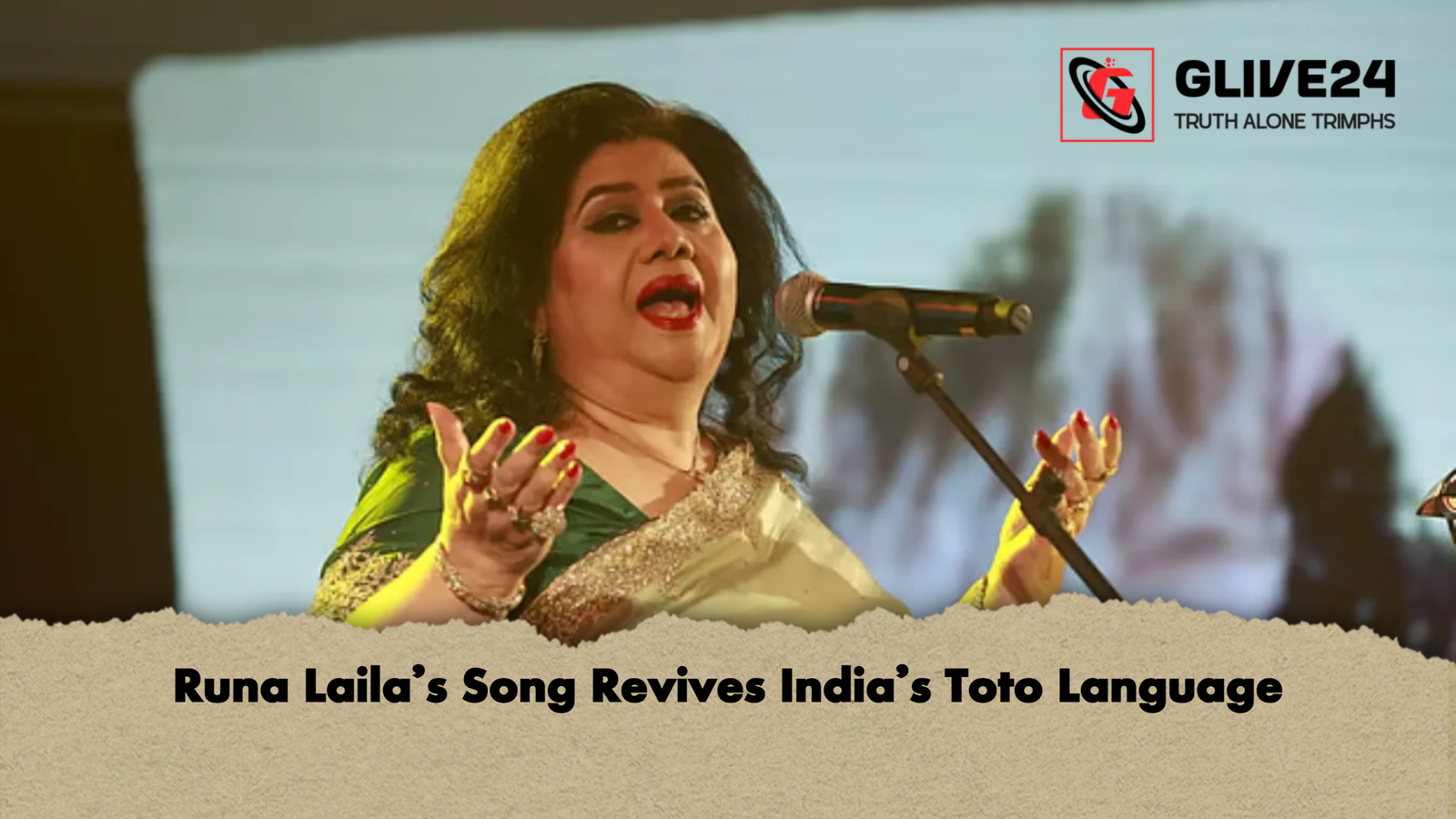
In a small village near the Bhutanese border in West Bengal, India, lies Totopara, home to one of India’s most ancient, small, and endangered tribal communities—the Toto people. For decades, the Toto language existed solely as a spoken form, without a written script, placing it at risk of gradual extinction. Remarkably, the inspiration to create a script for this language came from a song sung by the celebrated Bangladeshi singer Runa Laila. Nearly four decades ago, her song “Tumi Ami Likhi Praner Bornomala” contained a single line that profoundly influenced one tribal individual, ultimately leading to the creation of a written script for the language.
The pivotal figure behind this effort was Dhaniram Toto, who, recognising the urgent need to preserve his community’s language and culture, developed a distinct script known today as Toto-Horof or Totiko Allabet. In recognition of his remarkable contribution, the Government of India awarded him the Padma Shri. What many do not know is that a song played a crucial role in inspiring this initiative. Dhaniram revealed in an interview that while listening to the radio, he heard Runa Laila’s line—“If we can write the alphabet of our lives, why not our own language?”—which triggered the idea of creating a script for Toto.
Encouraged by this vision, Dhaniram undertook extensive research and gradually developed a formal script for his community. Simultaneously, other Toto enthusiasts sought to preserve the language using the Bengali alphabet, documenting words and folk stories to ensure its survival. Today, local initiatives include compiling dictionaries, storytelling projects, and incorporating the language into primary education.
Despite these efforts, challenges remain significant. The Toto population along the Torsa River in Alipurduar district faces pressures from modern education, external cultural influences, and limited population size. Yet, the community continues to engage younger generations in preserving their unique linguistic heritage.
Having spent two and a half months in the United States with her daughter and grandchildren, Runa Laila returned to Bangladesh on 5 March. Upon learning of her song’s impact on the Toto community, she expressed astonishment and delight. She told reporters, “A song does not merely entertain; it can leave a deep imprint on the mind. Music has the power to heal, inspire, and send messages across generations. That my song inspired an endangered tribe to revive their language is truly incredible.”
The song, penned by poet Shamsur Rahman and composed by Khandakar Nurul Alam, was initially recorded at the Bangladesh Betar transcription service in Shahbagh and later performed on Bangladesh Television. Reflecting on the offer to sing the song, Runa Laila recalled, “Nurul Alam called to suggest a patriotic song for me to sing. I agreed immediately. Little did I know that over forty-five years later, it would inspire an entire community to preserve their language.”
Initiatives to Preserve the Toto Language
| Initiative | Description | Responsible Individual/Organisation |
|---|---|---|
| Creation of a Written Script | Developed a unique alphabet, Toto-Horof / Totiko Allabet | Dhaniram Toto |
| Documentation | Recording words and stories using Bengali script | Local Toto enthusiasts |
| Educational Integration | Using the language in primary schools and storytelling | Local schools and community groups |
| Recognition | Awarded Padma Shri for language preservation | Government of India |
The extraordinary journey from a song lyric to a living script underscores the transformative power of music and its capacity to shape culture and identity. Through these combined efforts, the Toto language and heritage continue to survive and flourish.