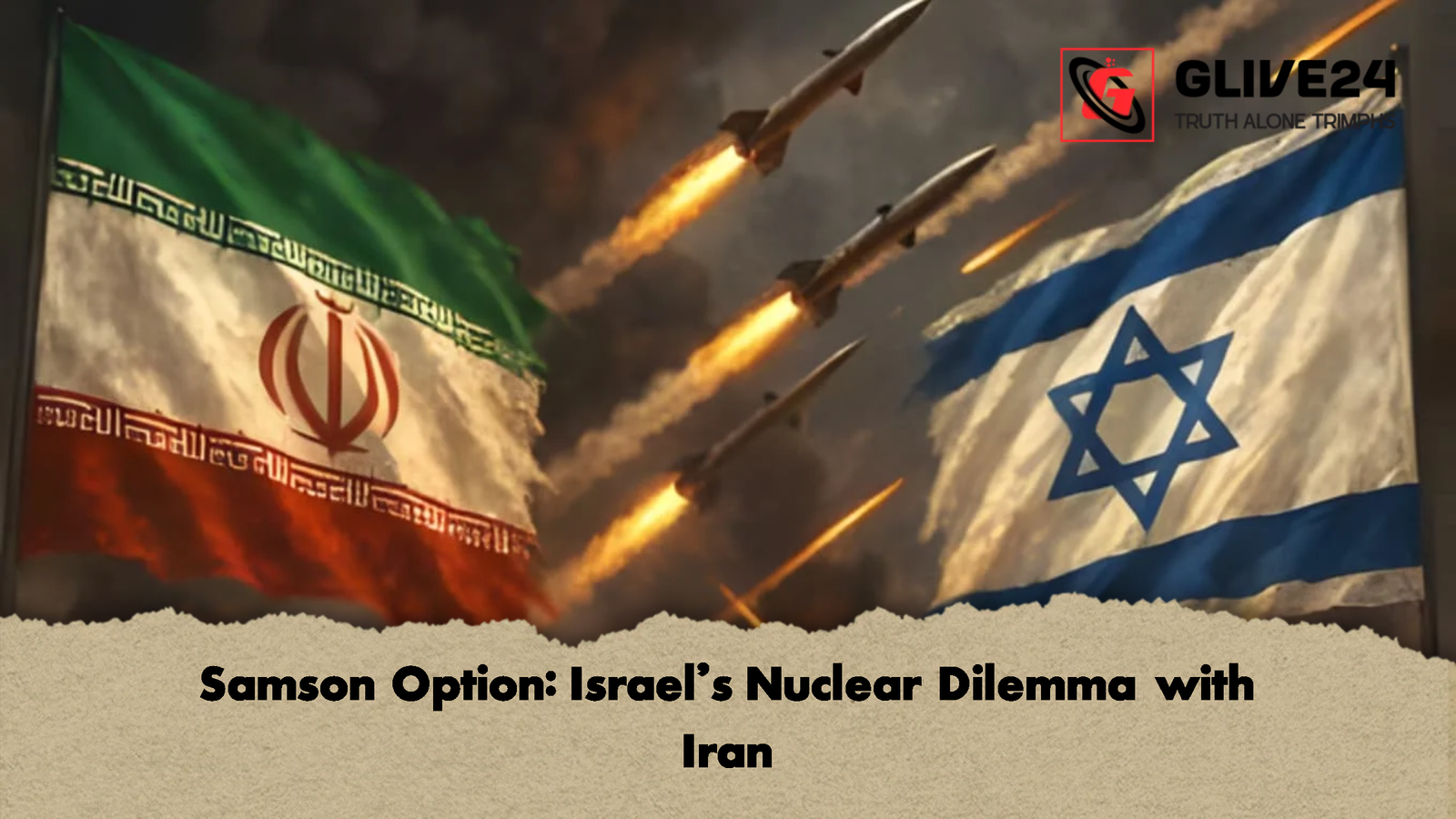
For decades, Israel’s nuclear arsenal has been one of the world’s most closely guarded secrets. Although the state has never officially confirmed its nuclear capabilities, security analysts widely believe it possesses a substantial stockpile, capable of both deterrence and offensive use.
According to the Stockholm International Peace Research Institute (SIPRI), Israel may hold roughly 80 nuclear warheads, potentially deployable via advanced fighter jets and ballistic missiles. This posture, often described as “nuclear opacity”, deliberately avoids either confirmation or denial, leaving the international community uncertain about the exact scale and readiness of Israel’s nuclear forces.
Table of Contents
Rising Tensions with Iran
Historically, questions regarding when Israel might employ these weapons were largely hypothetical. However, escalating hostilities with Iran, particularly following reports of attacks near Israel’s Dimona nuclear facility, have renewed focus on the potential use of nuclear arms. The region’s broader conflicts—spanning Gaza, Lebanon, Syria, and Iran—further complicate the strategic landscape and heighten fears of rapid escalation.
At the core of Israel’s security doctrine lies a fear of existential threat. From the 1967 and 1973 wars to contemporary confrontations with Iran and regional non-state actors, Israeli leadership has frequently framed conflicts as matters of national survival. Analysts argue that this persistent perception of existential risk heavily influences strategic calculations, including the potential use of nuclear weapons.
The “Samson Option”
Strategic analysts often refer to the so-called “Samson Option”: a theoretical doctrine under which Israel could deploy nuclear weapons if faced with total defeat or a direct existential threat. While never officially acknowledged, the underlying logic is clear: if Israel’s survival is perceived to be at stake, even non-nuclear adversaries could become targets as a form of deterrence or retaliation.
Unlike most global nuclear doctrines, which emphasise deterrence with extremely high thresholds for use, Israel’s context may lower those thresholds under extreme circumstances. Experts emphasise that the psychology of national survival is a decisive factor in Israel’s strategic planning and potential recourse to extreme military measures.
International Oversight and Strategic Risks
Israel’s nuclear programme exists outside international control mechanisms. The country has not signed the Treaty on the Non-Proliferation of Nuclear Weapons (NPT), and its nuclear facilities are not subject to international inspection. This autonomy presents a unique challenge to global security frameworks.
Recent operations in Gaza, which have resulted in thousands of casualties and widespread infrastructure destruction since October 2023, demonstrate the destructive power of conventional weapons. Analysts caution that if conventional arms can inflict such devastation, the potential threshold for nuclear use in a scenario perceived as existential cannot be ignored.
Strategic Summary
| Factor | Details | Implication |
|---|---|---|
| Estimated Warheads | ~80 | Deployable via aircraft & ballistic missiles |
| Nuclear Policy | Opacity / “Samson Option” | Retains uncertainty, deters threats |
| Key Threats | Iran, regional coalitions | Existential risk shapes strategy |
| International Oversight | None / NPT non-signatory | Independent capability outside global control |
| Conventional Military Actions | Gaza operations since Oct 2023 | Demonstrates high destruction potential |
| Strategic Consideration | Use in existential threat scenarios | Threshold for nuclear use may be lower |
Analysts stress that Israel’s engagements across multiple fronts make what was once largely theoretical a tangible strategic reality. Leadership may perceive existential risk not only from a single adversary but from regional alliances, potentially increasing the likelihood of extreme measures. The “Samson Option” thus remains a critical, if unspoken, element of Israel’s military calculus.
As tensions persist across the Middle East, the international community faces the dual challenge of monitoring conventional warfare while preparing for the unpredictable consequences of nuclear escalation under circumstances Israel perceives as threatening its very existence.