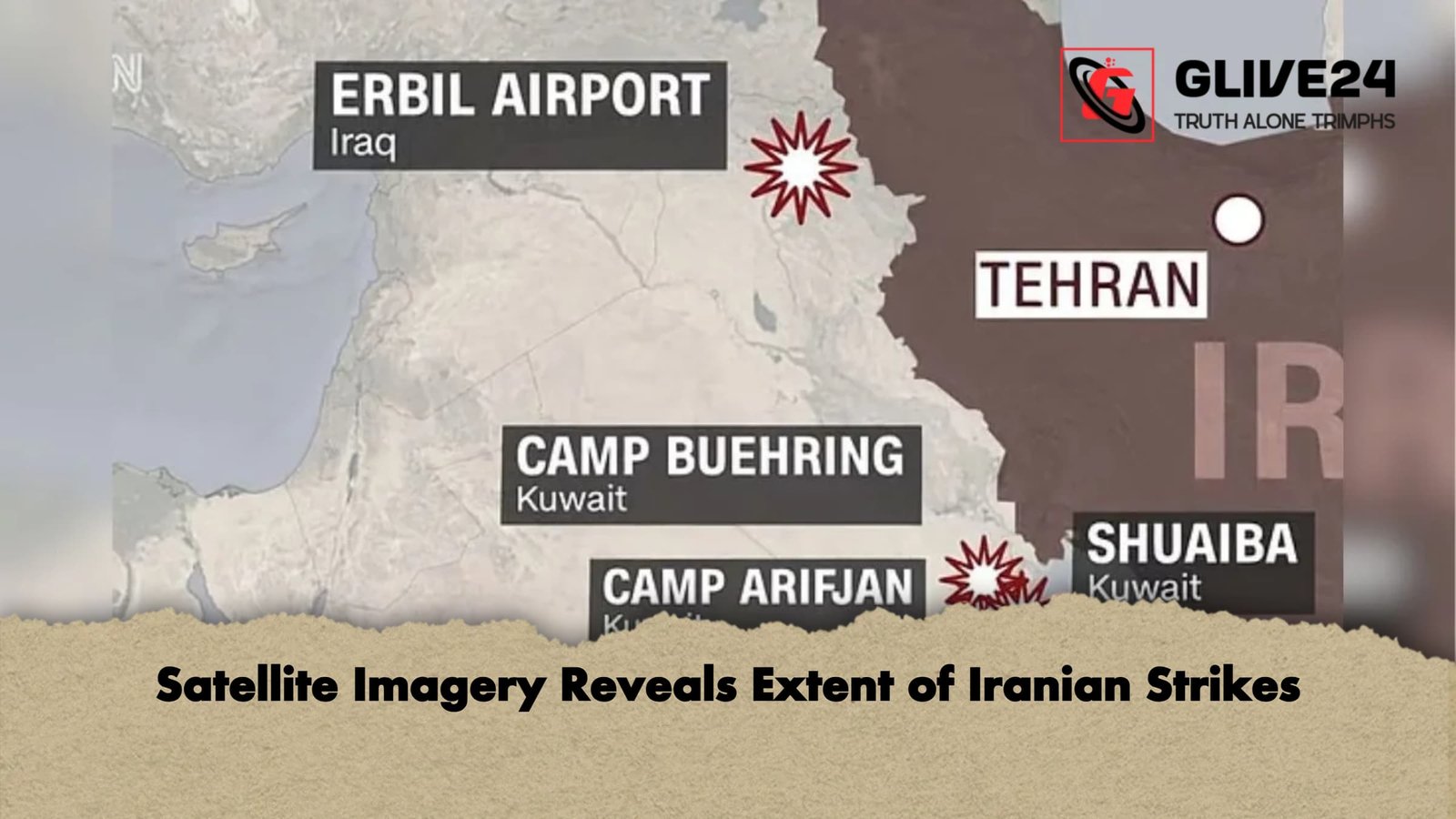
A series of high-resolution satellite images has begun to pull back the curtain on the significant structural damage inflicted upon United States military installations across the Gulf. Following a joint US-Israeli offensive that reportedly neutralised high-ranking Iranian officials, Tehran has initiated a ferocious retaliatory campaign. Over a frantic 48-hour window, at least nine major American strategic positions have been targeted by a sophisticated mix of ballistic missiles and loitering munitions.
Table of Contents
Precision and Proximity
Military analysts note that these Gulf installations are significantly more vulnerable than targets within Israel due to their geographical proximity to Iranian launch sites. This shorter flight path reduces the window for interception and enhances the terminal accuracy of Iran’s drone and missile fleet.
On Sunday morning, a targeted strike hit a temporary US operations centre at Shuaiba Port in Kuwait. Satellite passes captured plumes of thick black smoke billowing from the facility, where six American service members were tragically confirmed killed. Crucially, the imagery suggests a startling lack of active defensive measures—such as Patriot missile batteries—at this specific location during the time of the impact.
Strategic Blindness: Targeting Communications
A recurring theme in the latest intelligence reports is Iran’s tactical focus on “blinding” the US military. At least five satellite communication (SATCOM) terminals have been confirmed destroyed across various bases. This suggests a calculated effort to isolate these hubs from the global command structure.
Camp Buehring (Kuwait): An ‘Arash-2’ suicide drone struck a primary administrative building. While several Apache helicopters parked nearby narrowly escaped destruction, the structural integrity of the base’s internal housing was severely compromised.
NSA Bahrain: The home of the US Navy’s 5th Fleet—one of the most powerful maritime forces in the world—was breached by a ‘Shahed’ drone. Images clearly show a direct hit on a vital communication terminal, raising urgent questions regarding the fleet’s immediate defensive readiness.
Al-Udeid (Qatar): As the largest US airbase in the region, the damage here is the most extensive. Satellite photography confirms the destruction of warehouses and another critical SATCOM hub.
Regional Damage Assessment
| Installation | Location | Primary Damage Noted | Casualty Count |
| Shuaiba Port | Kuwait | Operations Centre destroyed by fire | 6 Killed |
| Camp Buehring | Kuwait | Administrative building / Arash-2 strike | Unknown |
| NSA Bahrain | Bahrain | SATCOM Terminal destroyed | None reported |
| Al-Udeid Air Base | Qatar | Multiple warehouses & comms hubs | Ongoing |
| King Abdulaziz | KSA | Fuel storage infrastructure | Minor |
A Breach in the ‘Steel Rain’
While the United States’ multi-billion dollar Patriot Air Defence systems successfully intercepted a vast majority of the incoming projectiles, the sheer volume of the Iranian “swarm” tactics ensured that several units penetrated the perimeter.
Experts suggest that even a small percentage of successful strikes is sufficient to shatter the perceived “security umbrella” that has defined American presence in the oil-rich Gulf states for decades. These strikes have not merely damaged hardware; they have pierced the strategic heart of US security architecture in the Middle East.