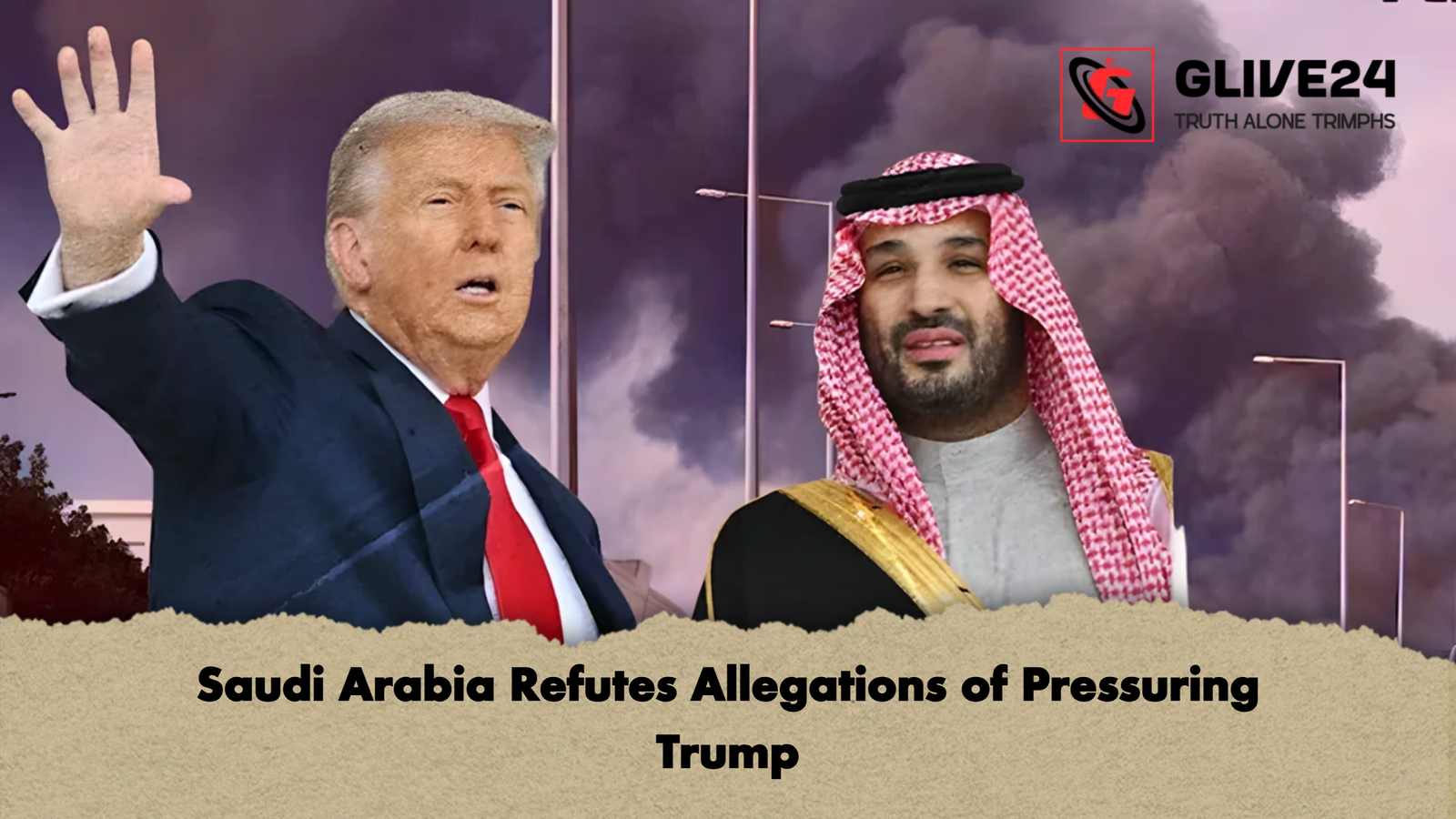
Saudi Arabia has firmly rejected claims that it covertly pressured former U.S. President Donald Trump to launch military strikes against Iran, disputing a report published by The Washington Post. The Saudi embassy in Washington emphasised the kingdom’s commitment to diplomacy and regional stability, framing itself as a stabilising force in the Gulf.
Fahad Najar, the embassy spokesperson, posted on social media platform X that Saudi Arabia has consistently prioritised diplomatic engagement to achieve credible and lasting agreements with Tehran. He stressed that at no point did the kingdom lobby the Trump administration to pursue a more aggressive stance toward Iran.
“Saudi Arabia has consistently supported all efforts to reach a diplomatic resolution with Iran,” Najar wrote. “There has been no communication with the Trump administration intended to influence a change in policy toward Tehran.”
Regional Position and Military Neutrality
Najar underlined Saudi Arabia’s role as a key regional actor, committed to preventing military escalation in the Gulf. The kingdom has reiterated its position of non-participation in potential conflicts.
Earlier, on 26th January, Crown Prince Mohammed bin Salman reportedly informed Iranian President Ebrahim Raisi during a phone call that Saudi airspace and territory would not be made available for military operations against Iran, signalling Riyadh’s firm stance on avoiding direct involvement in hostilities.
| Aspect | Details |
|---|---|
| Saudi Position | Diplomatic engagement with Iran; non-participation in military action |
| Communication with U.S. | No lobbying or pressure exerted on Trump administration |
| Crown Prince Statement | Saudi territory and airspace would not be used in strikes |
| Regional Cooperation | Active in Gulf security; working to prevent escalation |
| Report Source | The Washington Post (denied by Saudi Embassy) |
Escalation After U.S.-Israel Strikes
Despite Saudi Arabia’s neutral stance, tensions escalated sharply following joint U.S.-Israeli strikes targeting Iranian officials, including Supreme Leader Ayatollah Ali Khamenei. According to U.S. sources, Tehran retaliated within 24 hours, launching strikes directed at every Gulf Cooperation Council (GCC) nation, dramatically increasing regional instability.
In response, the United States, Saudi Arabia, Bahrain, Jordan, Kuwait, Qatar, and the United Arab Emirates issued a joint statement condemning Iran’s attacks, denouncing the threat to civilians and regional security.
Strategic Implications
Saudi Arabia’s public denial reinforces its diplomatic posture and clarifies its non-combatant role amid reports suggesting covert lobbying. Analysts note that the kingdom is attempting to balance regional influence with restraint, avoiding direct military engagement while promoting diplomatic avenues to de-escalate conflict.
The episode highlights the fragility of Gulf security and the complex interplay between regional powers, the United States, and Israel. By maintaining a measured approach, Saudi Arabia seeks both to limit its exposure to conflict and to affirm its role as a stabilising actor in ongoing diplomatic initiatives.