
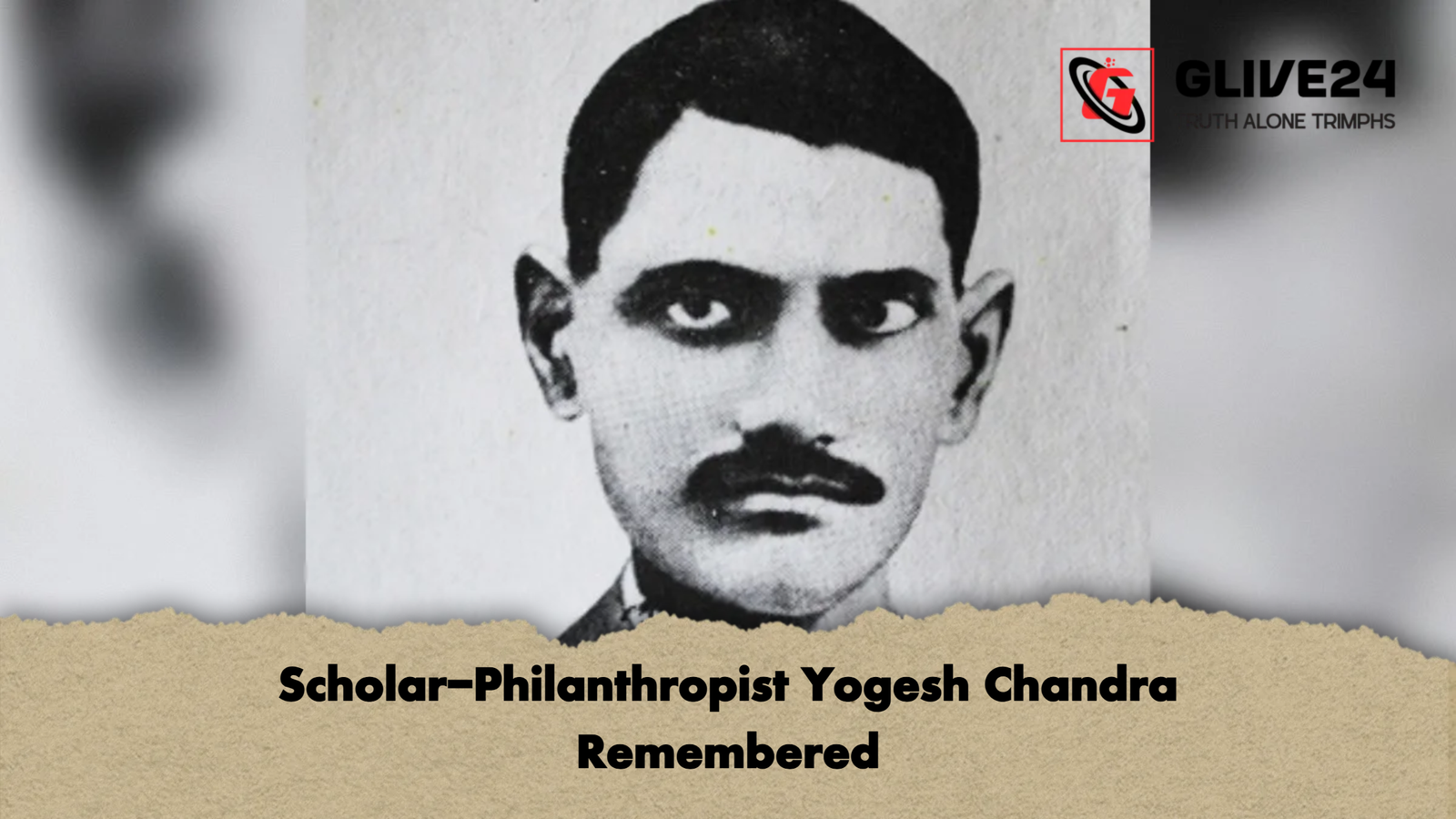
4 April stands as a sombre date in the historical memory of Bangladesh. On this day in 1971, amid the turbulence of the Liberation War, distinguished Ayurvedic scholar, educator, and humanitarian Yogesh Chandra Ghosh was martyred. He was fatally shot by the Pakistani occupation forces in front of the headquarters of his ownestablished institutions, Sadhana Aushadhalaya, located in Gendaria, Dhaka. His tragic death marked not only the loss of an eminent academic but also a compassionate servant of humanity.
Born in 1887 in Gosairhat of Shariatpur district, Yogesh Chandra Ghosh displayed remarkable intellectual promise from an early age. Raised under the guidance and values instilled by his father, Purnachandra Ghosh, he developed a deep commitment to education and learning. He passed the Entrance examination from K.L. Jubilee School in Dhaka in 1902 and completed his F.A. from Jagannath College in 1904. He later earned a Bachelor’s degree from Cooch Behar College, followed by a Master’s degree in Chemistry in 1908.
A concise overview of his academic and professional journey is presented below:
| Category | Details |
|---|---|
| Birth | 1887, Gosairhat, Shariatpur |
| Entrance | 1902, K.L. Jubilee School, Dhaka |
| F.A. | 1904, Jagannath College |
| B.A. | Cooch Behar College |
| M.A. (Chemistry) | 1908 |
| Early Career | Bhagalpur College (1908–1912) |
| Professor | Jagannath College (long tenure) |
| Principal | Jagannath College (1947–1948) |
Ghosh devoted his life to the dissemination of knowledge. Beginning his teaching career at Bhagalpur College, he later joined Jagannath College, where he served for many years as a professor of Chemistry. Renowned for his discipline, intellectual rigour, and humane approach, he inspired generations of students. His tenure as Principal from 1947 to 1948 further cemented his reputation as a visionary academic leader.
Even after retirement, Ghosh remained actively engaged in scholarly pursuits. His intellectual contributions earned him international recognition, including fellowship of the London Chemical Society and membership in the American Chemical Society—prestigious honours that reflected his global academic standing.
Beyond academia, however, his greatest legacy lay in his commitment to public welfare. A firm believer in accessible healthcare, he advocated the use of indigenous medicinal resources to provide affordable treatment. In 1914, he established Sadhana Aushadhalaya in Gendaria, Dhaka, an institution that would grow into a trusted centre for Ayurvedic medicine. His writings on disease, diagnosis, and Ayurvedic treatment enriched the field and served as valuable resources for practitioners and scholars alike.
Medicines developed from local herbs under his guidance gained recognition both at home and abroad. Yet, for Ghosh, the ultimate goal was not acclaim but the alleviation of human suffering. His life exemplified the principle that knowledge attains its highest purpose when used for the betterment of society.
Although he met a tragic end on that fateful night in 1971, the ideals he championed—education, compassion, and service—continue to resonate. Yogesh Chandra Ghosh remains a symbol of selfless dedication, reminding future generations that true greatness lies in serving humanity.
On his martyrdom anniversary, deep respect and homage are paid to his enduring legacy.